National Biometric Infrastructure
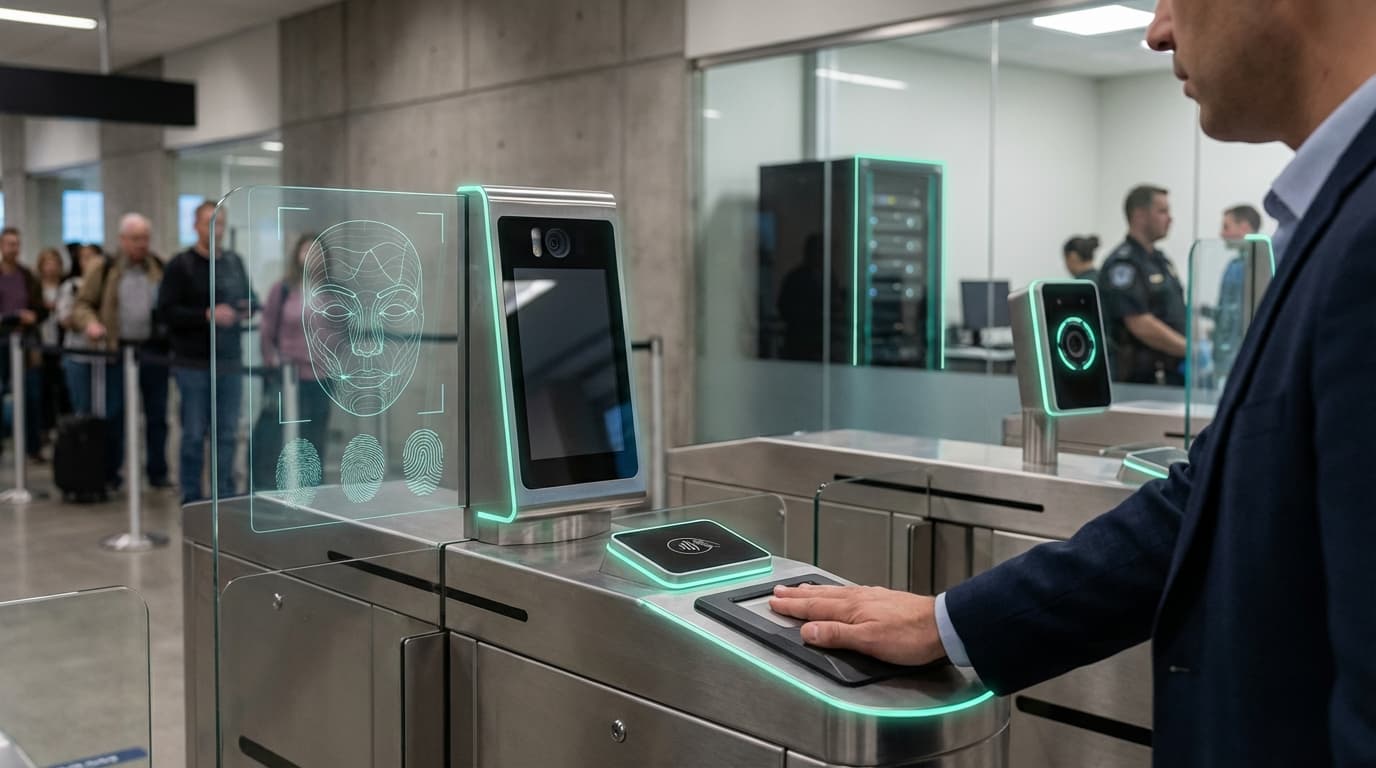
National biometric infrastructure represents a comprehensive framework of interconnected databases, sensors, and analytical systems designed to capture, store, and verify biological and behavioral characteristics of individuals across an entire nation. At its technical foundation, these systems integrate multiple biometric modalities—including facial recognition cameras, iris scanners, fingerprint readers, gait analysis sensors, and increasingly, DNA profiling capabilities—into centralized or federated databases that can process millions of identity verification requests daily. The infrastructure typically employs advanced computer vision algorithms, machine learning models for pattern matching, and distributed computing architectures to handle the massive data volumes generated by continuous monitoring at airports, border crossings, government facilities, and increasingly, public spaces. Modern implementations leverage edge computing to perform initial biometric matching locally before querying central databases, reducing latency and enabling real-time identity verification even in high-throughput environments like international airports processing thousands of travelers per hour.
The primary challenge these systems address is the fundamental difficulty of reliably verifying identity in an era of increased global mobility, sophisticated document forgery, and evolving security threats. Traditional identity verification methods relying solely on physical documents like passports or national ID cards have proven vulnerable to fraud, theft, and manipulation, creating gaps that can be exploited for illegal migration, identity theft, terrorism, and financial crimes. National biometric infrastructure overcomes these limitations by anchoring identity to immutable or difficult-to-replicate biological characteristics, making it substantially harder for individuals to assume false identities or evade detection across multiple touchpoints within a country's security apparatus. This capability enables governments to maintain more accurate population registries, streamline legitimate border crossings while flagging potential security risks, and create audit trails for sensitive transactions in banking and government services. The integration of these systems across previously siloed agencies—immigration, law enforcement, social services, and financial regulators—creates a unified identity ecosystem that can detect anomalies and patterns invisible to fragmented legacy systems.
Several nations have already deployed comprehensive biometric infrastructure at scale, with India's Aadhaar system enrolling over a billion citizens through iris and fingerprint scans, while the European Union's Entry/Exit System is implementing biometric border controls across member states. These deployments demonstrate both the technical feasibility and the operational complexity of managing biometric data at population scale, including challenges around data security, privacy protection, and preventing unauthorized access or misuse. Research suggests that future iterations will incorporate multimodal biometric fusion—combining multiple biological markers to increase accuracy and reduce false positives—alongside behavioral biometrics like typing patterns and voice recognition. As geopolitical tensions intensify and migration pressures mount, national biometric infrastructure is becoming a cornerstone of sovereign border control and internal security strategies, fundamentally reshaping the relationship between individuals, their identities, and state authority in ways that will define governance models for decades to come.
Research this in Signals
Signals turns a topic into a sourced research record you can inspect and rerun. Your first scan is free, and this one starts with National Biometric Infrastructure already loaded, so edit it or scan as is.