Future Circular Collider
Geography: Emea · Europe · Europe
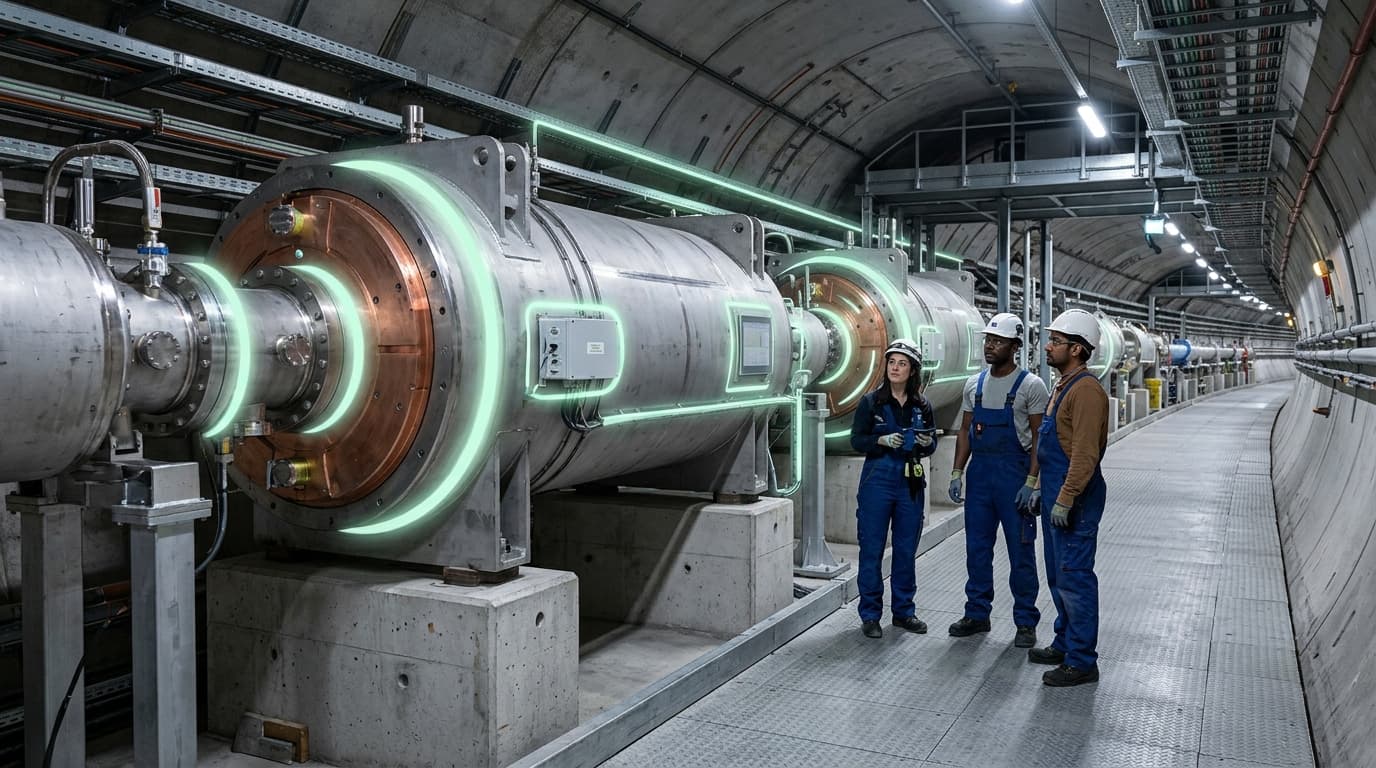
The Future Circular Collider (FCC) is CERN's proposed next-generation particle accelerator: a 91-kilometer tunnel under the Geneva region that would be the largest scientific instrument ever built. The FCC feasibility study delivered its report in March 2025, and the CERN Council endorsed the project as technically viable in November 2025.
The FCC would operate in two phases: FCC-ee (an electron-positron collider for precision measurements, operational ~2040s) and FCC-hh (a hadron collider achieving 7x the energy of the LHC, operational ~2060s). The estimated cost exceeds €20 billion, to be shared among CERN's 24 member states and associate members.
The scientific case is exploring physics beyond the Standard Model — the current theory of particle physics that, while extraordinarily successful, cannot explain dark matter, dark energy, or the matter-antimatter asymmetry of the universe. The FCC would also drive technology development: the LHC's predecessors produced the World Wide Web, PET scanners, hadron therapy for cancer, and advances in superconducting magnets.
Research this in Signals
Signals turns a topic into a sourced research record you can inspect and rerun. Your first scan is free, and this one starts with Future Circular Collider already loaded, so edit it or scan as is.