Antimatter Gravity Measurement
Geography: Emea · Europe · Europe
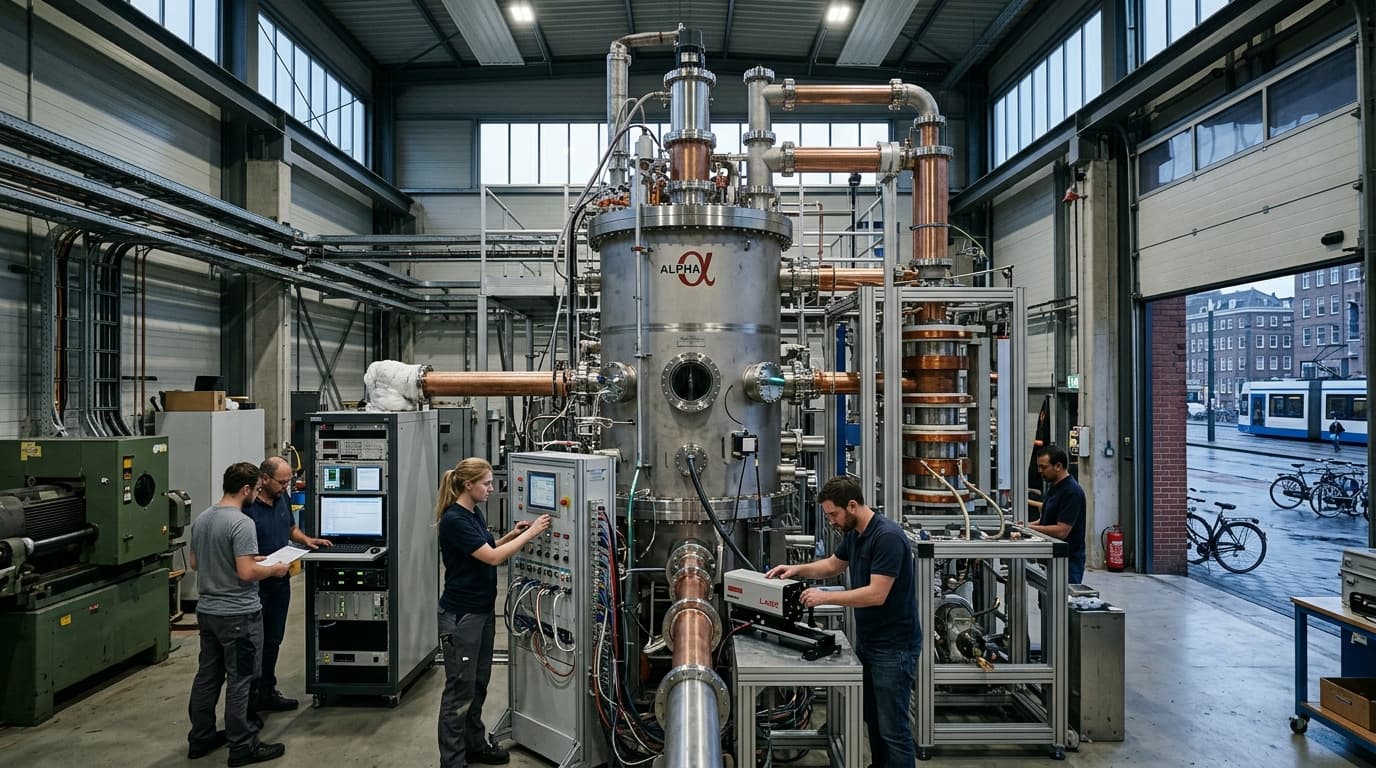
CERN's ALPHA-g experiment achieved a historic first in 2023: directly observing the gravitational behavior of antimatter. By trapping antihydrogen atoms in a magnetic bottle and releasing them vertically, the team measured that antimatter falls downward under gravity — consistent with Einstein's equivalence principle but never before experimentally verified. The 2024-2025 campaigns added laser-cooling to achieve dramatically higher precision.
The measurement matters because several theories of quantum gravity and dark energy predict that antimatter could interact differently with gravity than normal matter. Confirming or disproving this would be revolutionary — potentially explaining the matter-antimatter asymmetry of the universe (why anything exists at all). Two complementary experiments at CERN's Antimatter Factory, AEgIS and GBAR, are pursuing the same measurement using different techniques to cross-validate results.
CERN's antimatter program represents a unique European capability: no other facility on Earth can produce, trap, and manipulate antihydrogen atoms in quantities sufficient for precision physics. The Antiproton Decelerator and ELENA ring that supply these experiments exist only at CERN. The technology developed for antimatter trapping — superconducting magnets, ultra-high vacuum systems, laser cooling of exotic atoms — pushes engineering boundaries that feed into other fields including quantum computing and medical imaging.
Research this in Signals
Signals turns a topic into a sourced research record you can inspect and rerun. Your first scan is free, and this one starts with Antimatter Gravity Measurement already loaded, so edit it or scan as is.