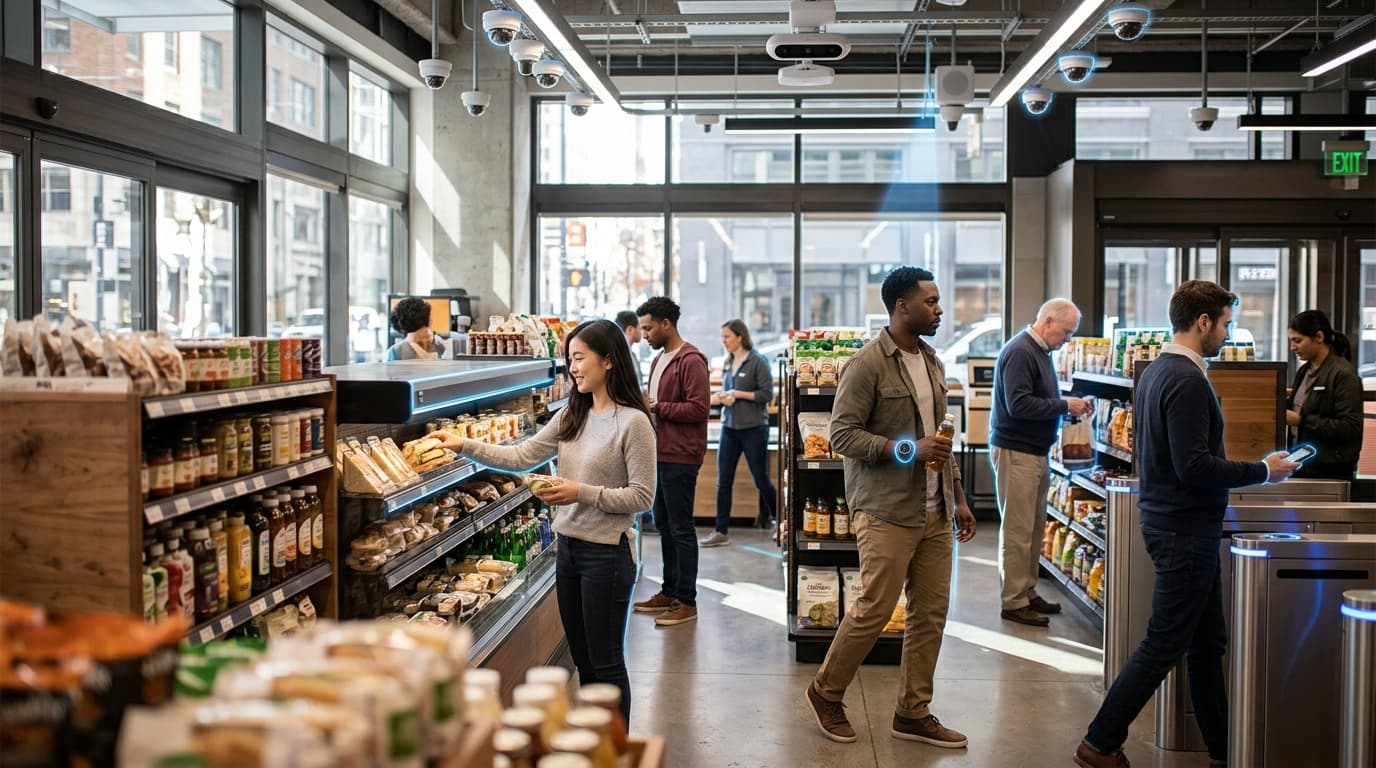
Cashierless Stores
Cashierless stores—pioneered by Amazon Go and now deployed by various retailers—eliminate traditional checkout by using computer vision, shelf sensors, and machine learning to track items as customers pick them up and carry them out. Shoppers enter via app-linked turnstiles, browse and select products, and leave; the system automatically charges their account for items taken. The technology typically combines overhead camera networks, weight sensors on shelves, and deep learning models trained to associate product removal with individual shoppers. Applications extend beyond convenience retail to grocery, quick-service food, and corporate cafeterias where reducing wait times drives significant value.
The retail sector faces pressure to reduce labor costs and improve customer experience. Cashierless stores address both by eliminating checkout queues and reducing staffing requirements. Commercial deployment remains limited to select urban locations; the technology is capital-intensive and requires significant sensor and compute infrastructure per store. Challenges include handling edge cases—items returned to shelves, shared carts, occluded products—and maintaining accuracy across diverse store layouts and product assortments. Privacy and data governance concerns accompany continuous surveillance of shopping behavior. As computer vision and sensor costs decline, cashierless systems may expand beyond pilot scale, though mainstream adoption depends on economics and consumer acceptance.
Research this in Signals
Signals turns a topic into a sourced research record you can inspect and rerun. Your first scan is free, and this one starts with Cashierless Stores already loaded, so edit it or scan as is.