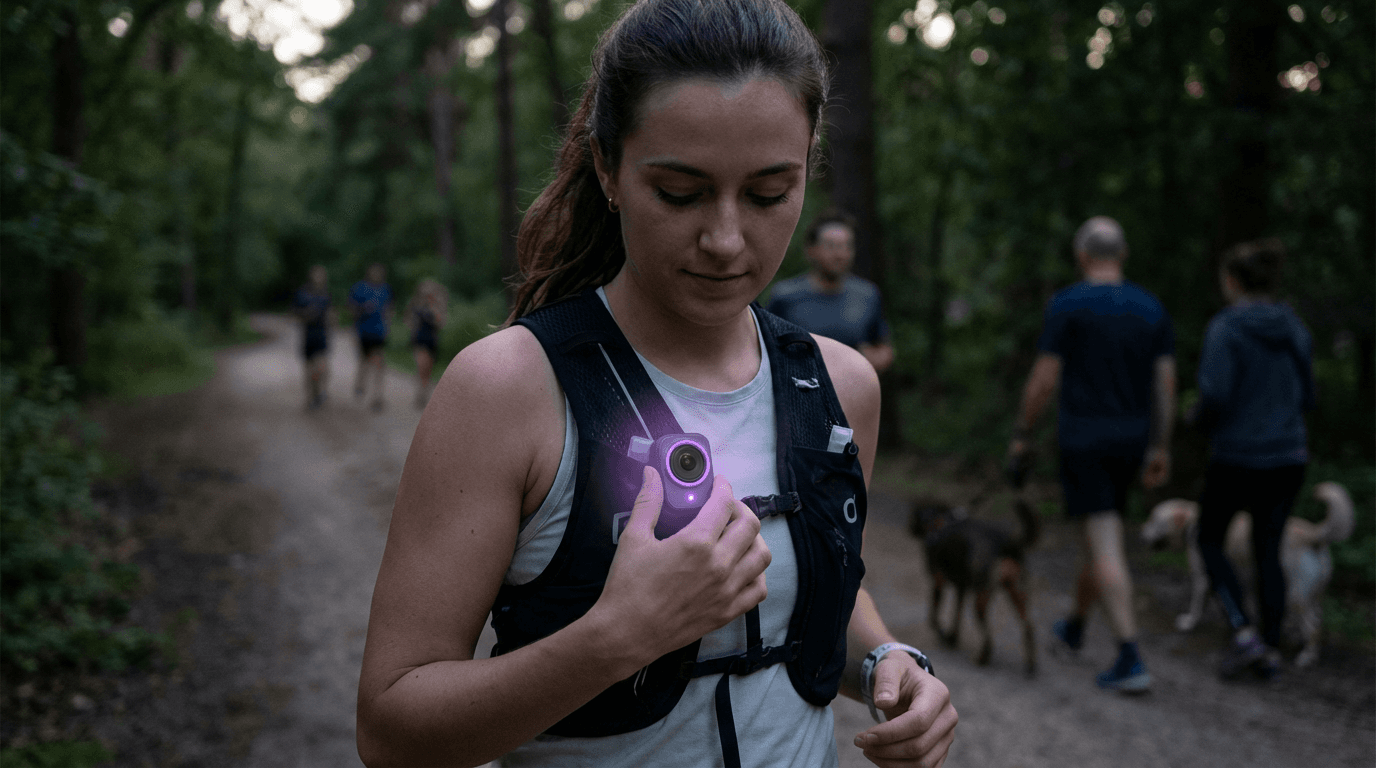
Camera-Based Personal Safety Wearables
Camera-based personal safety wearables represent a convergence of miniaturized imaging technology, edge computing, and wearable design to address vulnerabilities in personal awareness. These devices incorporate compact wide-angle or fisheye cameras positioned to capture the wearer's peripheral and rear field of view, areas typically outside natural human vision. The core technical mechanism relies on computer vision algorithms running on low-power processors embedded within the device itself. These algorithms perform real-time analysis of video feeds to detect human forms, track movement patterns, and assess proximity. More sophisticated implementations employ depth-sensing capabilities through stereo cameras or time-of-flight sensors, enabling the system to gauge not just the presence but the distance and approach velocity of detected individuals. Machine learning models trained on diverse datasets can distinguish between benign scenarios—such as someone walking in the same direction on a sidewalk—and potentially concerning behaviors like rapid approach or following patterns. The wearable form factor itself varies from pendant-style devices worn around the neck to clip-on accessories attachable to clothing or bags, with emerging designs integrating cameras directly into garment fabrics or accessories.
The fundamental problem these wearables address is the limitation of human situational awareness in environments where personal safety concerns exist. Traditional personal safety measures rely on vigilance and environmental awareness, but individuals engaged in activities like jogging with headphones, walking while distracted, or working in isolated settings face inherent blind spots. This technology extends the wearer's sensory perception beyond natural capabilities, functioning as a persistent guardian that never loses focus. The devices overcome the impracticality of constantly looking over one's shoulder or the social awkwardness of appearing paranoid in public spaces. By processing visual information on-device rather than transmitting footage to cloud servers, these systems address privacy concerns that have historically limited acceptance of body-worn cameras. When integrated with smartphone ecosystems, they enable features such as automatic emergency contact notification, location sharing with trusted individuals, and even audio or video evidence capture when the wearer activates an alert. This capability proves particularly valuable for vulnerable populations, including individuals who work night shifts, delivery personnel navigating unfamiliar areas, and those who have experienced stalking or harassment.
Early commercial implementations of camera-based safety wearables have emerged primarily in markets with heightened personal safety awareness, though widespread adoption remains in nascent stages. Pilot programs in urban environments have demonstrated the technology's utility for gig economy workers, particularly food delivery personnel and rideshare drivers who frequently operate alone in varied neighborhoods. The devices are also finding applications in corporate settings where employees work in isolated conditions, such as property inspectors, utility workers, or healthcare providers making home visits. Industry analysts note growing interest from university campus safety programs and corporate security departments seeking to augment traditional safety measures. The technology aligns with broader trends toward ambient intelligence and context-aware computing, where devices anticipate user needs based on environmental analysis. As sensor miniaturization continues and battery efficiency improves, future iterations may incorporate additional modalities such as audio analysis to detect verbal threats or environmental sensors to identify unsafe conditions. The trajectory suggests evolution toward multi-modal safety systems that combine visual monitoring with other sensing capabilities, potentially integrating with smart city infrastructure or emergency response networks to create comprehensive personal safety ecosystems.
Related Organizations

Multinational technology company known for GPS and wearable technology.

Developer of the FITT360 neckband camera which provides 360-degree recording and situational awareness for personal security.

Produces the Fly6 rear-facing camera and light combination for cyclists to record incidents from behind.

Leader in body-worn cameras for law enforcement, increasingly integrating AI for situational awareness and threat detection.

Insta360
China · Company
Produces compact 360-degree cameras (like the GO series) often worn for personal safety and full-surveillance recording.

A global leader in public safety and enterprise security.

Manufactures advanced video recording products for personal safety and law enforcement.

Reveal Media
United Kingdom · Company
European leader in body-worn camera solutions with front-facing screens to de-escalate aggression.

Manufacturer of body cameras and wearable safety technology for police and private security.

Produces wearable action cameras often used by motorcyclists for safety recording.
Supporting Evidence
Research this in Signals
Signals turns a topic into a sourced research record you can inspect and rerun. Your first scan is free, and this one starts with Camera-Based Personal Safety Wearables already loaded, so edit it or scan as is.