Envisioning is an emerging technology research institute and advisory.

LinkedInInstagramGitHub

2011 — 2026

research
  • Reports
  • Newsletter
  • Methodology
  • Origins
  • My Collection
services
  • Research Sessions
  • Signals Workspace
  • Bespoke Projects
  • Use Cases
  • Signal Scanfree
  • Readinessfree
impact
  • ANBIMAFuture of Brazilian Capital Markets
  • IEEECharting the Energy Transition
  • Horizon 2045Future of Human and Planetary Security
  • WKOTechnology Scanning for Austria
audiences
  • Innovation
  • Strategy
  • Consultants
  • Foresight
  • Associations
  • Governments
resources
  • Pricing
  • Partners
  • How We Work
  • Data Visualization
  • Multi-Model Method
  • FAQ
  • Security & Privacy
about
  • Manifesto
  • Community
  • Events
  • Support
  • Contact
  • Login
ResearchServicesPricingPartnersAbout
  1. Home
  2. Research
  3. Interface
  4. AI-Powered Digital Twin Platforms

AI-Powered Digital Twin Platforms

Virtual replicas of buildings that optimize energy use and operations through real-time sensor data and AI
Back to InterfaceView interactive version

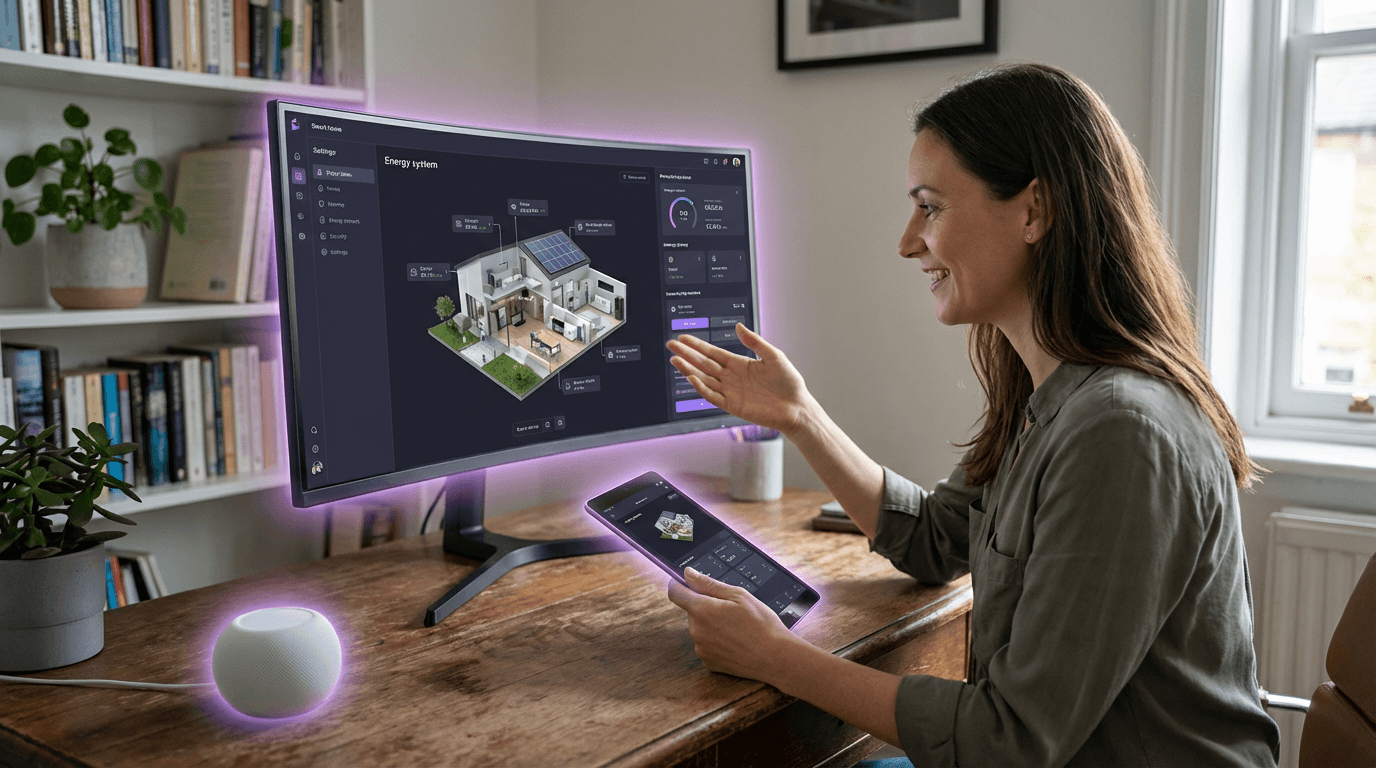
AI-powered digital twin platforms represent a convergence of Internet of Things (IoT) sensor networks, cloud computing infrastructure, and machine learning algorithms to create dynamic virtual replicas of physical buildings. Unlike static building information models (BIM), these platforms continuously ingest real-time data streams from hundreds or thousands of sensors monitoring HVAC performance, electrical consumption, water usage, indoor air quality, occupancy patterns, and equipment status. The digital twin synthesizes this disparate data into a unified virtual model that mirrors the physical building's current state, updating every few seconds or minutes. Machine learning models analyze historical and real-time data to identify patterns, detect anomalies, and generate predictive insights about building performance. The underlying architecture typically combines edge computing for local data processing with cloud-based analytics platforms that apply neural networks and optimization algorithms to the aggregated data, creating a feedback loop between the physical and digital environments.

The commercial real estate and facilities management sectors face mounting pressure to reduce operational costs while simultaneously meeting increasingly stringent sustainability targets and occupant comfort expectations. Traditional building management systems operate reactively, responding to problems after they occur and relying on fixed schedules that ignore actual usage patterns. AI-powered digital twins address these limitations by enabling predictive and prescriptive maintenance strategies that anticipate equipment failures before they happen, potentially reducing maintenance costs and avoiding costly downtime. The platforms optimize energy consumption by learning occupancy patterns and adjusting heating, cooling, and lighting dynamically rather than following rigid schedules, with early deployments indicating potential energy savings. For organizations committed to ESG reporting and carbon reduction goals, these systems provide granular visibility into resource consumption and quantifiable metrics for sustainability initiatives. The technology also enables scenario modeling, allowing facility managers to test the impact of proposed changes—such as upgrading to LED lighting or adjusting temperature setpoints—within the virtual environment before committing capital to physical modifications.

Major technology providers and specialized startups have begun deploying these platforms across commercial office buildings, hospitals, universities, and industrial facilities, with adoption accelerating as organizations seek data-driven approaches to building management. Current applications range from optimizing HVAC schedules in corporate campuses to predicting elevator maintenance needs in high-rise buildings and managing energy demand in hospital complexes where equipment reliability is critical. The platforms are increasingly integrated with broader smart city initiatives, connecting building-level data with district energy systems and grid management platforms. Industry analysts note that the convergence of declining sensor costs, advances in edge computing capabilities, and growing regulatory pressure around building emissions is driving wider adoption beyond early-adopter organizations. As the technology matures, the trajectory points toward increasingly autonomous building operations where AI systems make real-time adjustments with minimal human intervention, fundamentally transforming how built environments are managed and creating new benchmarks for operational efficiency and environmental performance in the decades ahead.

Technology Readiness Level
4/9Formative
Impact
3/5Medium
Investment
3/5Medium
Category
Software

Related Organizations

Willow logo
Willow

Australia · Startup

95%

Digital twin provider for real estate and infrastructure.

Developer
Autodesk logo
Autodesk

United States · Company

90%

Owner of the Arnold renderer, which integrates AI denoising to optimize high-end VFX workflows for film and TV.

Developer
Bentley Systems logo
Bentley Systems

United States · Company

90%

Infrastructure engineering software company.

Developer
BrainBox AI logo
BrainBox AI

Canada · Startup

90%

Uses autonomous AI to optimize HVAC systems in real-time, predicting thermal behavior to save energy.

Developer
Akila logo
Akila

China · Startup

85%

An ESG-first digital twin platform that tracks and optimizes building performance, energy, and waste management using real-time data.

Developer
Cityzenith logo

Cityzenith

United States · Startup

85%

Develops the SmartWorldOS digital twin platform for cities and large building portfolios.

Developer
Johnson Controls logo

Johnson Controls

United States · Company

85%

Multinational conglomerate producing HVAC and building control systems, notably the OpenBlue digital platform.

Developer
Matterport logo
Matterport

United States · Company

80%

Spatial data company that integrated mobile LiDAR support into their capture app, democratizing real estate digital twins.

Developer

Supporting Evidence

Article

The Willow Platform: AI-Powered Insights for Built World

Willow · Mar 19, 2025

Willow's platform connects building data into a single intelligent model to anticipate issues, optimize operations, and automate workflows using AI-driven insights.

Support 95%Confidence 95%

Article

Willow Digital Twin: Real-time intelligence for real estate portfolios

Willow · Mar 15, 2025

Platform transforming buildings into intelligent environments by unifying spatial and live data to power analytics, automation, and predictive insights.

Support 95%Confidence 100%

Article

Neuron Building Digital Twin: Intelligent Knowledge Management

Neuron · Jul 23, 2025

Solution prioritizing intelligent knowledge management and seamless IoT integration to optimize asset utilization and facility management beyond traditional BMS.

Support 90%Confidence 95%

Connections

Software
Digital Twin Platforms

Virtual replicas of physical systems that sync in real-time for testing, monitoring, and planning

Technology Readiness Level
4/9
Impact
3/5
Investment
3/5

Book a research session

Bring this signal into a focused decision sprint with analyst-led framing and synthesis.
Research Sessions