Envisioning is an emerging technology research institute and advisory.

LinkedInInstagramGitHub

2011 — 2026

research
  • Reports
  • Newsletter
  • Methodology
  • Origins
  • My Collection
services
  • Research Sessions
  • Signals Workspace
  • Bespoke Projects
  • Use Cases
  • Signal Scanfree
  • Readinessfree
impact
  • ANBIMAFuture of Brazilian Capital Markets
  • IEEECharting the Energy Transition
  • Horizon 2045Future of Human and Planetary Security
  • WKOTechnology Scanning for Austria
audiences
  • Innovation
  • Strategy
  • Consultants
  • Foresight
  • Associations
  • Governments
resources
  • Pricing
  • Partners
  • How We Work
  • Data Visualization
  • Multi-Model Method
  • FAQ
  • Security & Privacy
about
  • Manifesto
  • Community
  • Events
  • Support
  • Contact
  • Login
ResearchServicesPricingPartnersAbout
  1. Home
  2. Research
  3. Interface
  4. AI-Driven True Smell Recognition Sensors

AI-Driven True Smell Recognition Sensors

Electronic sensors that detect and identify odors using MEMS arrays and machine learning
Back to InterfaceView interactive version

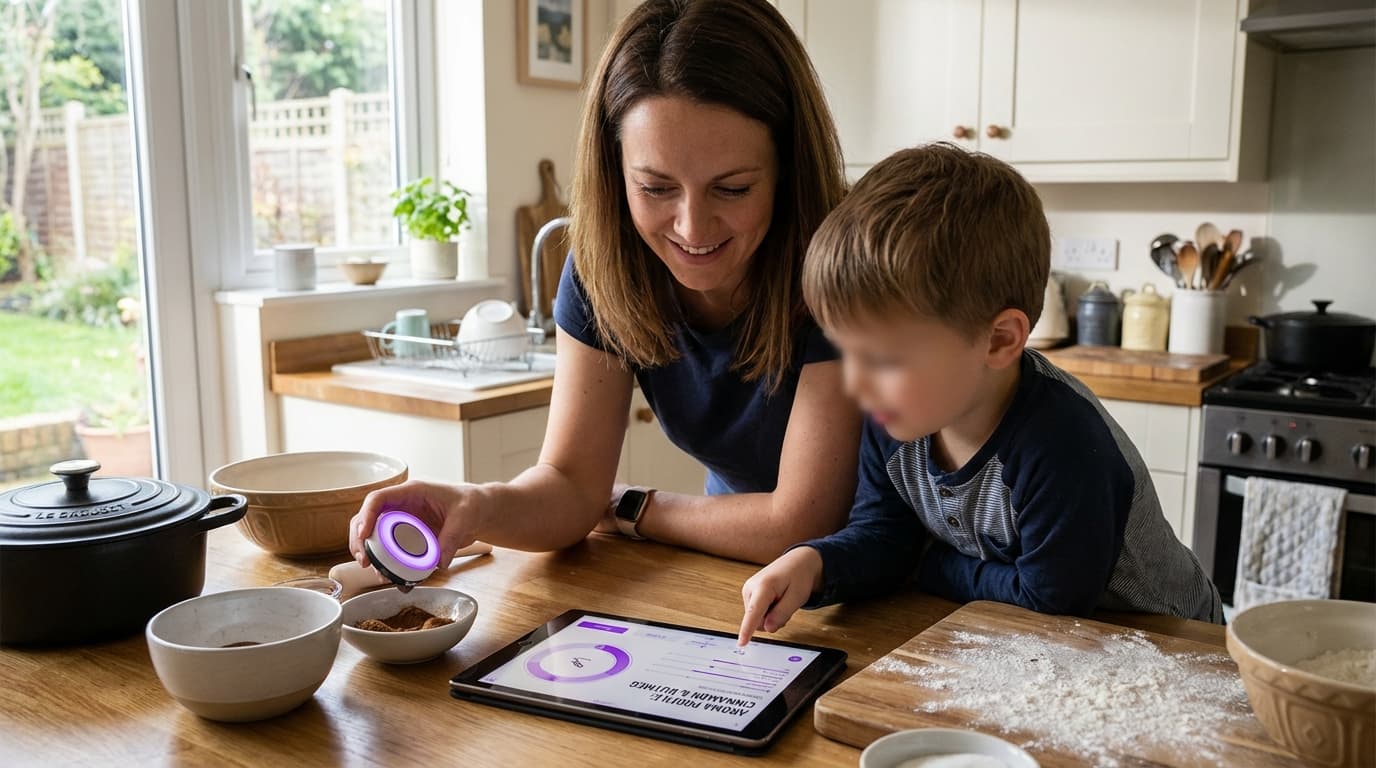
AI-driven smell recognition sensors represent a convergence of microelectromechanical systems (MEMS) fabrication, advanced materials science, and machine learning algorithms to replicate the human sense of smell in compact electronic devices. These systems, often called electronic noses or e-noses, employ arrays of nanoscale chemical sensors—typically metal oxide semiconductors, conducting polymers, or surface acoustic wave devices—that respond to volatile organic compounds in the air. When exposed to an odor, each sensor in the array reacts differently based on its material properties, creating a unique multidimensional response pattern or "odor fingerprint." Machine learning models, particularly deep neural networks, are trained on thousands of these patterns to recognize and classify complex scent profiles. Unlike traditional single-compound gas detectors, these AI-powered systems can distinguish between subtle variations in odor mixtures, learning to identify everything from the ripeness of fruit to specific disease biomarkers in human breath. The MEMS manufacturing process enables these sensor arrays to be produced at scales small enough for consumer electronics integration, with some prototypes measuring just a few millimeters across.

The technology addresses a significant gap in human-computer interaction and automated quality control systems. Industries ranging from food production to healthcare have long relied on human sensory evaluation or expensive laboratory analysis to assess odors, creating bottlenecks in quality assurance and limiting real-time decision-making capabilities. In food safety, for instance, spoilage detection currently depends on visual inspection, expiration dates, or costly microbiological testing, none of which provide immediate, non-invasive assessment. Similarly, medical diagnostics based on breath analysis—which can reveal markers for diabetes, lung disease, and certain cancers—require specialized equipment and trained personnel. AI-driven smell sensors offer a pathway to democratize these capabilities, enabling continuous monitoring and instant feedback. The technology also opens new possibilities for ambient intelligence in smart environments, where devices could automatically detect gas leaks, monitor air quality for specific pollutants, or even adjust ventilation systems based on detected odors. For augmented and virtual reality applications, smell recognition sensors could enable truly multisensory experiences, adding olfactory dimensions to digital content.

Research institutions and technology companies have begun exploring commercial applications of electronic nose technology, though widespread consumer adoption remains in early stages. Pilot programs in agricultural settings have demonstrated the ability to assess crop quality and detect pest infestations through volatile compound analysis. In healthcare contexts, experimental breath analysis systems show promise for non-invasive disease screening, though regulatory approval processes remain lengthy. Some smart home developers are investigating integration of odor sensors for safety applications, particularly natural gas and smoke detection with enhanced specificity. The primary technical challenges center on sensor stability over time—chemical sensors tend to drift in their responses, requiring periodic recalibration—and the difficulty of creating comprehensive odor databases that account for environmental variables like humidity and temperature. Additionally, the subjective nature of human smell perception complicates the creation of universal odor classification systems. As machine learning techniques advance and sensor materials improve, industry observers anticipate broader integration of smell recognition into consumer devices, potentially making olfactory sensing as ubiquitous as cameras and microphones in everyday technology. This trajectory aligns with larger trends toward multimodal sensing and ambient computing, where devices perceive and respond to the full spectrum of environmental conditions.

Technology Readiness Level
4/9Formative
Impact
3/5Medium
Investment
3/5Medium
Category
Hardware

Related Organizations

Aryballe logo
Aryballe

France · Company

95%

Combines biochemical sensors, advanced optics, and machine learning to create digital olfaction technology (NeOse).

Developer
Osmo logo
Osmo

United States · Startup

95%

A Google Research spinoff using AI to map the structure of molecules to odor perception (digitizing smell).

Developer
Aromyx logo
Aromyx

United States · Company

90%

Uses biological receptors cloned from the human nose/tongue on a chip (biosensor) combined with AI to digitize taste and scent.

Developer
NanoScent logo

NanoScent

Israel · Startup

90%

Develops sensors using nanoparticles and AI to detect and analyze scents for industrial and health applications.

Developer
Noze (formerly Stratuscent) logo
Noze (formerly Stratuscent)

Canada · Startup

90%

Develops a digital nose platform that digitizes smell to enable machines to detect and identify odors.

Developer
SmartNanotubes Technologies logo
SmartNanotubes Technologies

Germany · Startup

90%

Creator of the Smell iX16, a multi-channel gas detector chip designed to be an electronic nose for mass market IoT.

Developer
Bosch Sensortec logo
Bosch Sensortec

Germany · Company

85%

Develops micro-electro-mechanical systems (MEMS) sensors.

Developer
IBM Research logo
IBM Research

United States · Company

80%

Long-standing leader in neuro-symbolic AI, combining neural networks with logical reasoning for enterprise applications.

Researcher
Sensirion logo
Sensirion

Switzerland · Company

80%

Leading manufacturer of environmental sensors, including PM2.5 and CO2 sensors used in portable trackers.

Developer
Givaudan logo
Givaudan

Switzerland · Company

75%

The world's largest flavor and fragrance company, investing in digital scent startups and technologies.

Investor
Intel logo
Intel

United States · Company

70%

Develops silicon spin qubits using advanced 300mm wafer manufacturing processes.

Researcher

Supporting Evidence

Paper

Neuromorphic olfactory perception chips: towards universal odour recognition and cognition

Nature Reviews Electrical Engineering · Oct 28, 2025

A review of neuromorphic olfactory chips that integrate microelectronics and nanoelectronics with AI to mimic the architecture and functions of the biological olfactory pathway for universal odor recognition.

Support 95%Confidence 78%

Paper

AI‑driven photonic noses: from conventional sensors to cloud‑to-edge intelligent microsystems

Microsystems & Nanoengineering · Nov 7, 2025

This review explores AI-driven photonic noses, a class of optical sensing systems mimicking human olfaction, evolving from conventional sensors to intelligent cloud-to-edge microsystems.

Support 92%Confidence 95%

Paper

Pulse-driven MEMS gas sensor combined with machine learning for selective gas identification

Microsystems & Nanoengineering · Apr 23, 2025

Introduces a low-power electronic nose system using a single pulse-driven MEMS sensor combined with machine learning to identify trace gases.

Support 88%Confidence 95%

Article

Successful Visualization of the Odor Discrimination Process in an AI-Assisted Olfactory Sensor

NIMS · Sep 11, 2025

NIMS researchers used explainable AI (XAI) to visualize how chemical sensors discriminate odorant molecules, guiding the design of optimal receptor materials.

Support 87%Confidence 70%

Paper

Tunable and highly sensitive functionalized carbon-nanotube-based integrated systems for chemical gas sensing

Nature Sensors · Feb 25, 2026

Presents a tunable, highly sensitive integrated system based on functionalized carbon nanotubes for chemical gas sensing, advancing the materials science aspect of e-noses.

Support 85%Confidence 72%

Connections

Software
Software
AI-Powered Edge Sensors for Indoor Accidents

Cameras and sensors that detect falls, medical emergencies, and hazards indoors using on-device AI

Technology Readiness Level
4/9
Impact
3/5
Investment
3/5
Applications
Sensory Overload Detection

Wearables that monitor environmental and physiological signals to predict sensory overwhelm

Technology Readiness Level
5/9
Impact
3/5
Investment
3/5
Software
On-Device AI Bio-Signal Processing

Chips that analyze heart, brain, and muscle signals locally without cloud connectivity

Technology Readiness Level
4/9
Impact
3/5
Investment
3/5

Book a research session

Bring this signal into a focused decision sprint with analyst-led framing and synthesis.
Research Sessions