Optical Computing
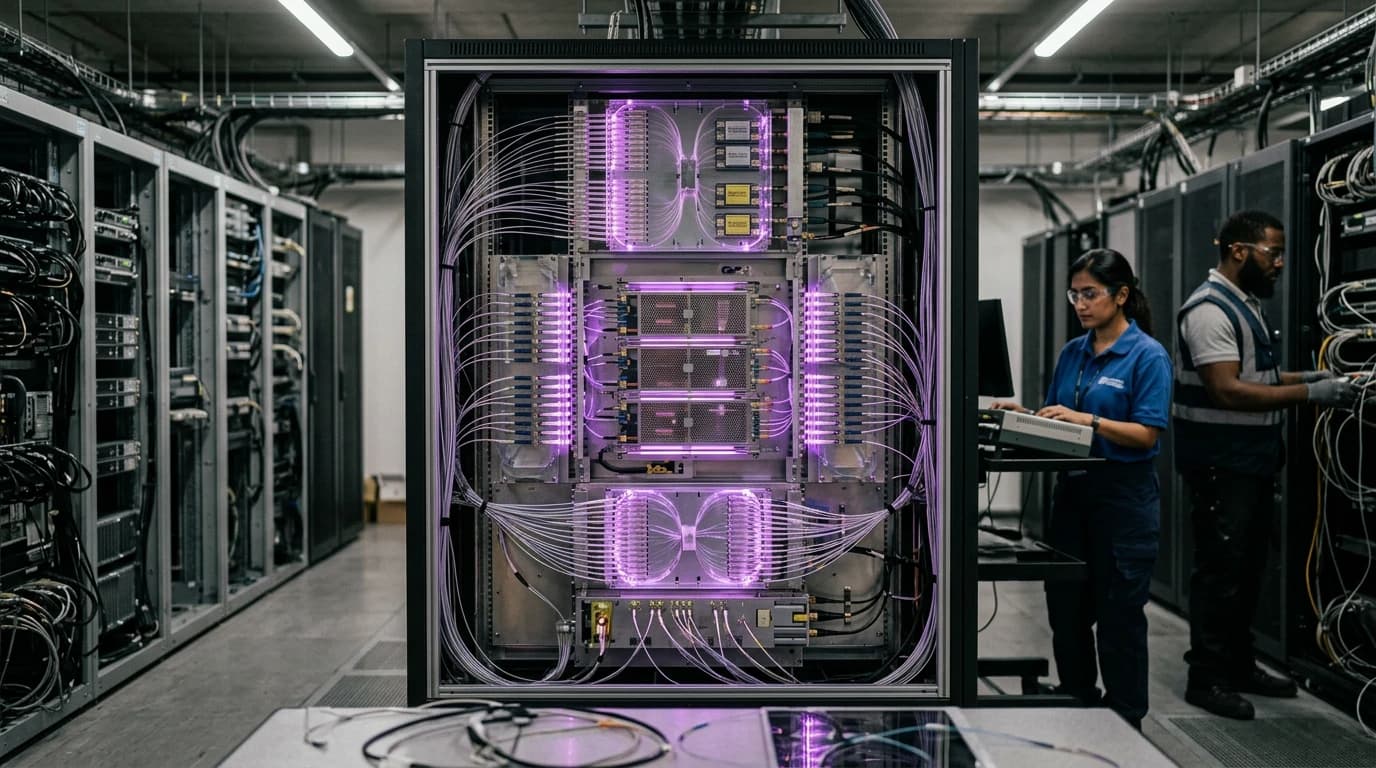
Optical Computing
Computing with photons instead of electrons for faster, lower-power processing
Optical computing uses photons—light—instead of electrons to perform computation, potentially enabling higher speeds, lower power consumption, and parallelism not achievable with electronic circuits. Research spans analog optical computing—using interferometry, holography, or spatial light modulators for matrix multiplication and signal processing—and digital optical logic—using optical switches, modulators, and nonlinear optics for logic gates. Some components have reached integrated-circuit integration: silicon photonics for interconnects, optical modulators, and detectors. Full optical processors remain research-stage. Applications could include AI inference acceleration, optical neural networks, and high-bandwidth interconnects within and between chips.
Electronic computing faces power and bandwidth limits as transistor counts grow. Optical computing offers an alternative: light propagates at high speeds with minimal heat, and optical interconnects can provide massive parallelism. Significant challenges include efficient optical nonlinearity for logic, integration with CMOS fabrication, and scaling to large systems. Research continues into photonic integrated circuits, optical neural network accelerators, and hybrid electronic-optical architectures. Some optical components—particularly for interconnects—are approaching commercialization; full optical processors remain longer-term prospects.
TRL
4/9Formative
Impact
5/5
Investment
4/5
Category
Hardware
What was expected
Published forecasts about this technology, graded against what happened in Hindsight.
Research this in Signals
Scan Optical Computing for yourself.
Signals turns a topic into a sourced research record you can inspect and rerun. Your first scan is free, and this one starts with Optical Computing already loaded, so edit it or scan as is.