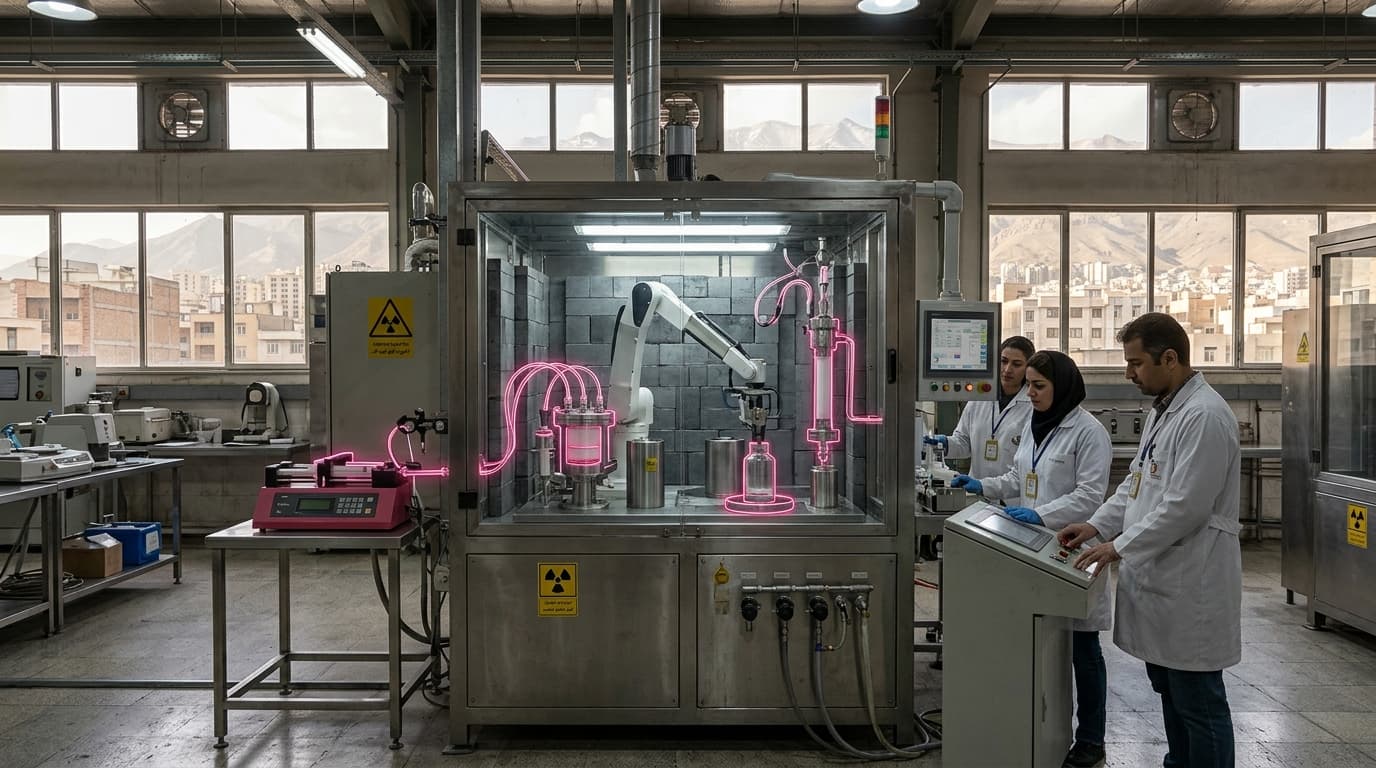
Radiopharmaceutical and Medical Isotope Production
Geography: Emea · Middle East · Iran
Iran ranks among the world's top three radiopharmaceutical producers, manufacturing a range of diagnostic and therapeutic radioisotopes for nuclear medicine through its Pars Isotope company and associated cyclotron facilities. The program produces isotopes including Technetium-99m (the most widely used diagnostic isotope), Fluorine-18 for PET imaging, Iodine-131 for thyroid treatment, and various other therapeutic and diagnostic agents. These products are exported to 15 countries including Iraq, India, Pakistan, Syria, Egypt, Georgia, and several European nations.
Radiopharmaceutical production requires a sophisticated infrastructure chain: nuclear reactors or cyclotrons to generate isotopes, hot cell facilities for processing radioactive materials, quality control laboratories, and rapid logistics for short-lived isotopes. Iran's ability to maintain this chain domestically is a direct byproduct of its nuclear program — the same enrichment and reactor technology that generates geopolitical concern also enables medical isotope production. The Tehran Research Reactor, fueled with 20% enriched uranium, is a key source of medical isotopes.
The dual-use nature of radiopharmaceutical production encapsulates Iran's technology story: sanctioned nuclear capabilities have civilian applications that serve both domestic healthcare and export revenue. The program demonstrates that nuclear technology denial has unintended consequences — by driving indigenous capability development, sanctions created a self-sufficient nuclear medicine industry that now serves as a positive-use case for Iranian nuclear technology on the international stage.
Research this in Signals
Signals turns a topic into a sourced research record you can inspect and rerun. Your first scan is free, and this one starts with Radiopharmaceutical and Medical Isotope Production already loaded, so edit it or scan as is.