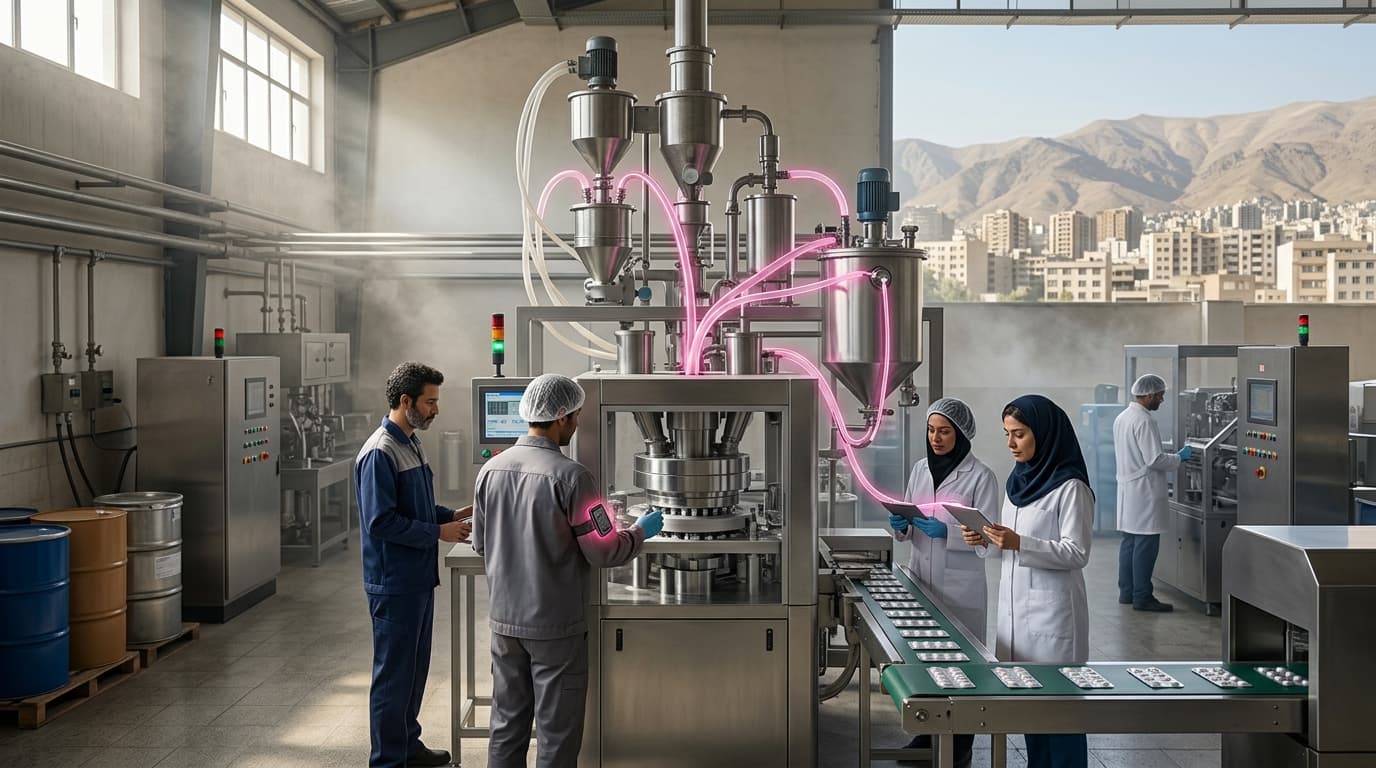
Large-Scale Generic Pharmaceutical Manufacturing
Geography: Emea · Middle East · Iran
Iran's generic pharmaceutical manufacturing sector produces the vast majority of the country's medicine requirements through approximately 60 major companies and hundreds of smaller operations. The industry covers the full production chain: active pharmaceutical ingredient (API) synthesis, formulation, filling, packaging, and quality control. Product categories span antibiotics, cardiovascular drugs, oncology medications, vaccines, insulin, and psychiatric medications. The domestic market is valued at approximately $7.9 billion.
The industry's development follows a clear sanctions-driven trajectory. Pre-revolution Iran imported most pharmaceuticals; post-revolution policies emphasized self-sufficiency, and successive rounds of sanctions accelerated import substitution. The result is one of the most self-sufficient pharmaceutical sectors in the developing world. While quality standards vary — and access to certain novel drugs remains constrained by IP and sanctions barriers — the industry succeeds in its primary mission of ensuring basic medicine availability for 88 million people.
The strategic significance of pharmaceutical self-sufficiency became particularly evident during COVID-19, when Iran developed and manufactured multiple domestic vaccines (COVIran Barekat, PastoCovac, Razi Cov Pars) after being unable to reliably access international supplies. The industry also supports the broader biotech ecosystem: pharmaceutical manufacturing capability feeds into biosimilar production, radiopharmaceuticals, and emerging cell therapy manufacturing. Export activity focuses on neighboring markets (Iraq, Afghanistan, Central Asia) where Iranian generics are price-competitive.
Research this in Signals
Signals turns a topic into a sourced research record you can inspect and rerun. Your first scan is free, and this one starts with Large-Scale Generic Pharmaceutical Manufacturing already loaded, so edit it or scan as is.