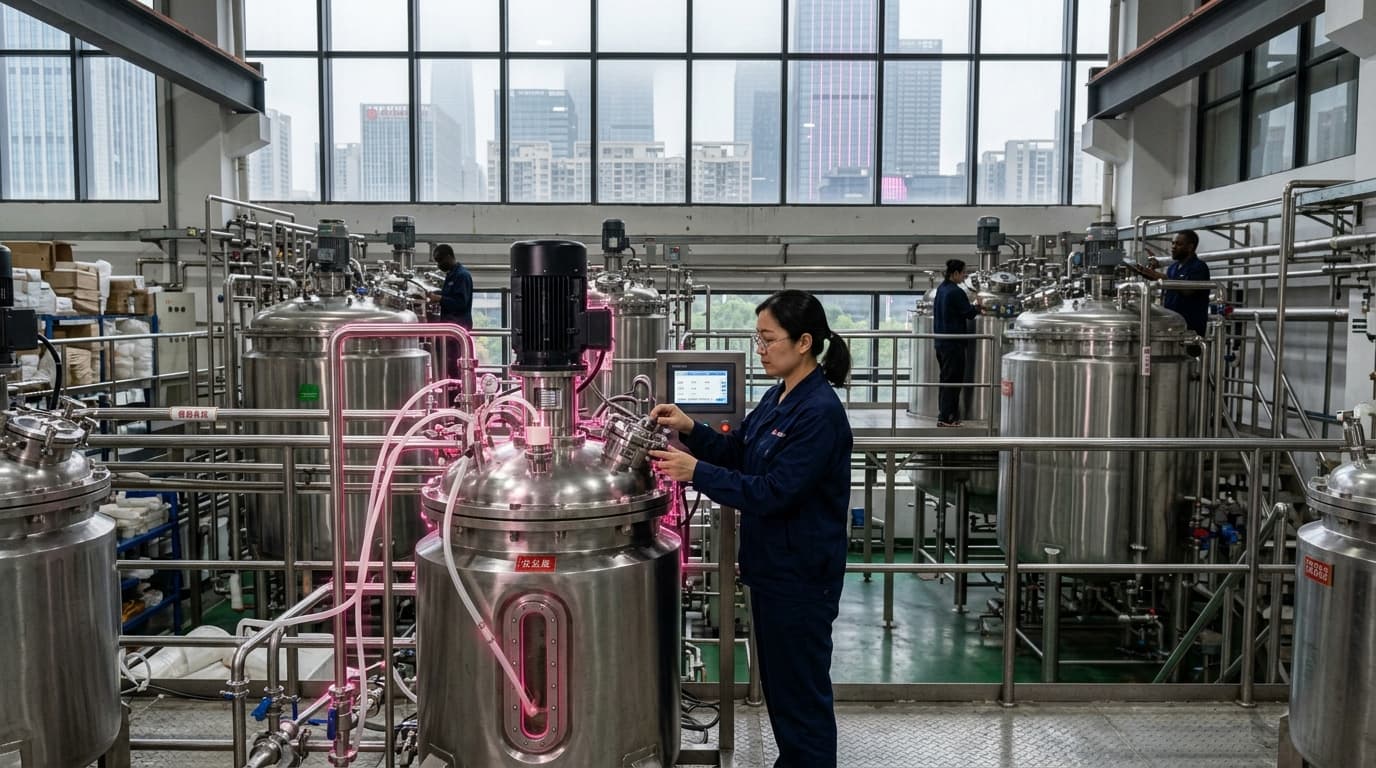
Synthetic Biology and Biomanufacturing
Geography: Asia Pacific · East Asia · China
Biomanufacturing uses genetically engineered microbes — bacteria, yeast, algae — as living factories. Instead of cracking petroleum into plastics and chemicals, engineered organisms convert sugar, CO2, or waste biomass into the same products with lower emissions.
China is scaling this from lab to industrial production. Applications include bio-based nylon, sustainable aviation fuel, lab-grown collagen for cosmetics, and engineered enzymes for industrial processes. The government's explicit inclusion of biomanufacturing in the Five-Year Plan signals infrastructure-level investment.
The bottleneck is cost competitiveness with petrochemicals. At current oil prices, bio-based alternatives are often 2-3x more expensive. China's strategy is to push down the cost curve through manufacturing scale — the same playbook that worked for solar panels and batteries.
Research this in Signals
Signals turns a topic into a sourced research record you can inspect and rerun. Your first scan is free, and this one starts with Synthetic Biology and Biomanufacturing already loaded, so edit it or scan as is.