Artificial Starch/Food Synthesis from CO2
Geography: Asia Pacific · East Asia · China
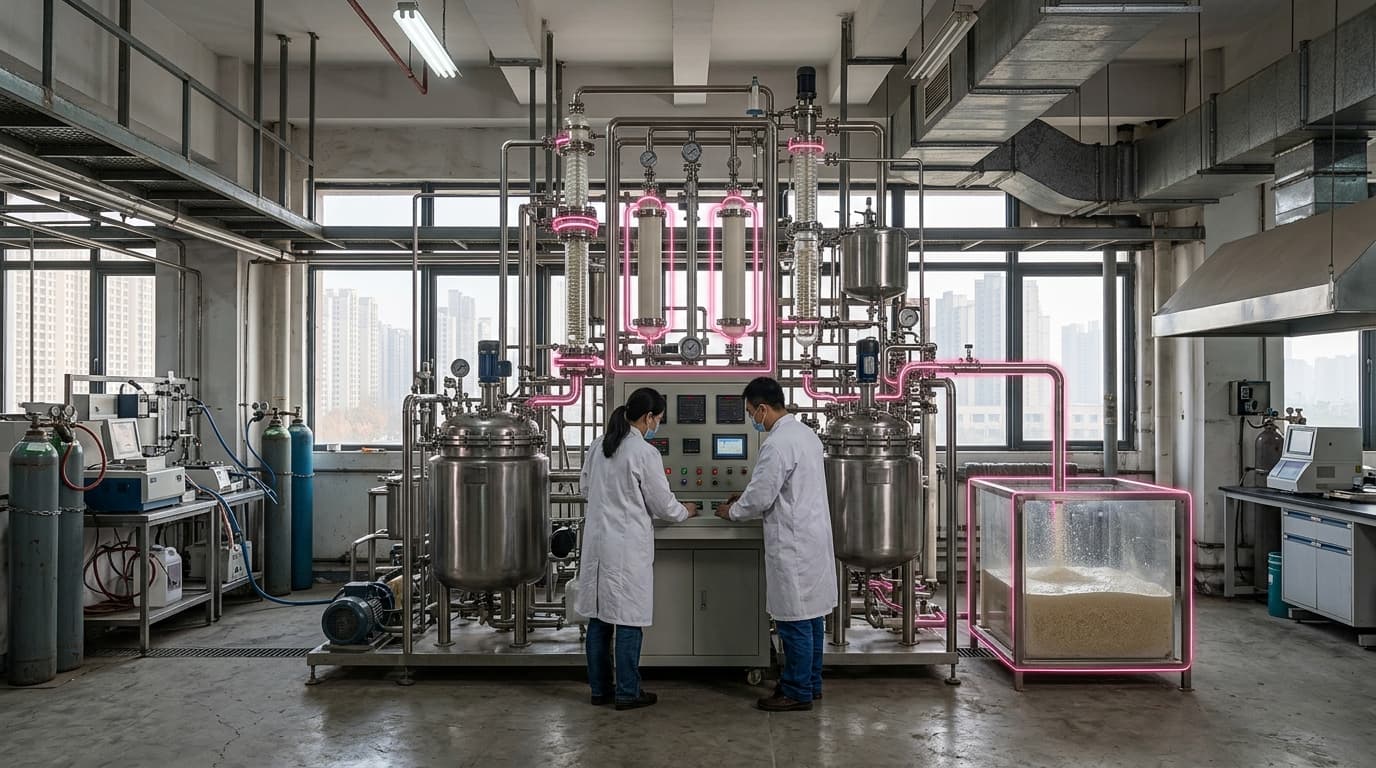
Scientists at the Tianjin Institute of Industrial Biotechnology (TIB) of the Chinese Academy of Sciences achieved the first-ever artificial synthesis of starch from carbon dioxide, published in Science in September 2021. The 11-step chemoenzymatic pathway converts CO2 and hydrogen into starch at 8.5 times the efficiency of natural photosynthesis in corn — without soil, water, sunlight, or farmland.
The follow-up work extended the approach to hexose sugars (glucose, fructose) from CO2, published in 2023. The technology uses chemical catalysts to first reduce CO2 to methanol, then enzymatic cascades to build the methanol into complex carbohydrates. If industrialized, a bioreactor the size of a typical factory could theoretically replace hundreds of thousands of hectares of cropland.
The technology is still at laboratory scale (TRL 2-3) and years from industrial viability. The energy input required is significant — the process needs hydrogen and electricity — so it makes economic sense only when powered by very cheap renewable energy. But for a country that feeds 18% of the world's population on 7% of its arable land, the strategic value of decoupling food production from agriculture is existential. China's National Science and Technology Award recognized the work as a top-10 breakthrough.
Research this in Signals
Signals turns a topic into a sourced research record you can inspect and rerun. Your first scan is free, and this one starts with Artificial Starch/Food Synthesis from CO2 already loaded, so edit it or scan as is.