







Improved Food Provenance Validation
This page is broader than it.
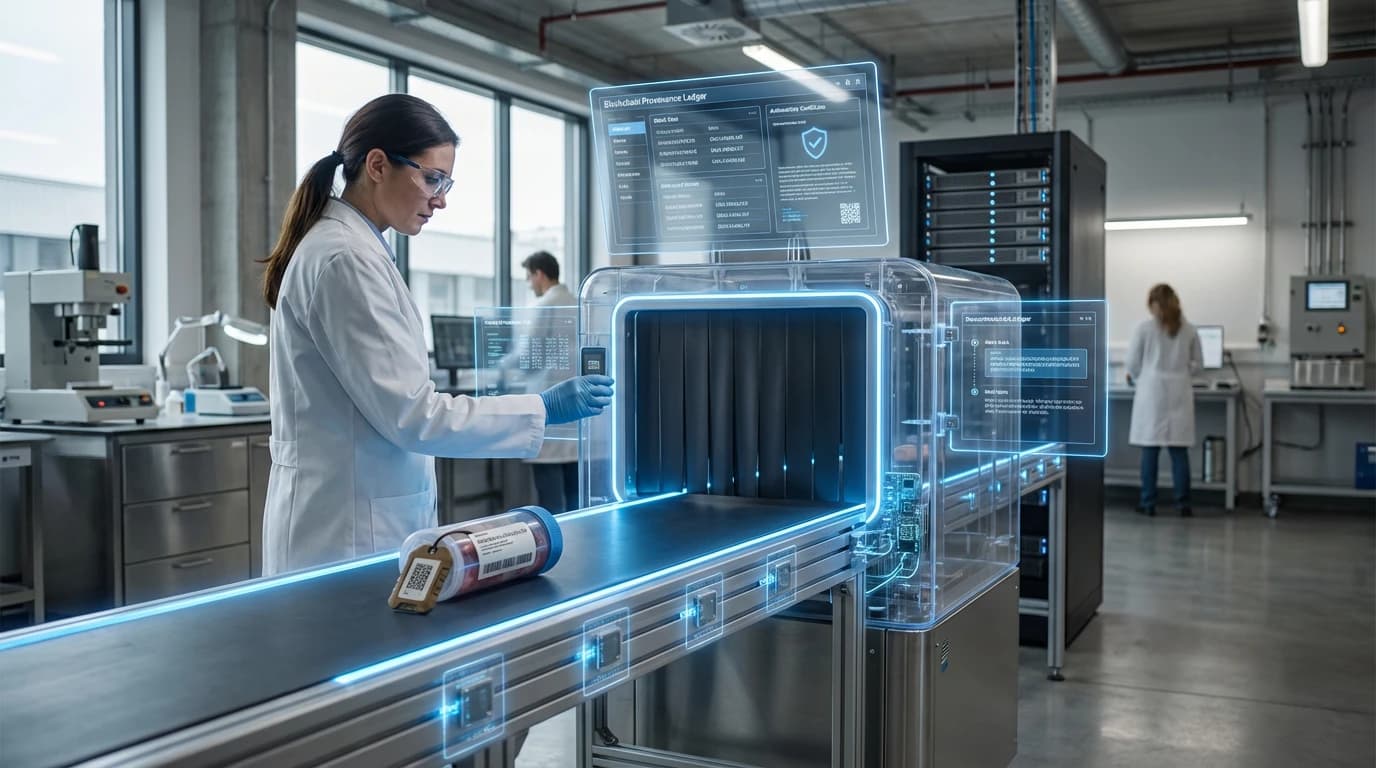
Blockchain provenance ledgers represent a fundamental shift in how supply chains establish and verify the authenticity and journey of goods from origin to end consumer. Unlike traditional tracking systems that rely on centralized databases vulnerable to tampering and single points of failure, blockchain technology creates a distributed ledger where each transaction or movement of goods is recorded as an immutable block of data. This architecture employs cryptographic hashing to link each record to the previous one, creating an unalterable chain of custody that multiple stakeholders can access simultaneously without requiring a trusted intermediary. The technology works by assigning unique digital identifiers to physical products—often through RFID tags, QR codes, or NFC chips—that correspond to entries on the blockchain. As goods move through the supply chain, authorized participants scan these identifiers and record key data points such as location transfers, quality inspections, temperature conditions, or ownership changes directly onto the ledger, creating a comprehensive and verifiable history that cannot be retroactively modified.
The fragmented nature of global supply chains has long created opportunities for fraud, counterfeiting, and opacity regarding product origins and handling conditions. Traditional paper-based documentation and siloed digital systems make it difficult for brands to verify claims about ethical sourcing, for customs authorities to efficiently process shipments, or for consumers to trust the authenticity of premium products. Blockchain provenance ledgers address these challenges by providing a shared source of truth that all authorized parties can access and verify independently. For luxury goods manufacturers, this technology offers a powerful tool against the estimated billions of dollars lost annually to counterfeiting, allowing customers to verify authenticity through simple smartphone scans. In industries where ethical sourcing matters—such as conflict-free minerals, organic agriculture, or fair-trade products—blockchain enables transparent verification of supply chain claims that might otherwise rely on easily falsified certificates. The technology also streamlines cross-border trade by encoding compliance documentation and certifications directly into smart contracts that can automatically trigger customs clearance when predetermined conditions are met, reducing delays and administrative overhead.
Early adoption of blockchain provenance systems has emerged across several industries, with fashion houses implementing solutions to combat counterfeit luxury handbags and watches, while food retailers have deployed blockchain tracking for high-value items like organic produce and premium seafood to verify freshness and origin claims. The diamond industry has similarly embraced this technology to provide conflict-free certification, and pharmaceutical companies are exploring blockchain to combat the dangerous proliferation of counterfeit medications in global markets. However, widespread implementation faces challenges including the need for industry-wide standards, the cost of integrating blockchain systems with existing enterprise software, and the practical difficulties of ensuring that physical scanning and data entry accurately reflect real-world conditions. As interoperability standards mature and integration costs decline, blockchain provenance ledgers are positioned to become increasingly central to supply chain operations, particularly as consumer demand for transparency and regulatory requirements around product traceability continue to intensify. The technology's evolution will likely see greater integration with Internet of Things sensors for automated data capture and artificial intelligence systems for anomaly detection, creating increasingly sophisticated and trustworthy supply chain ecosystems.
Provides supply chain traceability and battery passports to ensure ethical sourcing and recycling verification.
Hosts Hyperledger Indy and Aries, the open-source frameworks that power a significant portion of global SSI projects.
Enterprise blockchain platform focusing on supply chain management and IoT integration for product lifecycle tracking.
Founded by LVMH, Prada, and Cartier to provide a unified blockchain solution for luxury product tracking and authenticity certificates.
Uses blockchain to create digital records of provenance for high-value assets like diamonds, art, and minerals.
A software solution that validates and amplifies sustainability claims using blockchain technology.
A blockchain protocol for tracking responsible mineral sourcing in the supply chain.
Supply chain middleware platform utilizing blockchain for document handling and event tracking.
Published forecasts about this technology, graded against what happened in Hindsight.
Improved Food Provenance Validation
This page is broader than it.
Signals turns a topic into a sourced research record you can inspect and rerun. Your first scan is free, and this one starts with Blockchain Provenance Ledgers already loaded, so edit it or scan as is.