


















Active & Intelligent Packaging
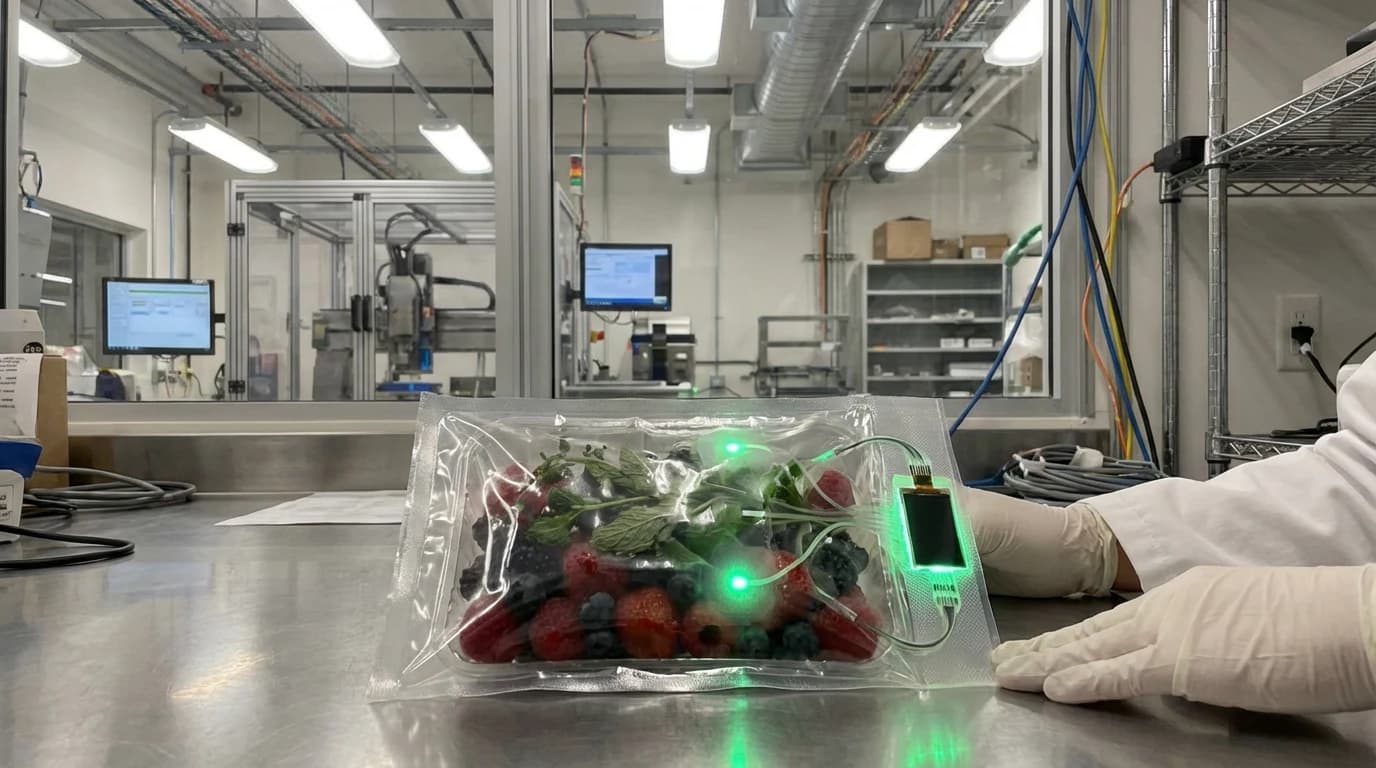
Smart Active Packaging
Packaging that monitors freshness and actively extends shelf life of perishable foods
Smart active packaging represents a significant advancement in food preservation technology, combining passive and active components to both monitor and extend the shelf life of perishable goods. Unlike traditional packaging that merely serves as a barrier, this technology incorporates functional materials such as oxygen scavengers, moisture regulators, and antimicrobial agents directly into the packaging structure. These active components work continuously to create an optimal microenvironment around the food product, slowing degradation processes that lead to spoilage. Additionally, the packaging integrates colorimetric or other visual sensors that respond to specific chemical markers associated with freshness, such as pH changes, volatile organic compounds, or microbial metabolites. These indicators provide real-time, visual feedback about product quality without requiring laboratory testing or specialized equipment.
The food supply chain faces persistent challenges in minimizing waste while ensuring consumer safety, particularly as products move through complex distribution networks spanning multiple temperature zones and handling points. Traditional date labeling systems rely on conservative estimates that often lead to premature disposal of still-edible food, contributing to the billions of tons of food waste generated globally each year. Smart active packaging addresses these inefficiencies by providing objective, product-specific freshness data rather than generic expiration dates. The antimicrobial and scavenging components actively combat the primary mechanisms of food deterioration, potentially extending shelf life by days or even weeks depending on the product. This extension has profound implications for reducing waste at retail and consumer levels, while also enabling longer distribution chains that could connect remote producers with distant markets more effectively.
Research into smart active packaging has progressed from laboratory concepts to commercial pilots across various food categories, particularly in high-value perishables like meat, seafood, and fresh produce. Early implementations have focused on incorporating natural antimicrobial compounds derived from plant extracts or essential oils, addressing consumer preferences for clean-label ingredients. The colorimetric indicators, often based on pH-sensitive dyes or enzymatic reactions, are being refined to provide clearer, more intuitive signals that consumers can easily interpret. Industry analysts note growing interest from retailers seeking to differentiate premium product lines and reduce shrinkage from spoilage. As production costs decline through economies of scale and material innovations, this technology aligns with broader trends toward supply chain transparency, sustainability, and data-driven inventory management. The integration of these packaging systems with digital traceability platforms could eventually enable dynamic pricing models and more precise cold chain monitoring throughout the entire harvest-to-consumer journey.
TRL
6/9Demonstrated
Impact
4/5
Investment
3/5
Category
Hardware
Related Organizations
Provides SmartFresh (1-MCP) technology and digital monitoring solutions to extend produce shelf life during transit and storage.
Developer
Develops sachets and packaging inserts that release active vapor (1-MCP) to slow the ripening process of produce.
Developer
Specializes in modified atmosphere packaging (MAP) that actively regulates humidity and gas composition to extend produce shelf life.
Developer
Develops battery-free IoT Pixels that harvest energy from radio waves to sense and communicate.
Developer
Produces ruggedized tracking hardware, barcode scanners, and RFID readers used in field logistics.
Developer
Produces 'Smart Tags' that use color-changing chemistry combined with barcodes to digitally record temperature breaches.
Developer
Global packaging leader developing active packaging solutions (MaXQ) and films that manage moisture and oxygen transmission.
Developer
Develops paper-based electrical sensors that detect ammonia and other spoilage gases in meat and fish packaging.
Developer
Develops visual freshness sensors (FreshCode) that change color based on aggregate time-temperature exposure.
Developer
Produces smart labels that change color to indicate freshness based on time and temperature or CO2 levels inside the package.
Developer
Produces a time-temperature indicator that shows the actual remaining shelf life of food products based on thermal exposure.
Developer
Creator of the AGELESS oxygen absorber, a pioneering active packaging technology that preserves food freshness.
Developer

Sealed Air
United States · Company
Owner of the Cryovac brand, developing active packaging solutions including oxygen scavengers and odor absorbers for food preservation.
Developer
Manufactures shock, tilt, and temperature indicators (WarmMark, ShockWatch) that attach to packaging to monitor conditions.
Developer
Manufactures smart indicators that visually track time and temperature breaches for perishable goods.
Developer
Develops active packaging sorbent solutions (oxygen, moisture, hydrocarbon) to extend shelf life of food and beverages.
Developer
Develops edible, biodegradable coatings for fruits and vegetables to extend shelf life and reduce plastic packaging.
Developer
Develops plant-derived coatings that growers, suppliers, and retailers use to keep produce fresh longer.
Developer
A global leader in material science that develops active packaging solutions, including moisture and oxygen scavenging technologies.
Developer
Creates an edible, silk-based protective layer that slows down spoilage, acting as an active barrier directly on food.
Developer
Manufactures ultra-low-cost, flexible integrated circuits (FlexICs) that are thinner than a human hair.
Developer
Global printing and materials company developing GL BARRIER films and smart packaging solutions with integrated NFC/RFID.
Developer
Produces Time Temperature Integrative (TTI) labels that monitor the cold chain history of food products.
Developer
Stora Enso
Finland · Company
One of the largest global providers of renewable solutions in packaging, biomaterials, and wooden construction (CLT/LVL).
Developer
Developed 'atma.io', a connected product cloud that assigns unique digital IDs to billions of items, bridging physical tags (RFID/QR) with digital data.
Developer
What was expected
Published forecasts about this technology, graded against what happened in Hindsight.
Intelligent and Active Packaging
Supporting Evidence
Evidence data is not available for this technology yet.
Research this in Signals
Scan Smart Active Packaging for yourself.
Signals turns a topic into a sourced research record you can inspect and rerun. Your first scan is free, and this one starts with Smart Active Packaging already loaded, so edit it or scan as is.