














Cellular Agriculture
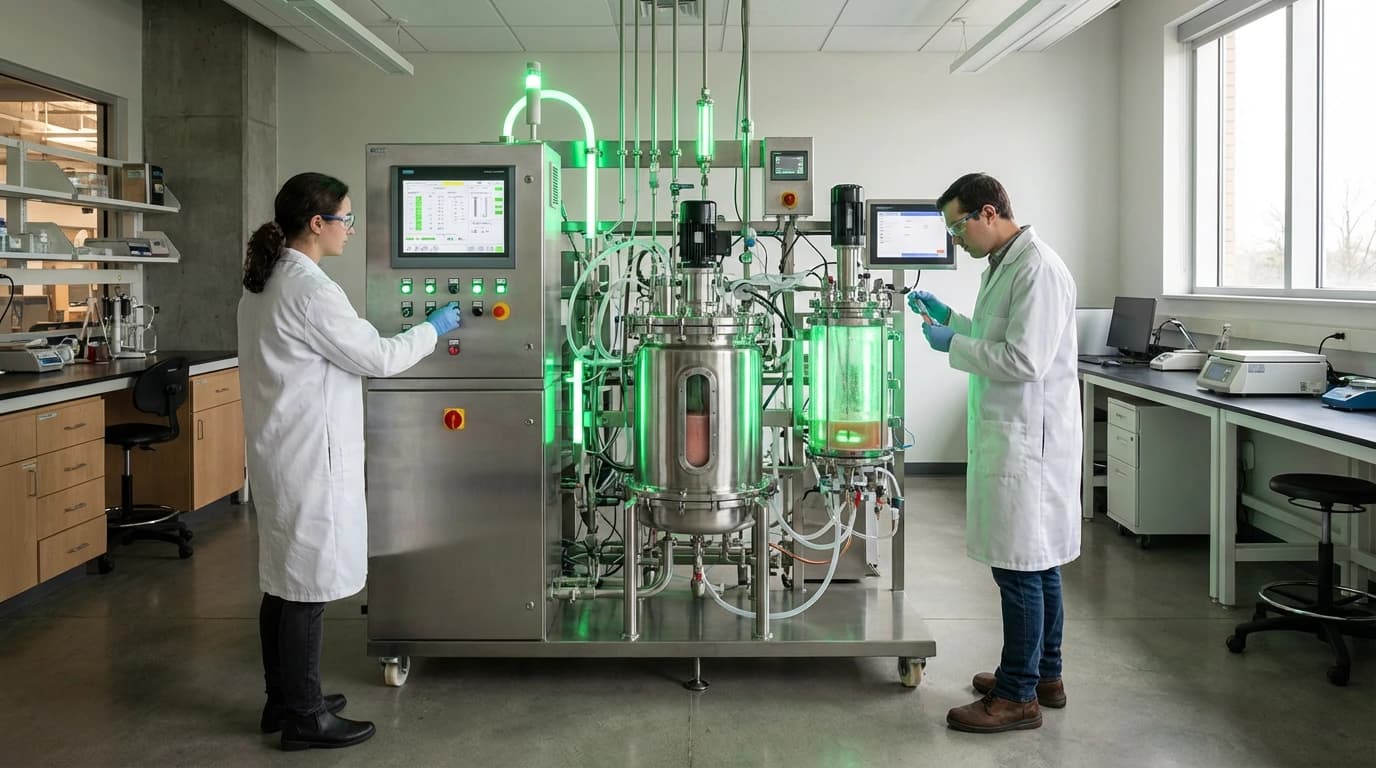
Cellular Agriculture
Growing meat, dairy, and other animal products directly from cells in bioreactors
Cellular agriculture represents a fundamental shift in how animal-based foods are produced, moving from traditional farming to controlled biological manufacturing. This approach involves extracting a small sample of animal cells—typically muscle, fat, or other tissue cells—and cultivating them in bioreactors under carefully controlled conditions. The cells are fed a nutrient-rich growth medium containing proteins, sugars, vitamins, and minerals that support cellular proliferation and differentiation. Through this process, the cells multiply and develop into structured tissues that replicate the composition and characteristics of conventional meat, dairy, or other animal products. The technology draws on principles from regenerative medicine and tissue engineering, adapting them for food production at commercial scale. Unlike plant-based alternatives that mimic animal products, cellular agriculture produces genuine animal tissue without requiring animal slaughter or intensive livestock operations.
The agricultural sector faces mounting pressure from environmental degradation, resource constraints, and growing global protein demand. Traditional livestock farming accounts for significant greenhouse gas emissions, requires vast amounts of land and water, and raises persistent animal welfare concerns. Cellular agriculture addresses these challenges by dramatically reducing the environmental footprint of animal protein production—early assessments suggest potential reductions of up to 90% in greenhouse gas emissions and land use compared to conventional beef production. This technology also offers unprecedented control over the final product's nutritional profile, enabling producers to adjust fat content, enhance beneficial nutrients, or eliminate antibiotics and hormones entirely. For food supply chains, cellular agriculture promises greater resilience against disease outbreaks, climate disruptions, and geographic constraints that plague traditional livestock systems. The approach also opens possibilities for producing exotic or endangered animal products without harvesting wild populations.
Several companies have progressed from laboratory research to pilot-scale production, with regulatory approvals beginning to emerge in select markets. Singapore became the first country to approve cultivated chicken for commercial sale in 2020, followed by the United States granting regulatory clearance to multiple producers in 2023. Current production focuses primarily on ground meat products and processed formats, where the technology can deliver cost-competitive products more readily than whole-cut meats requiring complex tissue architecture. Industry analysts note that achieving price parity with conventional meat remains the critical barrier to widespread adoption, with production costs still significantly higher despite rapid improvements in bioreactor efficiency and growth medium formulation. As the technology matures and scales, cellular agriculture is positioned to become an increasingly important component of diversified food systems, complementing rather than entirely replacing traditional agriculture while offering consumers expanded choices that align with environmental and ethical considerations.
TRL
6/9Demonstrated
Impact
5/5
Investment
5/5
Category
Applications
Related Organizations
Division of Eat Just; the first company to sell cultivated meat commercially (in Singapore).
Developer
A leader in the cultivated meat industry, being the first to receive FDA green light for cultivated chicken in the US.
Developer
Dutch food technology company that created the world's first cultivated beef burger.
Developer
Focuses on growing high-quality cultivated beef steaks using 3D tissue engineering.
Developer
Develops cell-cultured seafood products, specifically focusing on high-value species like bluefin tuna.
Developer
A nonprofit research institute dedicated to advancing the field of cellular agriculture through academic funding.
Researcher
A non-profit think tank working to accelerate alternative protein innovation through open-access research and policy advocacy.
Researcher
Uses opti-ox technology with pluripotent stem cells to produce cultivated pork and beef rapidly.
Developer
The first cell-based meat company in SE Asia, focusing on crustaceans (shrimp, crab, lobster).
Developer
Academic center dedicated to developing the scientific and engineering foundations of cellular agriculture.
Researcher
French company reinventing foie gras through cellular agriculture to offer a cruelty-free alternative.
Developer
Cultivated chicken company operating a production-to-fork restaurant pilot in Tel Aviv.
Developer
The world's largest meat processing company, which acquired BioTech Foods and is building a cultivated meat plant in Spain.
Investor
Australian company creating new food categories using cells from exotic animals (e.g., quail, mammoth DNA).
Developer
What was expected
Published forecasts about this technology, graded against what happened in Hindsight.
Cellular Culture Agriculture
Cultured Proteins
Acellular Meat Production
This page is broader than it.
Cultivated Collagen
This page is broader than it.
Cultivated meat
This page is broader than it.
Cultured Meat
This page is broader than it.
Lab-Grown Meat Is Going Mainstream
This page is broader than it.
Supporting Evidence
Paper
Generation of multitissue cell-cultivated meat via multidirectional differentiation of stable porcine epiblast stem cellsNature Communications · Mar 2, 2026
Development of an efficient approach to produce multitissue engineered meat by directing porcine pregastrulation epiblast stem cells toward muscle, adipose, and endothelium in a serum-free system.
Support 95%Confidence 98%
Paper
A unique spontaneously immortalised cell line from pig with enhanced adipogenic capacitynpj Science of Food · Apr 20, 2025
Report on 'FaTTy', a spontaneously immortalized porcine mesenchymal stem cell line with high adipogenic efficiency, stable for over 200 doublings without genetic modification.
Support 92%Confidence 95%
Article
Cultivated Meat 2026: How Cellular Agriculture Is Moving From Lab to Factory With FDA Approvals and 12,000-Tonne PlantsProgramming Helper Tech · Jan 28, 2026
Reports on the commercial scale-up of cultivated meat, highlighting Believer Meats' FDA and USDA approvals in 2025 and the operation of a 12,000-tonne annual capacity facility.
Support 90%Confidence 85%
Paper
Unravelling bovine preadipocyte differentiation and their three-dimensional cultivation for cellular agriculturenpj Science of Food · Nov 25, 2025
Isolation and characterization of spontaneously immortalized bovine preadipocytes that proliferate for over 100 days and differentiate into fat tissue for cultured meat.
Support 89%Confidence 95%
Paper
Cultured chicken meat developed by structuring cellular spheroids on an edible bacterial nanocellulose bioscaffoldnpj Science of Food · Dec 13, 2025
Research on developing cultured chicken meat by structuring cellular spheroids on edible bacterial nanocellulose bioscaffolds to improve texture and structure.
Support 88%Confidence 95%
Research this in Signals
Scan Cellular Agriculture for yourself.
Signals turns a topic into a sourced research record you can inspect and rerun. Your first scan is free, and this one starts with Cellular Agriculture already loaded, so edit it or scan as is.