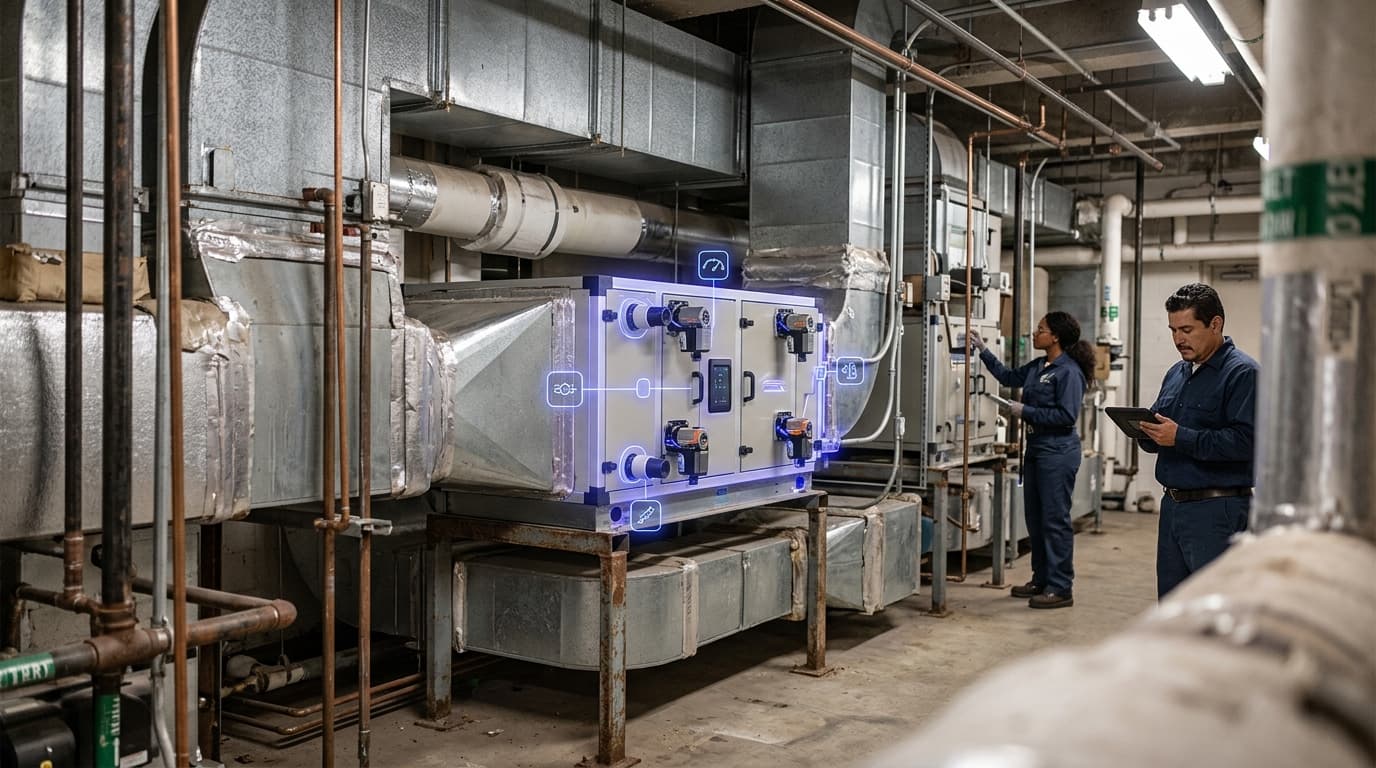
Smart Aeraulic Systems
Smart aeraulic systems use sensors and control logic—increasingly augmented by AI or data-driven models—to regulate ventilation and airflow in buildings in real time. Air quality (CO₂, particulates, volatile organic compounds), occupancy, and outdoor conditions are monitored; dampers, fans, and sometimes filtration are adjusted to maintain targets while minimising energy use. Demand-controlled ventilation reduces over-ventilation in intermittently occupied spaces; integration with building management systems allows coordination with heating, cooling, and occupancy schedules. Applications are especially relevant in schools, hospitals, offices, and high-occupancy spaces where health and productivity depend on air quality and where energy cost is significant.
The technology addresses the trade-off between indoor air quality and energy: fixed ventilation rates often waste energy when occupancy or pollution load is low, while under-ventilation risks health and cognitive performance. Smart aeraulic systems aim to deliver the right amount of fresh air and filtration when and where needed. Post-pandemic attention to airborne transmission has increased interest in better monitoring and control. Standards and certifications for indoor air quality and ventilation are evolving.
Challenges include sensor cost and reliability, model accuracy (e.g. predicting occupancy or pollutant generation), and retrofit complexity in existing buildings. As building codes and tenant expectations shift toward health and sustainability, smart aeraulic systems are likely to become more common in new construction and major renovations, often as part of broader smart building and wellness offerings.
Research this in Signals
Signals turns a topic into a sourced research record you can inspect and rerun. Your first scan is free, and this one starts with Smart Aeraulic Systems already loaded, so edit it or scan as is.