Superhot Rock Geothermal Energy
Geography: Americas · North America · United States
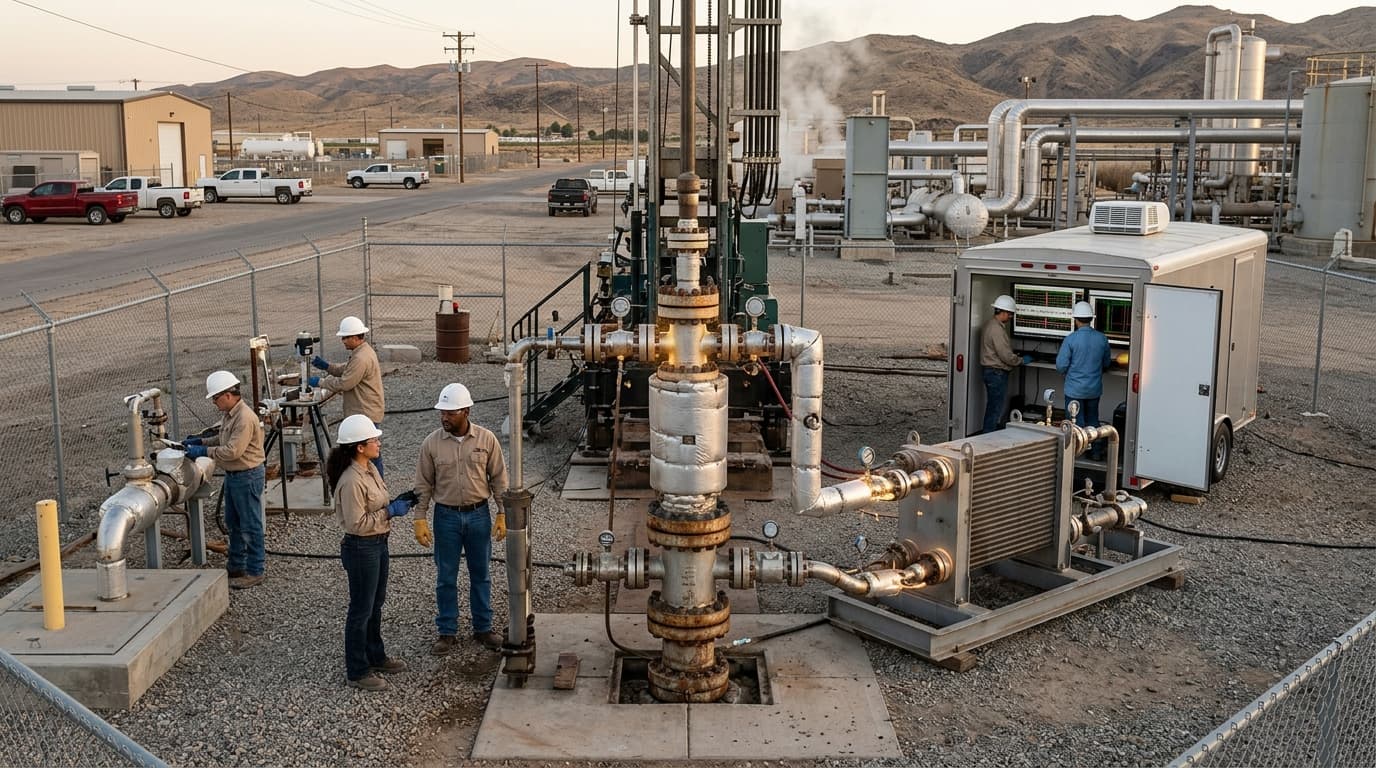
Superhot rock (SHR) geothermal targets subsurface reservoirs at temperatures exceeding 375°C and pressures above 22 MPa, where water exists in a supercritical state with dramatically higher energy density than conventional geothermal fluids. ARPA-E launched the SUPERHOT program in January 2025 with $30 million to develop novel well construction materials, testing facilities, and reservoir heat extraction methods capable of surviving these extreme conditions. The program addresses specific engineering barriers: conventional drilling equipment and well casings degrade rapidly at supercritical temperatures.
This is distinct from enhanced geothermal systems (EGS) like Fervo Energy's projects, which operate at conventional temperatures (150-200°C). SHR wells could deliver 5-10x the power output per well compared to standard geothermal, fundamentally changing the economics. A single superhot well could generate 50 MW or more, compared to 5-10 MW for a conventional geothermal well. The Clean Air Task Force estimates SHR could provide hundreds of gigawatts of clean baseload power in the US alone.
The technology requires breakthroughs in high-temperature drilling fluids, corrosion-resistant casing materials, and downhole instrumentation that can survive supercritical conditions for 15+ years. Iceland's IDDP project demonstrated that superhot wells are physically possible, producing record-breaking steam output. If ARPA-E-funded solutions crack the materials and engineering challenges, SHR could become the ultimate clean energy source — geothermal's energy density at scale, available anywhere deep enough drilling can reach.
Research this in Signals
Signals turns a topic into a sourced research record you can inspect and rerun. Your first scan is free, and this one starts with Superhot Rock Geothermal Energy already loaded, so edit it or scan as is.