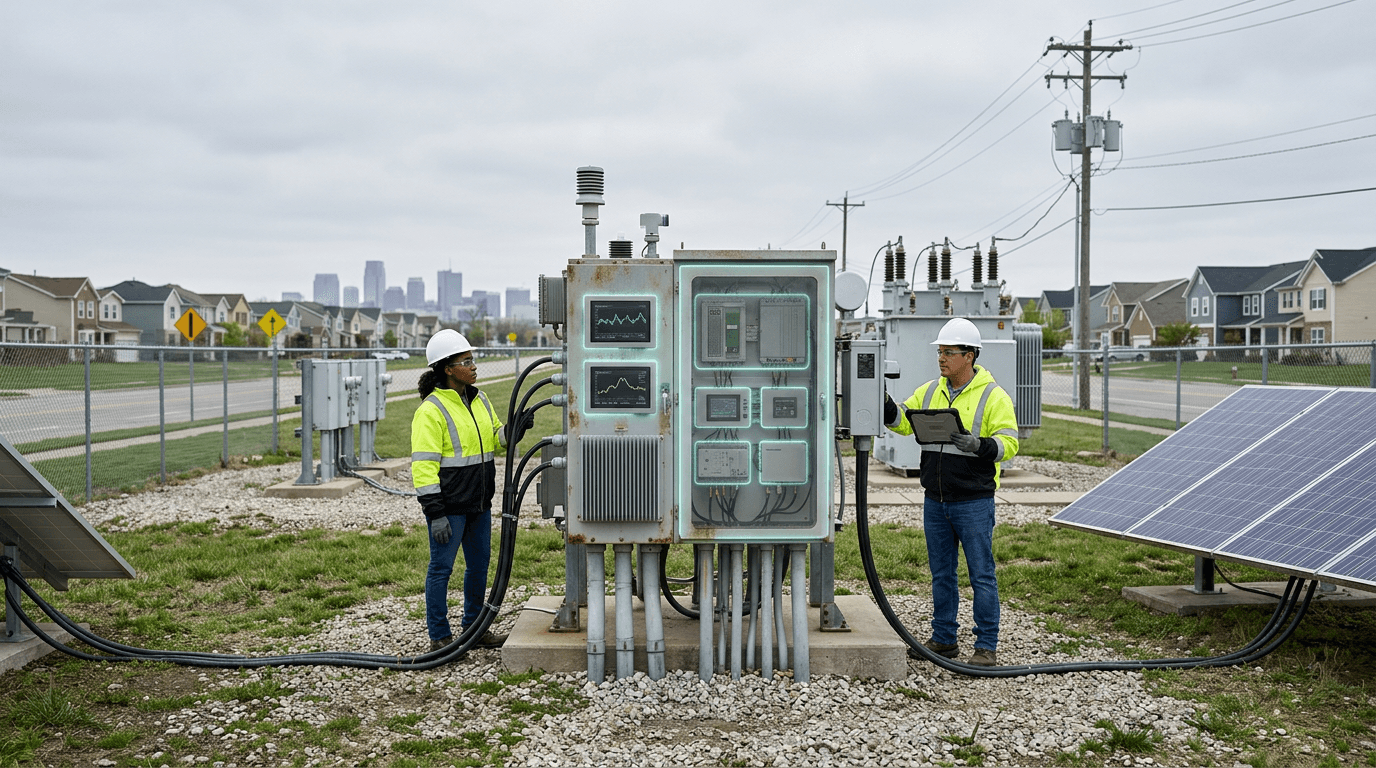
AI-Managed Distributed Energy Grid
Geography: Americas · North America · United States
The US electricity grid is transitioning from centralized one-way power delivery to a distributed network of millions of generators, batteries, and controllable loads. AI-driven energy management platforms coordinate these distributed energy resources (DERs) in real-time: aggregating rooftop solar, scheduling battery discharge, managing EV charging, and responding to grid stress. AutoGrid, Stem, and major utilities deploy these systems at scale.
This transformation is necessary because renewable energy is inherently distributed and variable. A grid with 50%+ renewable penetration must balance supply and demand second-by-second across millions of sources and sinks. Human operators cannot manage this complexity — AI is essential for optimization at the speed and scale required.
The US leads in grid AI due to its deregulated electricity markets (which reward optimization), large installed base of DERs, and software innovation ecosystem. The technology also enables virtual power plants — aggregations of distributed batteries and flexible loads that can respond to grid needs as effectively as a conventional power plant, without building new generation capacity.
Research this in Signals
Signals turns a topic into a sourced research record you can inspect and rerun. Your first scan is free, and this one starts with AI-Managed Distributed Energy Grid already loaded, so edit it or scan as is.