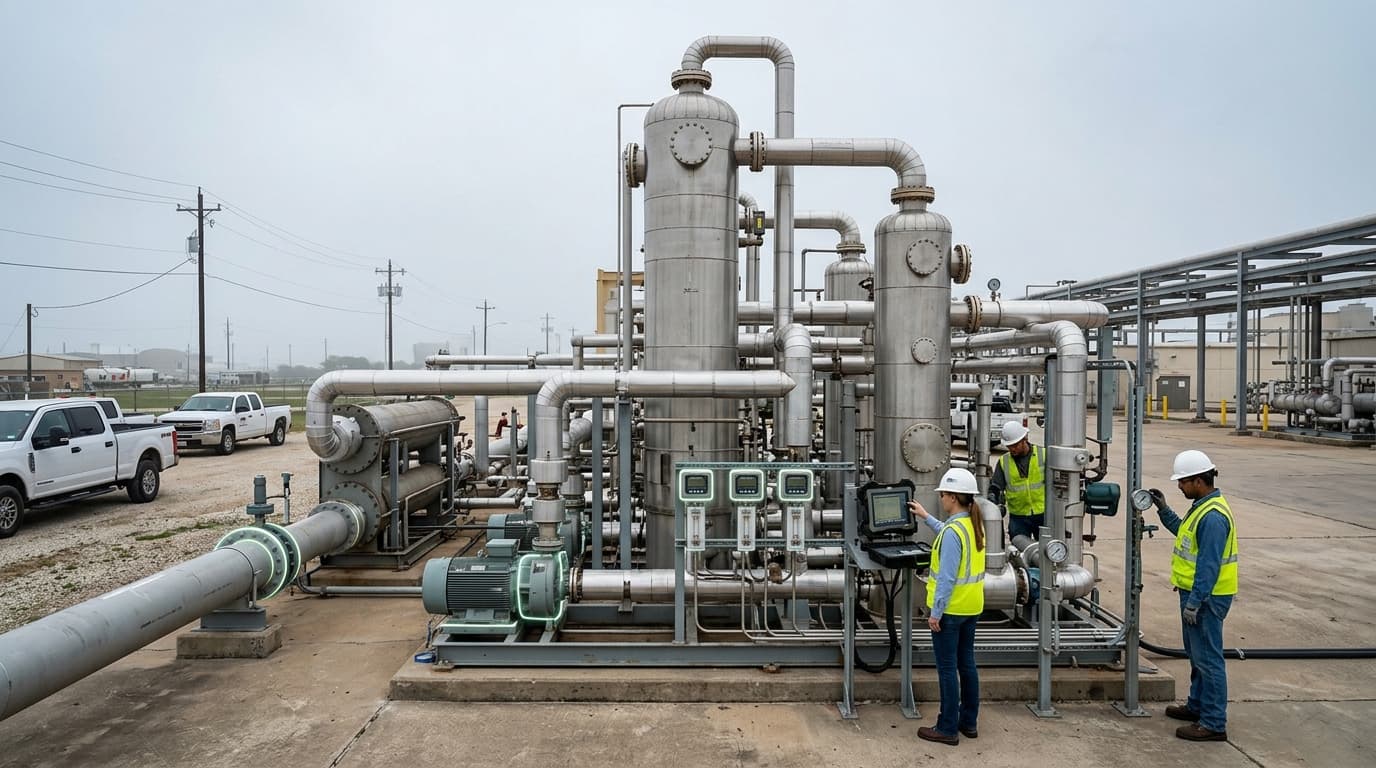
Industrial Carbon Capture & Storage
Geography: Americas · North America · United States
Point-source carbon capture removes CO₂ from industrial emissions before they reach the atmosphere. The US Gulf Coast is developing the world's largest CCS industrial cluster, leveraging existing pipeline infrastructure, deepwater geology suitable for permanent storage, and proximity to heavy industry. Google signed a power purchase agreement with Broadwing's 400 MW gas plant in Illinois that captures 90% of CO₂ emissions.
Industrial CCS addresses emissions from sectors that cannot easily electrify: cement production, steel manufacturing, chemical processing, and natural gas power generation. With restructured 45Q credits providing $85/tonne for geologic storage, CCS projects are increasingly economically viable in the US — particularly when co-located with enhanced oil recovery.
The US has the world's most favorable combination for CCS: geological storage capacity estimated at hundreds of billions of tonnes, extensive pipeline networks, regulatory frameworks, and tax incentives. Hyperscaler demand for clean firm power (for AI data centers) is creating a new market pull for gas plants with CCS, potentially making CCS-equipped natural gas the 'bridge' power source for the AI era.
Research this in Signals
Signals turns a topic into a sourced research record you can inspect and rerun. Your first scan is free, and this one starts with Industrial Carbon Capture & Storage already loaded, so edit it or scan as is.