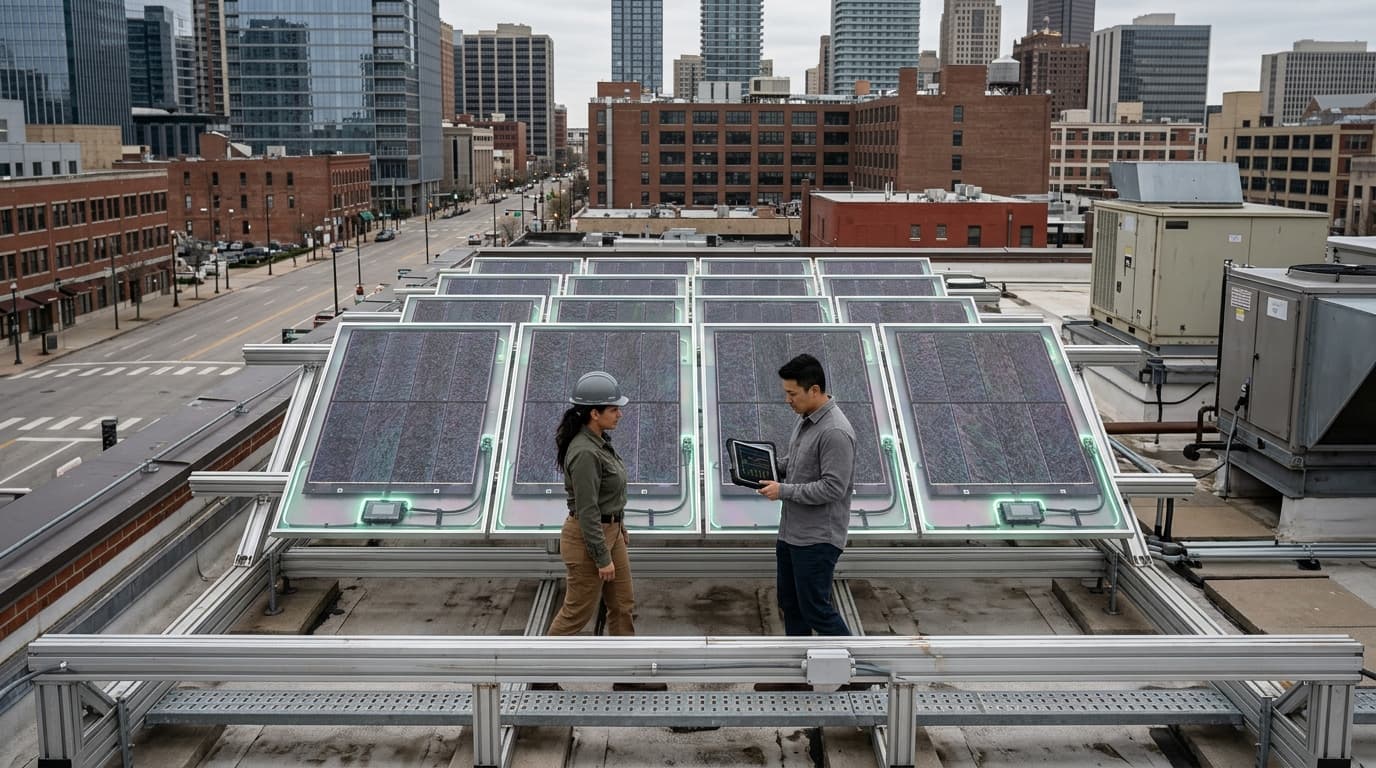
Perovskite-Silicon Tandem Solar Cells
Geography: Americas · North America · United States
Perovskite-silicon tandem solar cells layer a thin perovskite film on top of a conventional silicon cell, capturing different parts of the light spectrum in each layer. This combination has achieved efficiencies exceeding 33% in lab settings — well beyond the ~29% theoretical maximum for silicon alone. Oxford PV and multiple US university labs (MIT, Stanford, NREL) are leading commercialization efforts.
The beauty of tandem cells is that they can be integrated into existing silicon solar manufacturing lines: a thin perovskite layer is deposited on top of standard silicon cells, adding roughly 50% more power output from the same panel area. This means rooftop solar that generates significantly more power without requiring more space, and utility-scale installations that produce more per acre.
Stability remains the key challenge — perovskites degrade faster than silicon when exposed to moisture, heat, and UV light. Recent advances in encapsulation and compositional engineering have extended lifetimes to 20+ years in accelerated testing. If durability targets are met, perovskite tandems could become the default solar technology by the late 2020s, potentially disrupting China's dominance in conventional silicon panel manufacturing.
Research this in Signals
Signals turns a topic into a sourced research record you can inspect and rerun. Your first scan is free, and this one starts with Perovskite-Silicon Tandem Solar Cells already loaded, so edit it or scan as is.