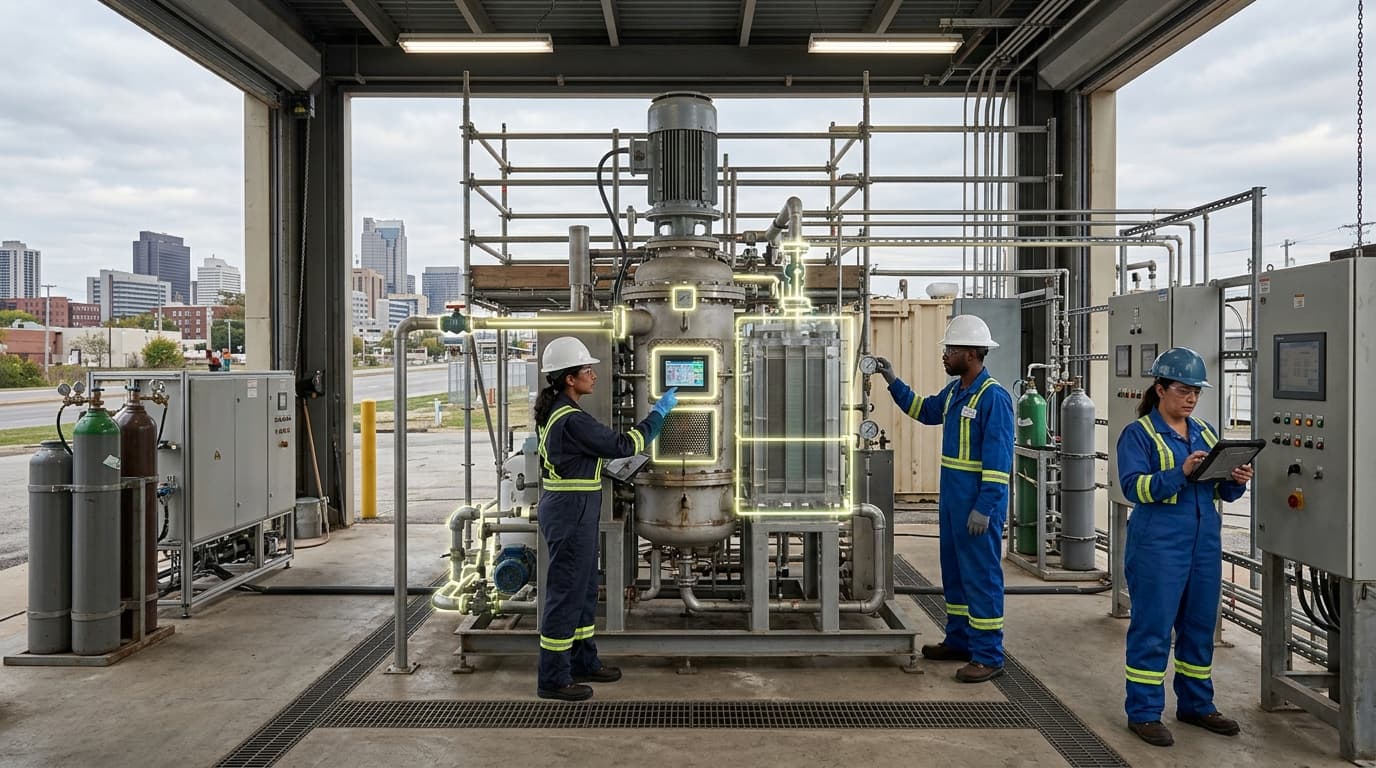
Electrochemical CO₂-to-Fuels Conversion
Geography: Americas · North America · United States
Electrochemical CO₂ conversion uses specialized electrolyzers to split CO₂ and water into carbon monoxide and hydrogen (syngas), which is then catalytically assembled into hydrocarbons — jet fuel, ethylene, methanol, and other chemicals. Twelve (formerly Opus 12), based in Berkeley, California, has raised over $645 million and operates the world's first commercial-scale CO₂-to-chemicals facility. The US Air Force signed an agreement to purchase Twelve's E-Jet synthetic aviation fuel for military aircraft.
This technology addresses the hardest-to-decarbonize sector: aviation. Batteries are too heavy for long-haul flight, and hydrogen requires entirely new aircraft and infrastructure. Synthetic jet fuel made from CO₂ and renewable electricity is chemically identical to conventional jet fuel and works in existing engines and fueling infrastructure — a true drop-in replacement. The same electrochemical process can produce ethylene (the building block for plastics) and other industrial chemicals currently derived from petroleum.
The economics depend on cheap renewable electricity and CO₂ feedstock (from direct air capture or industrial point sources). At current costs, e-fuels are 3-5x more expensive than fossil fuels, but costs are declining rapidly with electrolyzer scaling. The US Air Force's early adoption signals military willingness to pay a premium for fuel that can be produced anywhere with electricity and air, reducing the logistical vulnerability of petroleum-dependent supply chains. DOE and ARPA-E programs are funding catalyst and electrolyzer improvements to close the cost gap.
Research this in Signals
Signals turns a topic into a sourced research record you can inspect and rerun. Your first scan is free, and this one starts with Electrochemical CO₂-to-Fuels Conversion already loaded, so edit it or scan as is.