Direct Lithium Extraction from Geothermal Brines
Geography: Americas · North America · United States
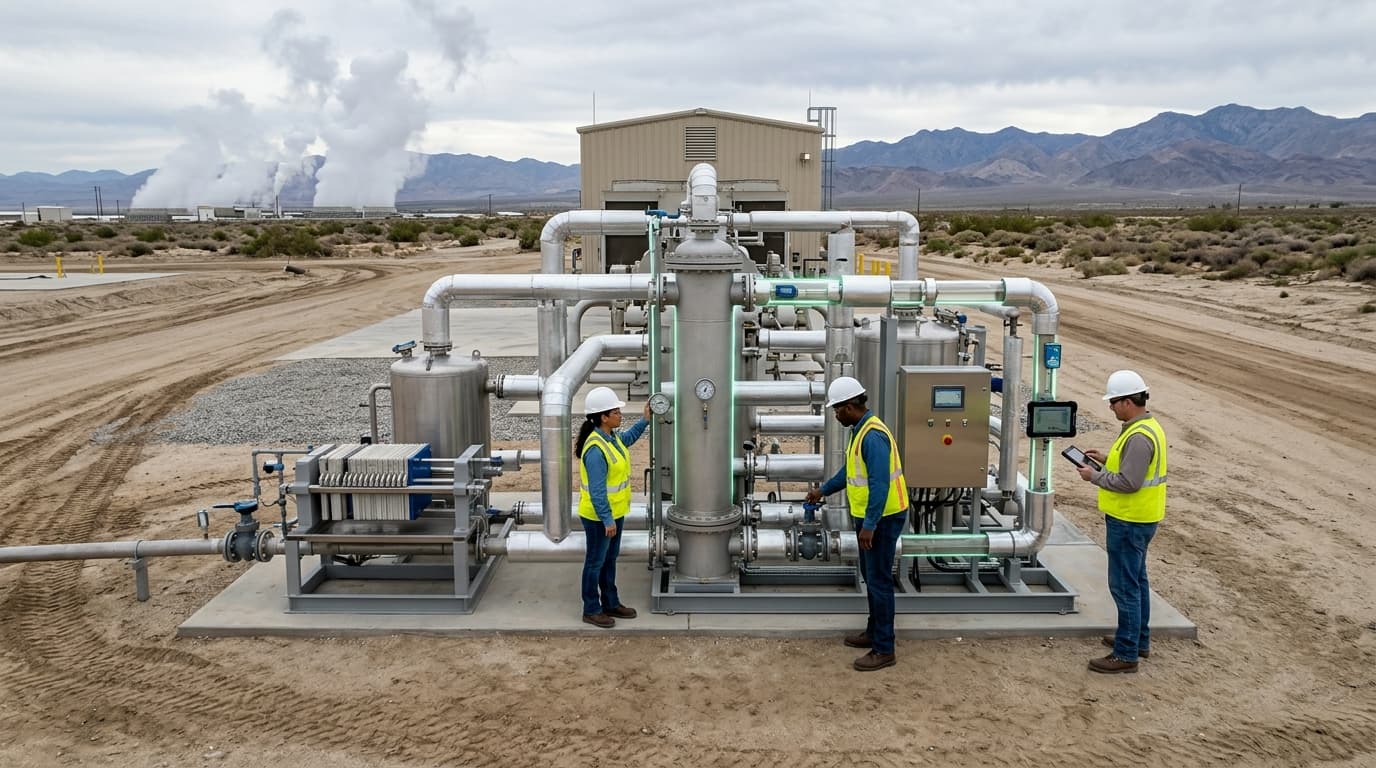
Direct lithium extraction (DLE) uses selective sorbents, ion exchange, or membrane technologies to pull lithium directly from geothermal brines in hours rather than the 12-18 months required by traditional evaporation pond methods. The DOE committed a $1.4 billion loan to EnergySource Minerals for a DLE plant near California's Salton Sea, where geothermal power plants already produce lithium-rich brine as a byproduct. Standard Lithium secured a $225 million DOE grant for its Arkansas DLE project, and Controlled Thermal Resources plans a 2026 IPO for its combined geothermal-lithium operation.
The Salton Sea region alone is estimated to contain enough lithium to supply 375 million EV batteries — potentially making California a global lithium supplier. DLE produces lithium with a dramatically smaller environmental footprint than either South American evaporation ponds (which consume vast quantities of water in arid regions) or Australian hard-rock mining. The technology also recovers other critical minerals like zinc and manganese from the same brine streams, creating multiple revenue sources.
DLE represents a strategic opportunity to co-produce clean energy and critical minerals from the same wells. Geothermal plants generate baseload power while their spent brine yields battery-grade lithium. This synergy could reduce US dependence on lithium imports (currently 50%+ from Chile and Australia) while supporting both the grid and the EV supply chain. The technology is still proving commercial viability at scale, with 2026-2027 as the critical period for first large-scale DLE production.
Research this in Signals
Signals turns a topic into a sourced research record you can inspect and rerun. Your first scan is free, and this one starts with Direct Lithium Extraction from Geothermal Brines already loaded, so edit it or scan as is.