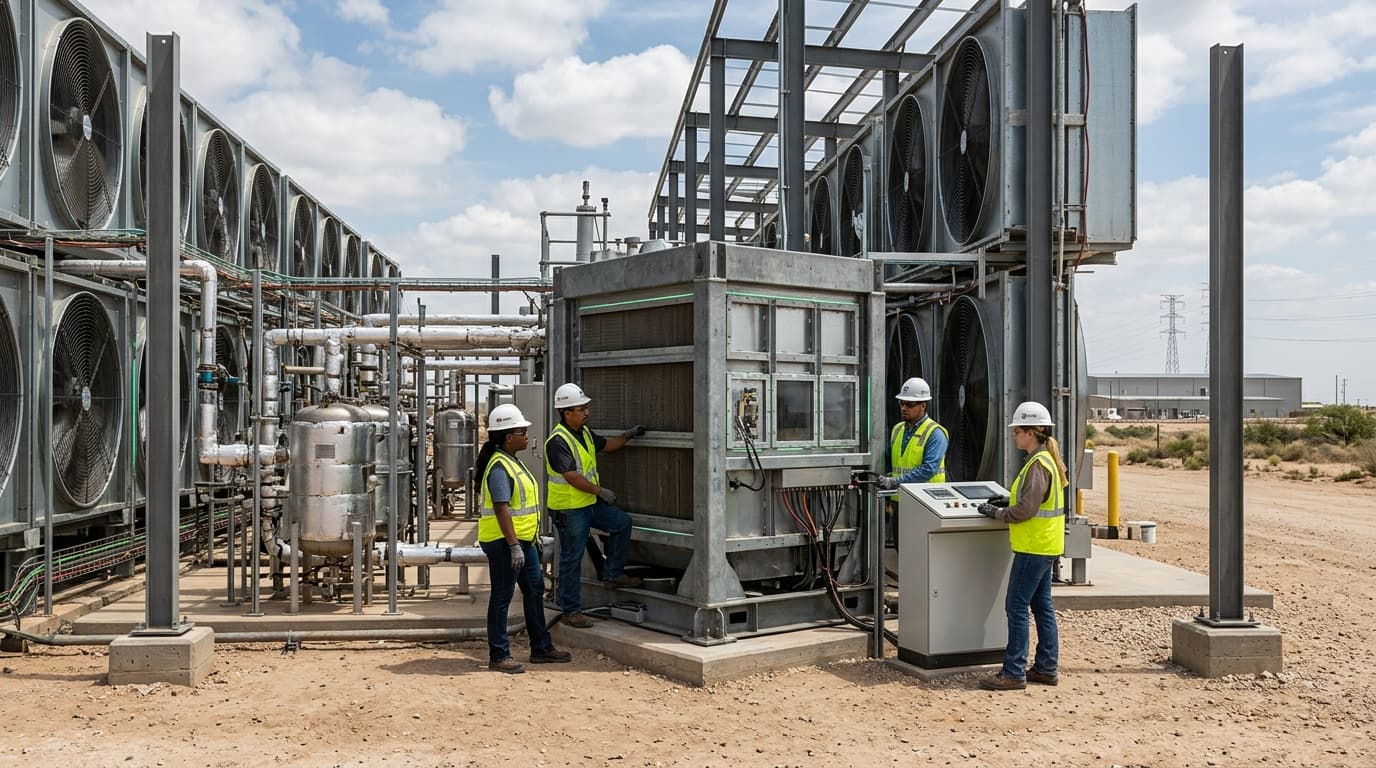
Direct Air Capture (DAC)
Geography: Americas · North America · United States
Direct Air Capture uses chemical processes to extract CO₂ directly from ambient air. Occidental's Stratos facility in the Permian Basin, Texas — the world's largest DAC plant — uses Carbon Engineering's liquid solvent technology. The DOE's Regional Direct Air Capture Hubs program selected two projects (South Texas and Louisiana) for up to $3.5 billion in combined funding. Restructured 45Q tax credits provide up to $130/tonne for DAC with geologic storage.
DAC is the only technology that can reduce atmospheric CO₂ concentrations regardless of emission source. While expensive ($200-400/tonne today vs. $50-100 for point-source capture), DAC is location-flexible and can be sited near geological storage or renewable energy. Coupled with enhanced oil recovery, DAC can be partially self-funding through oil production revenue.
The US leads in DAC deployment due to favorable geology (vast underground storage capacity), energy infrastructure, and policy support (45Q credits). Carbon removal is increasingly viewed as essential alongside emissions reduction — the IPCC estimates that gigatonnes of CO₂ removal will be needed annually to meet climate targets. The technology also serves as a hedge against insufficient emissions reduction in hard-to-abate sectors.
Research this in Signals
Signals turns a topic into a sourced research record you can inspect and rerun. Your first scan is free, and this one starts with Direct Air Capture (DAC) already loaded, so edit it or scan as is.