Low-Energy Electrochemical Desalination
Geography: Americas · North America · United States
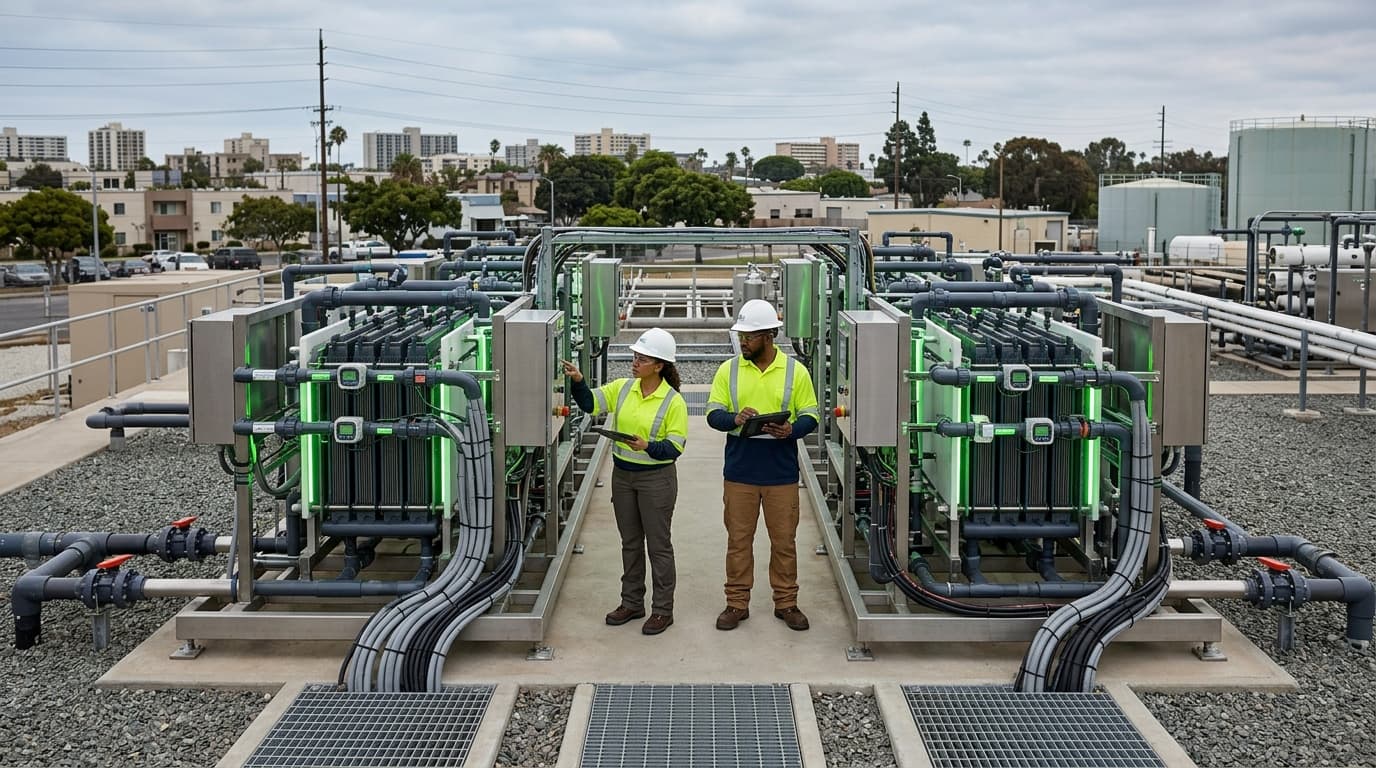
Electrochemical desalination technologies — including advanced electrodialysis (ED), capacitive deionization (CDI), and hybrid ED-RO systems — use electric fields to selectively pull ions from saltwater rather than forcing water through membranes under extreme pressure. MIT, Stanford, and the University of Texas are developing next-generation systems that reduce energy consumption 30-50% below conventional reverse osmosis. Startup companies are commercializing these advances for brackish water treatment, industrial wastewater, and decentralized desalination in water-scarce communities.
The energy advantage is critical because desalination's primary cost is electricity for pressurizing water to 60-80 bar through RO membranes. Electrochemical methods operate at ambient pressure, use less energy for brackish water (which is far more abundant than seawater near population centers), and can be powered directly by intermittent solar energy without batteries — the system simply processes more water when the sun shines. The NSF Convergence Accelerator's Track K (Equitable Water Solutions) has funded multiple teams working on electrochemical water treatment.
Water scarcity affects 2 billion people globally and is becoming a US domestic crisis — the Colorado River basin, California's Central Valley, and the Ogallala Aquifer all face depletion. Low-energy desalination of brackish groundwater (which underlies much of the western US) could provide a sustainable water source where surface water is disappearing. The technology is also relevant for treating produced water from oil and gas operations, lithium brine processing, and industrial wastewater recycling — creating multiple market entry points beyond municipal desalination.
Research this in Signals
Signals turns a topic into a sourced research record you can inspect and rerun. Your first scan is free, and this one starts with Low-Energy Electrochemical Desalination already loaded, so edit it or scan as is.