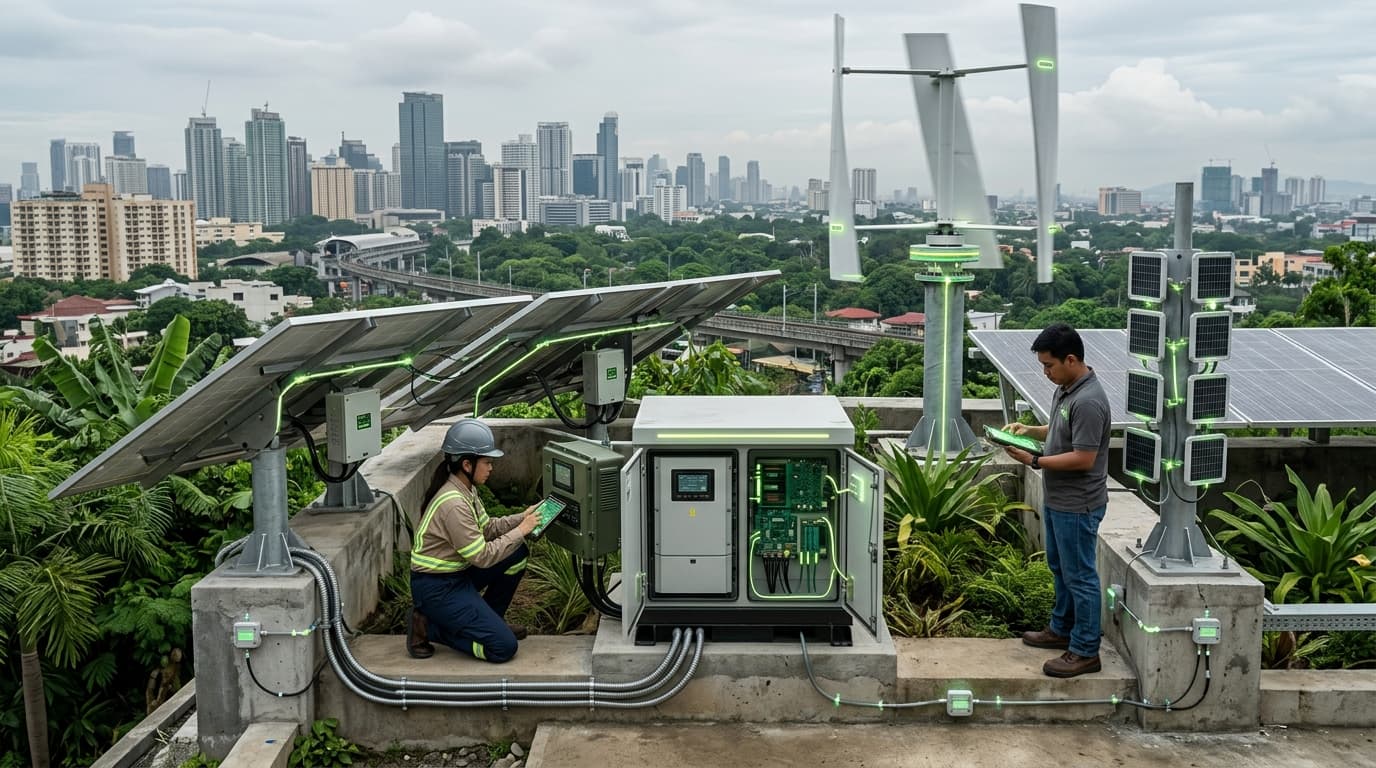
Typhoon-Resilient Renewable Energy Infrastructure
Geography: Asia Pacific · Southeast Asia · Southeast Asia
Philippines — The Philippines averages 20 typhoons per year, including Category 5 events with sustained winds exceeding 250 km/h. This has forced the development of renewable energy infrastructure specifically engineered for extreme weather: reinforced mounting systems, typhoon-rated solar panels, and wind turbines with storm-survival modes. Super Typhoon Fung-Wong in November 2025 provided real-world validation of these systems.
The engineering challenge is fundamental: standard renewable energy infrastructure designed for temperate climates fails in Philippine conditions. Solutions include lower-profile solar arrays, concrete-reinforced mounting, typhoon shutters for wind turbines, and underground cable routing. Each typhoon season generates empirical data that improves the next generation of designs.
This creates exportable engineering knowledge. Every tropical country facing climate change-intensified storms needs the same solutions. Philippine expertise in typhoon-resilient renewables could become a consulting and engineering export — similar to how Dutch water management expertise became a global commodity. The World Bank's $500M+ resilience investment in the Philippines further validates this technology pathway.
Research this in Signals
Signals turns a topic into a sourced research record you can inspect and rerun. Your first scan is free, and this one starts with Typhoon-Resilient Renewable Energy Infrastructure already loaded, so edit it or scan as is.