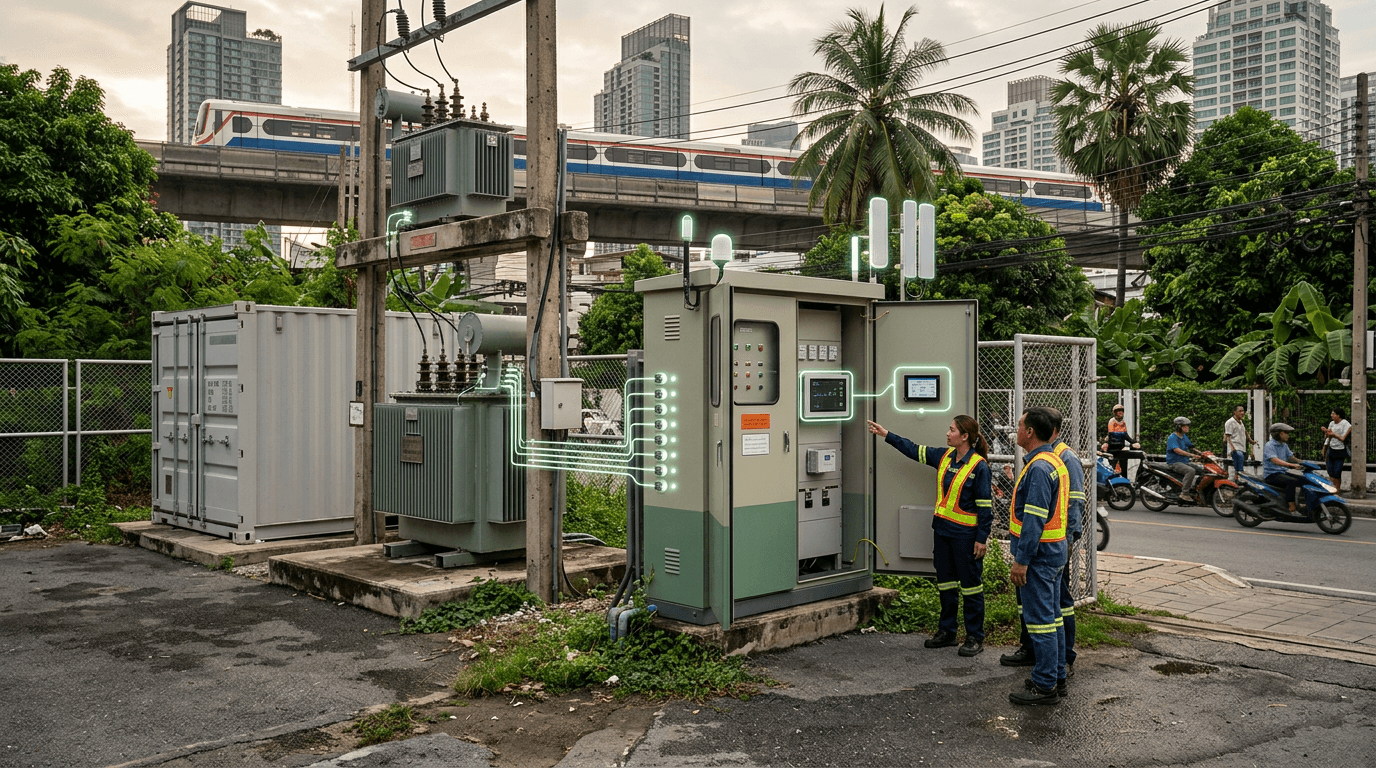
Smart Grid & Demand Response Systems
Geography: Asia Pacific · Southeast Asia · Southeast Asia
Thailand — The Electricity Generating Authority of Thailand (EGAT) is deploying smart grid infrastructure to manage the integration of increasing renewable energy. Advanced metering infrastructure (AMI), demand response programs, and grid-scale battery storage are being installed to handle the intermittency of solar and wind power while maintaining grid stability.
Thailand's Power Development Plan targets 30% renewable energy by 2037, requiring fundamental grid modernization. The challenge is managing the 'duck curve' — solar generation peaks during the day when commercial demand is moderate, then drops at evening peak demand. Battery storage and demand response smooth this mismatch, but require intelligent grid management that Thailand's aging infrastructure wasn't designed for.
The smart grid buildout coincides with the data center boom: the $23 billion in data center investments create predictable, large-scale electricity demand that can be shaped through demand response agreements. If data centers agree to load flexibility (shifting computational workloads based on grid conditions), they become grid stabilization assets rather than pure demand — a symbiotic relationship between digital and energy infrastructure.
Research this in Signals
Signals turns a topic into a sourced research record you can inspect and rerun. Your first scan is free, and this one starts with Smart Grid & Demand Response Systems already loaded, so edit it or scan as is.