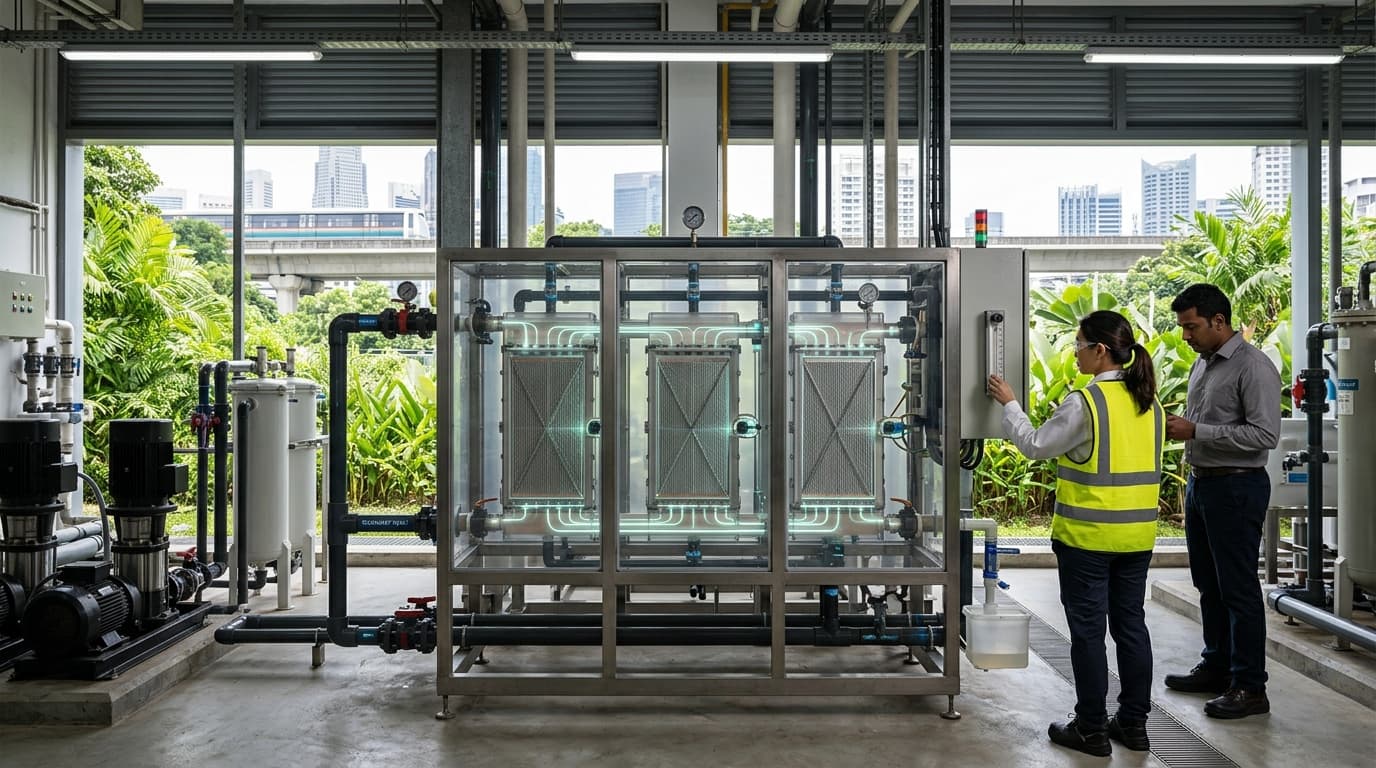
Low-Energy Desalination Membrane Technology
Geography: Asia Pacific · Southeast Asia · Southeast Asia
Singapore — Beyond NEWater, Singapore is investing in next-generation desalination technologies to reduce the energy cost of seawater treatment. PUB (the national water agency) and NUS are developing biomimetic membranes inspired by aquaporin proteins, electrochemical desalination systems, and advanced oxidation processes that could cut energy consumption by 30-50% compared to conventional reverse osmosis.
Desalination currently costs roughly 3x more energy than water recycling (NEWater), making it Singapore's most expensive water source. If next-generation membranes achieve the targeted energy reduction, desalination becomes economically competitive with recycling — giving Singapore true water independence without relying on Malaysia's water supply agreements.
The global market for desalination technology exceeds $20 billion annually and is growing as climate change stresses freshwater supplies. Singapore's decades of operational experience, combined with cutting-edge membrane research, positions it as a global leader in water technology IP. The business model is licensing and consulting rather than water export — selling the knowledge to build water infrastructure worldwide.
Research this in Signals
Signals turns a topic into a sourced research record you can inspect and rerun. Your first scan is free, and this one starts with Low-Energy Desalination Membrane Technology already loaded, so edit it or scan as is.