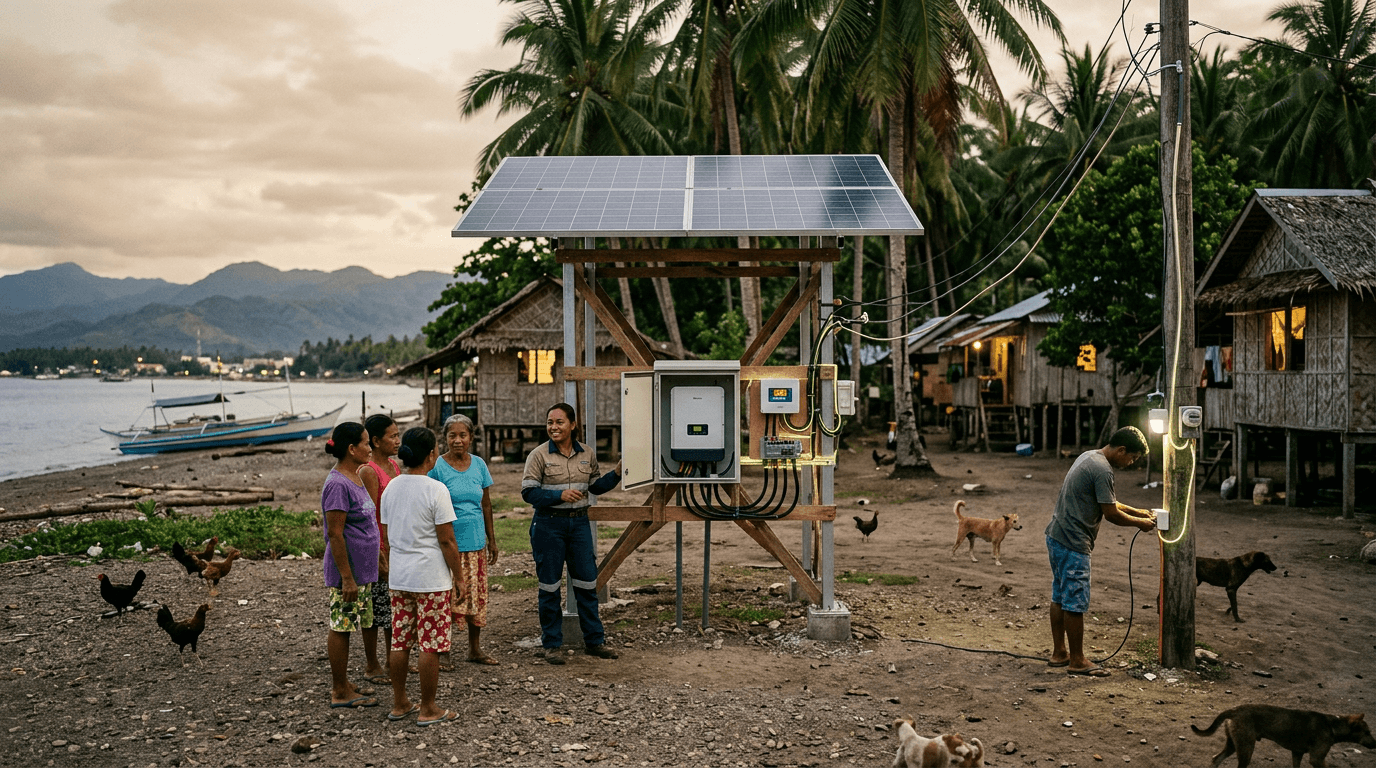
Solar Mini-Grid Island Electrification
Geography: Asia Pacific · Southeast Asia · Southeast Asia
Philippines — The Philippine archipelago's 7,641 islands present a unique electrification challenge: extending the national grid to every island is economically prohibitive. Solar-battery mini-grids — standalone systems combining solar panels, lithium-ion batteries, and smart inverters — provide electricity to communities that have never had grid access. The Department of Energy's mini-grid program targets 100% electrification.
Modern mini-grids use IoT-enabled management platforms that monitor battery state-of-charge, optimize load distribution, and enable mobile phone-based pay-as-you-go billing. The combination of declining solar costs, improving battery technology, and mobile payment integration makes island mini-grids economically viable without subsidies in many locations.
The Philippine model is directly applicable to Indonesia (17,000 islands), Pacific Island nations, and coastal communities globally. The engineering challenge — designing systems that withstand typhoons, saltwater corrosion, and extreme humidity — produces ruggedized solar-battery systems that are more resilient than any temperate-climate equivalent. Philippine mini-grid expertise is becoming an exportable technology package for tropical island electrification worldwide.
Research this in Signals
Signals turns a topic into a sourced research record you can inspect and rerun. Your first scan is free, and this one starts with Solar Mini-Grid Island Electrification already loaded, so edit it or scan as is.