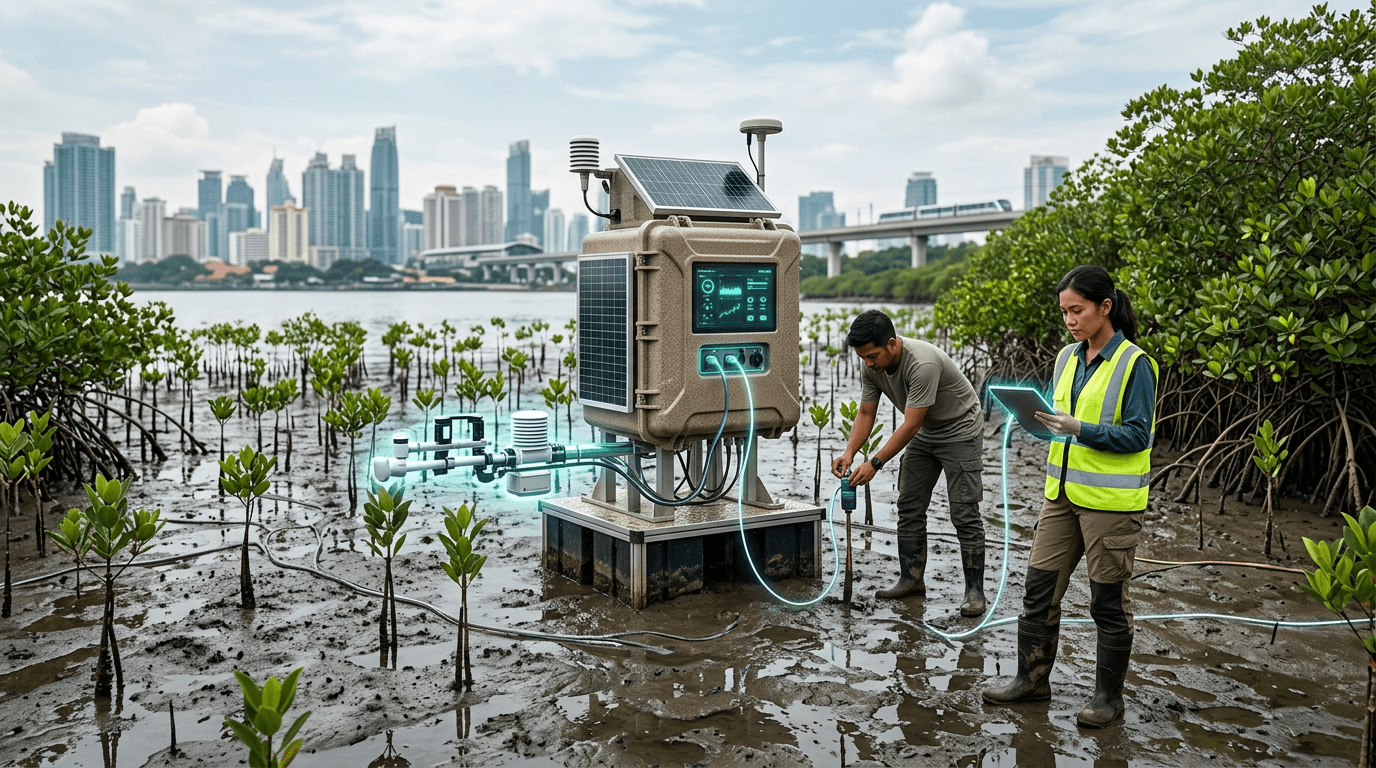
Mangrove Restoration & Blue Carbon Technology
Geography: Asia Pacific · Southeast Asia · Southeast Asia
Indonesia — Indonesia contains approximately 23% of the world's mangrove forests — the single largest national mangrove endowment. Mangroves store 3-5x more carbon per hectare than terrestrial forests, making them the most efficient natural carbon sequestration system on Earth. Indonesia's national mangrove restoration target of 600,000 hectares (set in 2021) deploys satellite monitoring, drone planting, and community-based management.
Mangrove restoration generates high-value blue carbon credits that command premium prices on voluntary carbon markets. Singapore's Climate Impact X exchange is a natural marketplace for these credits. The monitoring technology — combining satellite imagery, drone surveys, and ground-truth verification — creates transparent, high-integrity carbon credits that meet international verification standards (Verra, Gold Standard).
The co-benefits extend beyond carbon: mangroves protect coastlines from storm surges (critical in a typhoon and tsunami-prone region), support fisheries (serving as nursery habitat for commercially important species), and prevent coastal erosion. Indonesia's mangrove program is arguably the world's most cost-effective climate adaptation investment, simultaneously addressing emissions, coastal protection, food security, and biodiversity.
Research this in Signals
Signals turns a topic into a sourced research record you can inspect and rerun. Your first scan is free, and this one starts with Mangrove Restoration & Blue Carbon Technology already loaded, so edit it or scan as is.