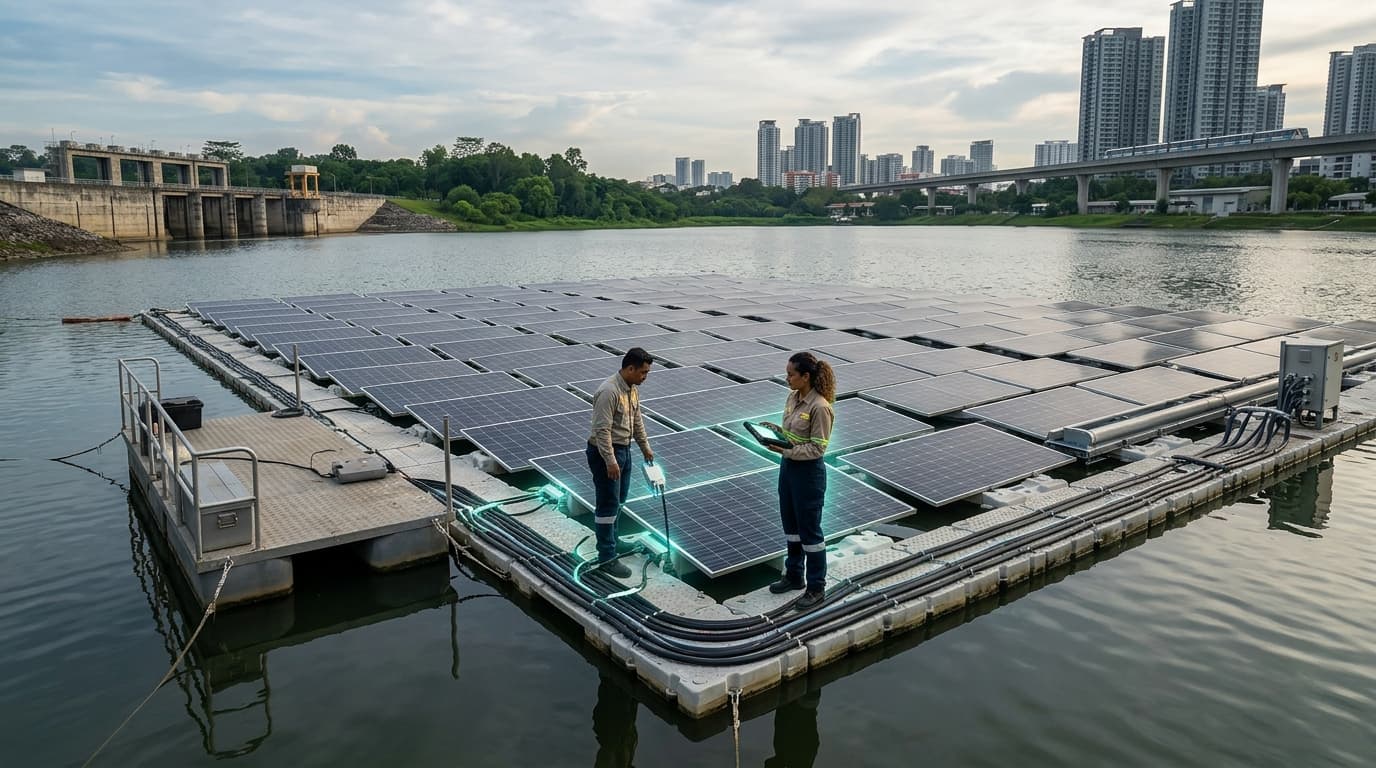
Floating Solar on Reservoirs & Hydropower Dams
Geography: Asia Pacific · Southeast Asia · Southeast Asia
Thailand & Indonesia — Southeast Asia is pioneering floating photovoltaic (FPV) systems on hydropower reservoirs, leveraging existing grid connections and water cooling to boost solar panel efficiency by 5-10%. Thailand's Sirindhorn Dam hosts one of the world's largest floating-hydro solar hybrid systems. Indonesia is deploying FPV across its extensive reservoir network to meet renewable energy targets.
The dual benefit is compelling: floating panels generate electricity while reducing reservoir evaporation (critical in drought-prone regions), and the water body provides natural cooling that extends panel lifespan. The existing grid connection from the hydropower dam eliminates the most expensive part of solar deployment — transmission infrastructure.
For land-scarce tropical countries, floating solar solves the competing land-use challenge. Unlike ground-mounted solar that competes with agriculture, FPV uses otherwise unproductive water surfaces. As Southeast Asia targets aggressive renewable energy goals (Indonesia: 23% renewables by 2025, Thailand: 30% by 2037), floating solar on the region's thousands of reservoirs and dams could contribute significant capacity without land conflicts.
Research this in Signals
Signals turns a topic into a sourced research record you can inspect and rerun. Your first scan is free, and this one starts with Floating Solar on Reservoirs & Hydropower Dams already loaded, so edit it or scan as is.