Floating Offshore Wind
Geography: Asia Pacific · East Asia · South Korea
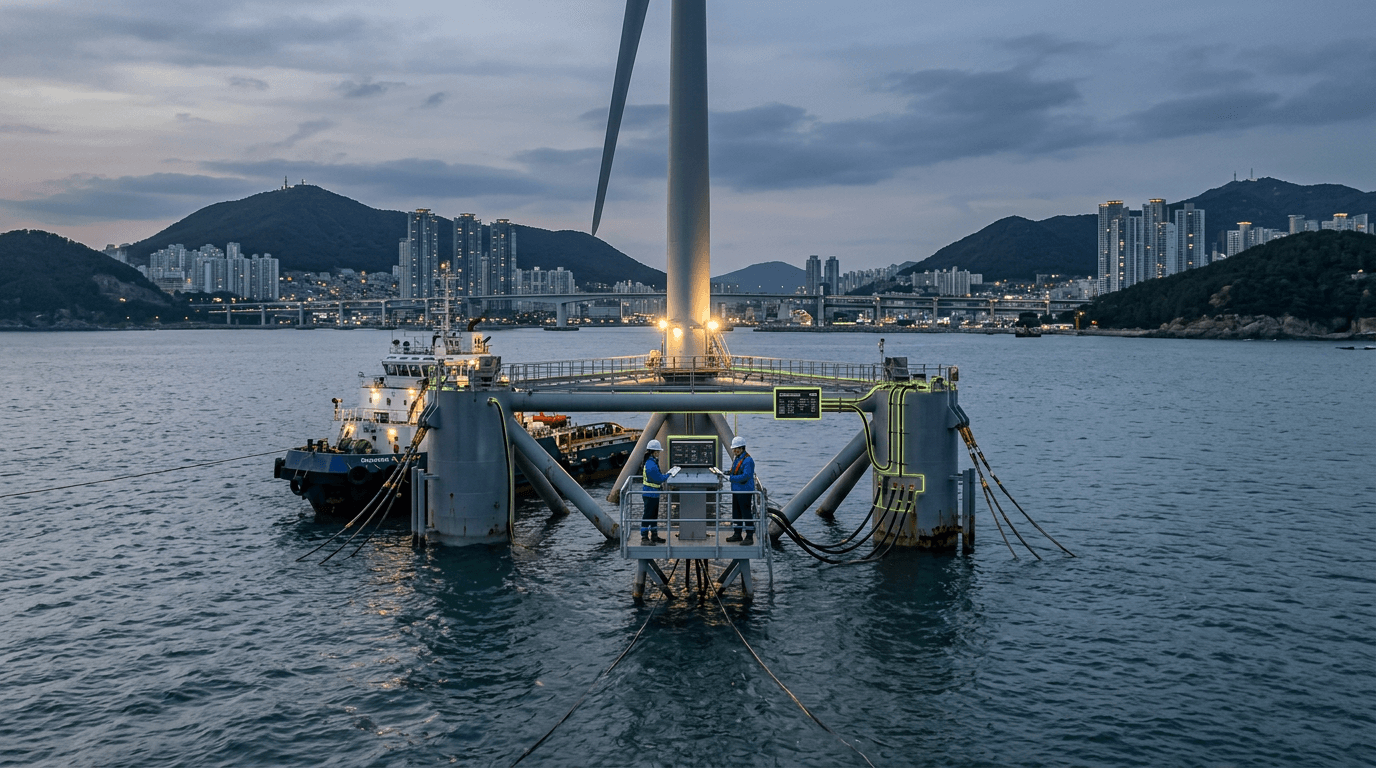
South Korea's offshore wind target of 14.3 GW by 2030 includes significant floating wind capacity in deep waters off the southern and eastern coasts. HD Hyundai Heavy Industries, Samsung Heavy Industries, and local developers are adapting their deepwater vessel and offshore platform expertise to manufacture floating wind turbine foundations — semi-submersible and spar-type structures that enable wind turbines in waters too deep for fixed-bottom foundations.
Korea's shipyards are uniquely positioned for floating offshore wind because the manufacturing challenges — welding large steel structures, managing complex offshore logistics, operating heavy-lift cranes — are identical to shipbuilding competencies they've mastered over decades. HD Hyundai's Ulsan shipyard can fabricate floating foundations at a scale and cost that most competitors cannot match.
The Ulsan Floating Offshore Wind Project (1.5 GW) is the flagship development, with Korea's largest companies (SK, Hanwha, HD Hyundai) competing for manufacturing contracts. If Korean shipyards successfully pivot to floating wind foundation manufacturing, they add a new revenue stream that offsets cyclical volatility in commercial ship orders while leveraging existing infrastructure and workforce.
Research this in Signals
Signals turns a topic into a sourced research record you can inspect and rerun. Your first scan is free, and this one starts with Floating Offshore Wind already loaded, so edit it or scan as is.