National Hydrogen Economy
Geography: Asia Pacific · East Asia · South Korea
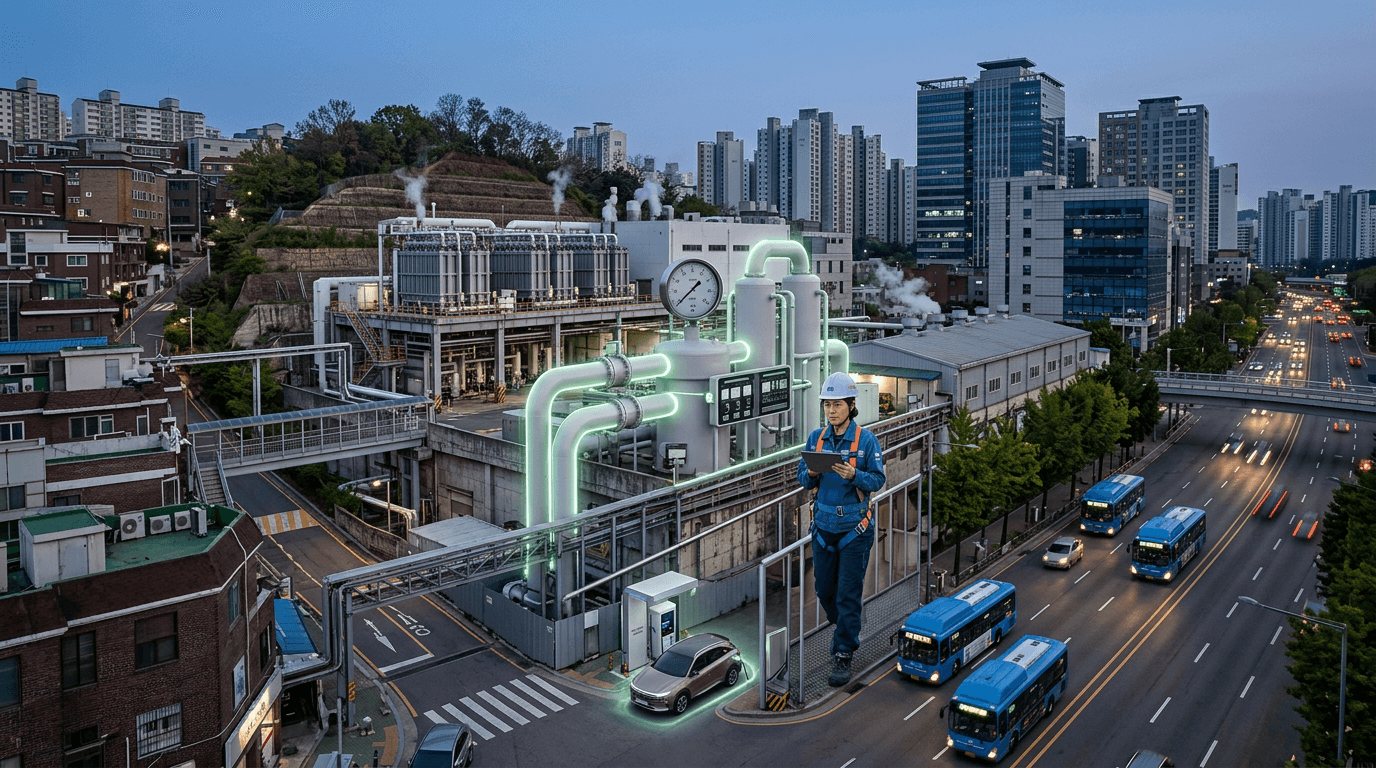
South Korea's Hydrogen Economy Roadmap, launched in 2019, targets 6.2 million fuel cell vehicles, 1,200 hydrogen refueling stations, and 15 GW of fuel cell power generation by 2040. The country already has the most hydrogen fuel cell buses in operation globally. Hyundai's NEXO SUV is the world's best-selling hydrogen fuel cell vehicle, and Hyundai operates the world's only mass-production fuel cell system factory in Guangzhou.
Korea's hydrogen bet is strategic: the country imports 94% of its energy and has limited renewable energy potential (small land area, high population density). Hydrogen — potentially imported as ammonia from Australia or the Middle East — offers a path to energy security that solar and wind alone cannot provide. The government has backed this with tax incentives, mandated hydrogen blending in gas networks, and created special hydrogen economic zones in Ulsan and Incheon.
Hyundai Motor Group is the anchor of the hydrogen ecosystem, developing everything from passenger vehicles to hydrogen-powered trucks, ships, and urban air mobility vehicles. The $6.3B AI/robotics/hydrogen hub announced in 2025 underscores how central hydrogen is to Hyundai's long-term strategy alongside robotics and autonomous driving.
Research this in Signals
Signals turns a topic into a sourced research record you can inspect and rerun. Your first scan is free, and this one starts with National Hydrogen Economy already loaded, so edit it or scan as is.