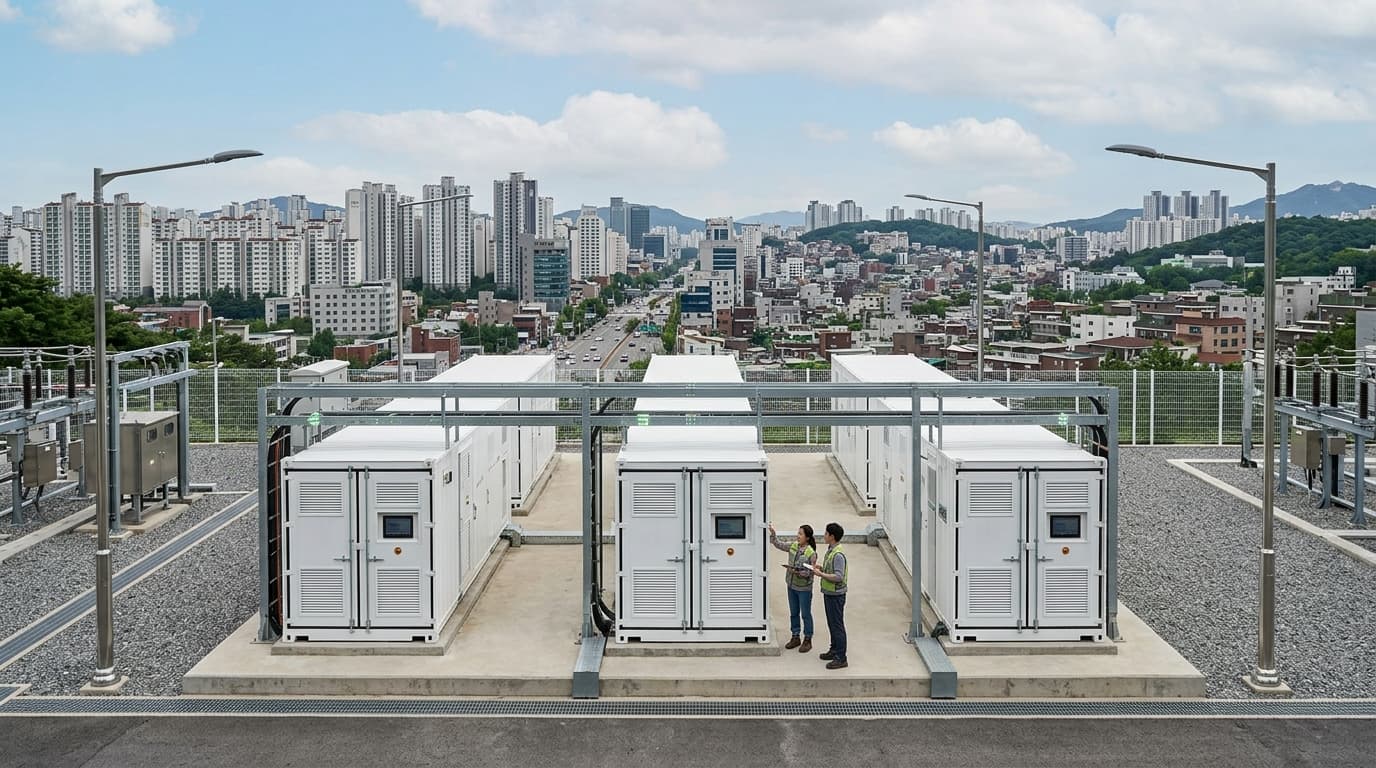
Grid-Scale Energy Storage Systems
Geography: Asia Pacific · East Asia · South Korea
LG Energy Solution has shipped over 70 GWh of energy storage systems globally, making it one of the largest ESS suppliers in the world alongside CATL and BYD. The company transitioned to LFP (lithium iron phosphate) chemistry for stationary storage in 2024, offering lower cost and improved safety over NMC chemistry. Samsung SDI supplies ESS cells to major system integrators including Fluence and Wärtsilä.
Grid-scale storage is essential for renewable energy integration — batteries smooth the intermittency of solar and wind, provide frequency regulation, and defer expensive grid upgrades. Korea's battery makers bring automotive-grade manufacturing quality and scale to the ESS market, offering high reliability that utility customers demand.
The ESS market is projected to grow 5x by 2030 as global renewable deployment accelerates. Korean companies face intense competition from Chinese LFP producers (CATL, BYD) on cost, but compete on quality, safety certifications, and bankability — many Western utilities and project financiers prefer Korean-certified cells for insurance and liability reasons.
Research this in Signals
Signals turns a topic into a sourced research record you can inspect and rerun. Your first scan is free, and this one starts with Grid-Scale Energy Storage Systems already loaded, so edit it or scan as is.