Smart Grid Systems for Renewable Integration
Geography: Americas · South America · Latin America
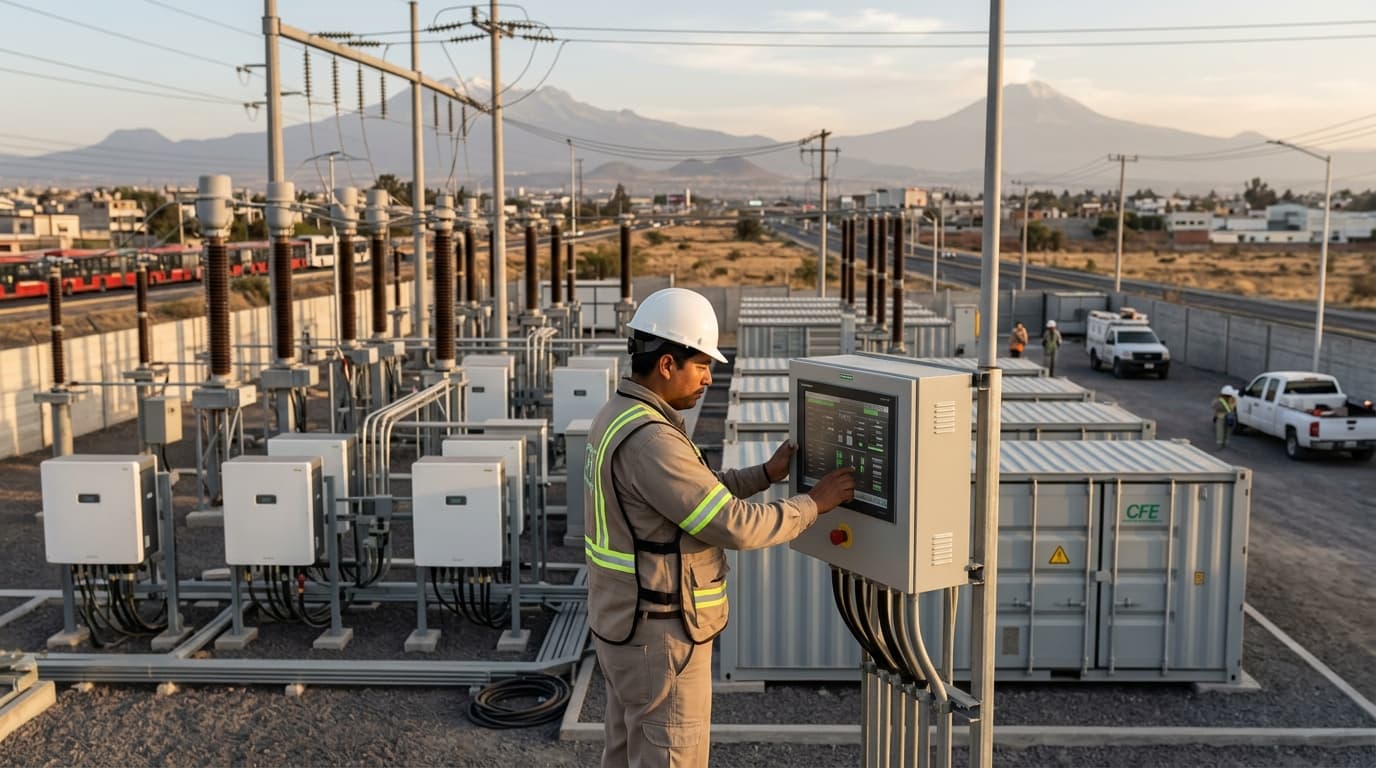
Mexico's electrical grid, operated by CFE (Federal Electricity Commission), faces the challenge of integrating rapidly growing renewable generation — particularly solar in the northern deserts and wind in the Isthmus of Tehuantepec — into a grid designed for centralized thermal generation. Smart grid technologies being deployed include advanced SCADA (Supervisory Control and Data Acquisition) systems, phasor measurement units for real-time grid stability monitoring, and grid-scale battery storage to manage intermittency.
The technical challenges are Mexico-specific: long transmission distances from renewable-rich northern and southern regions to the central demand centers, limited interconnection capacity between regional grids, and an aging transmission infrastructure. Solutions include flexible AC transmission systems (FACTS), high-voltage direct current (HVDC) corridors under study for north-south power transfer, and distributed battery storage at substations to provide frequency regulation.
The energy transition in Mexico is politically complex — the current administration has favored CFE's thermal generation over private renewables — but the economic fundamentals favor solar and wind. Mexico's solar irradiance in Sonora and Chihuahua rivals the world's best, and grid modernization is essential whether the generation mix shifts slowly or rapidly. The technology investment in smart grid infrastructure pays off under any energy policy scenario.
Research this in Signals
Signals turns a topic into a sourced research record you can inspect and rerun. Your first scan is free, and this one starts with Smart Grid Systems for Renewable Integration already loaded, so edit it or scan as is.