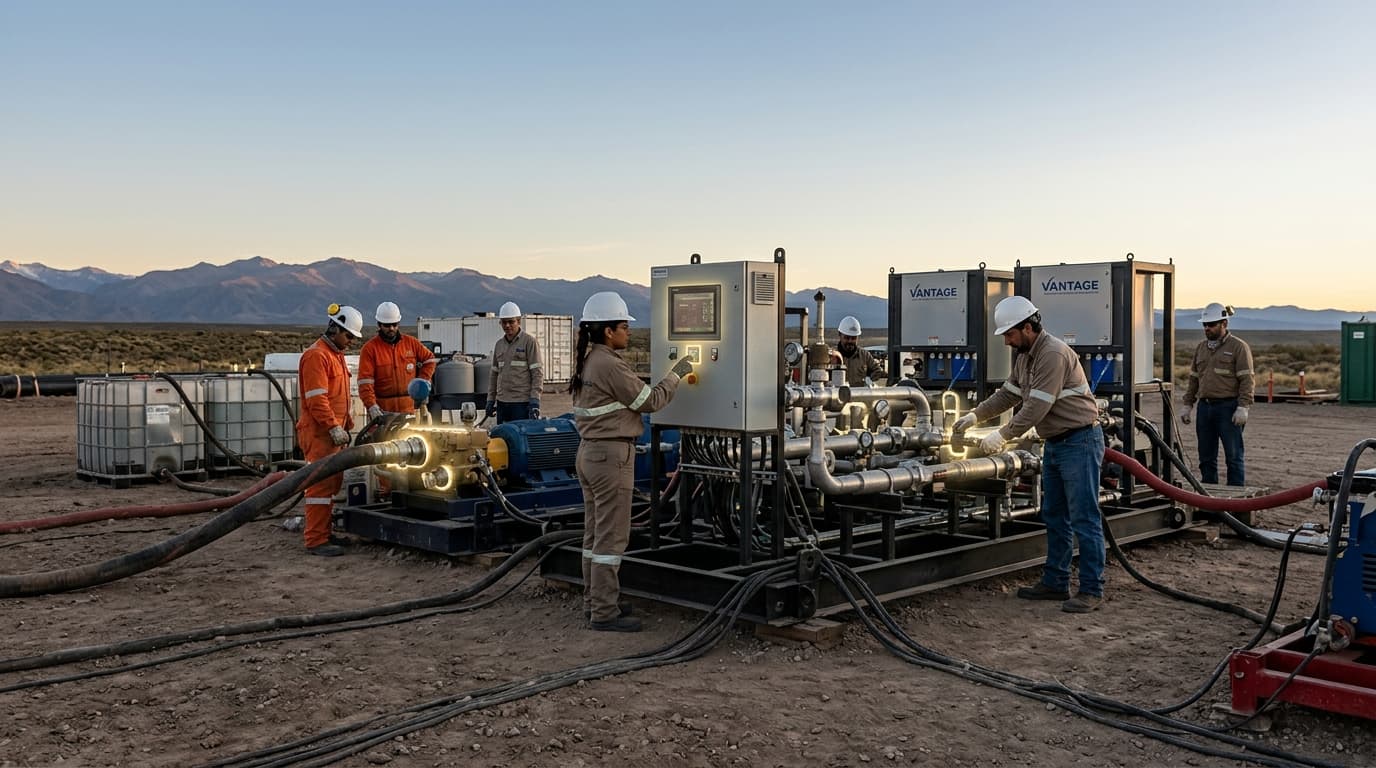
Vaca Muerta Adapted Fracking Technology
Geography: Americas · South America · Latin America
Vaca Muerta ("Dead Cow"), a 30,000 km² shale formation in Neuquén province, holds the world's second-largest shale gas reserves and fourth-largest shale oil reserves according to the EIA. After a decade of development since YPF and Chevron's 2013 pilot agreement, Argentina has adapted North American hydraulic fracturing technology to Vaca Muerta's unique geology — thicker pay zones (up to 450 meters vs. typical U.S. shale at 30–60 meters), higher reservoir pressures, and different clay mineralogy. Argentine and international operators have developed extended-reach horizontal wells exceeding 3,000 meters with 40+ frac stages, achieving initial production rates competitive with the Permian Basin at significantly lower well costs ($8–12 million vs. $10–15 million in West Texas).
The formation's development has accelerated dramatically since 2022, driven by Argentina's desperate need for export revenue and the global energy supply crunch following the Ukraine conflict. Production has surged past 400,000 barrels of oil equivalent per day, with YPF, Pan American Energy, Vista Energy, and Tecpetrol leading operations. Critical infrastructure investments — the Vaca Muerta Sur oil pipeline (enabling 400,000+ bbl/d export capacity by 2026), the Néstor Kirchner gas pipeline (increasing domestic gas transport), and LNG export terminal projects at Bahía Blanca — are finally catching up to wellhead production capacity. Argentina has shifted from a net energy importer to a net exporter for the first time in over a decade.
Strategically, Vaca Muerta is one of the most consequential energy developments in the Southern Hemisphere. At full development, it could supply 1+ million bbl/d of oil and significant LNG exports, positioning Argentina as a major energy exporter and transforming the country's chronic balance-of-payments problem. The formation's development has created a domestic oilfield services ecosystem — Argentine firms like Tenaris (tubulars), Tecna (engineering), and TGS (pipelines) — that reduces dependence on Halliburton and Schlumberger. The key risk remains Argentina itself: currency controls, export taxes, regulatory unpredictability, and periodic political lurches have historically deterred the scale of foreign investment needed to fully unlock the play. Yet momentum is undeniable — Vaca Muerta is now producing regardless of Buenos Aires politics.
Research this in Signals
Signals turns a topic into a sourced research record you can inspect and rerun. Your first scan is free, and this one starts with Vaca Muerta Adapted Fracking Technology already loaded, so edit it or scan as is.