Indigenous Nuclear Fuel Fabrication
Geography: Americas · South America · Latin America
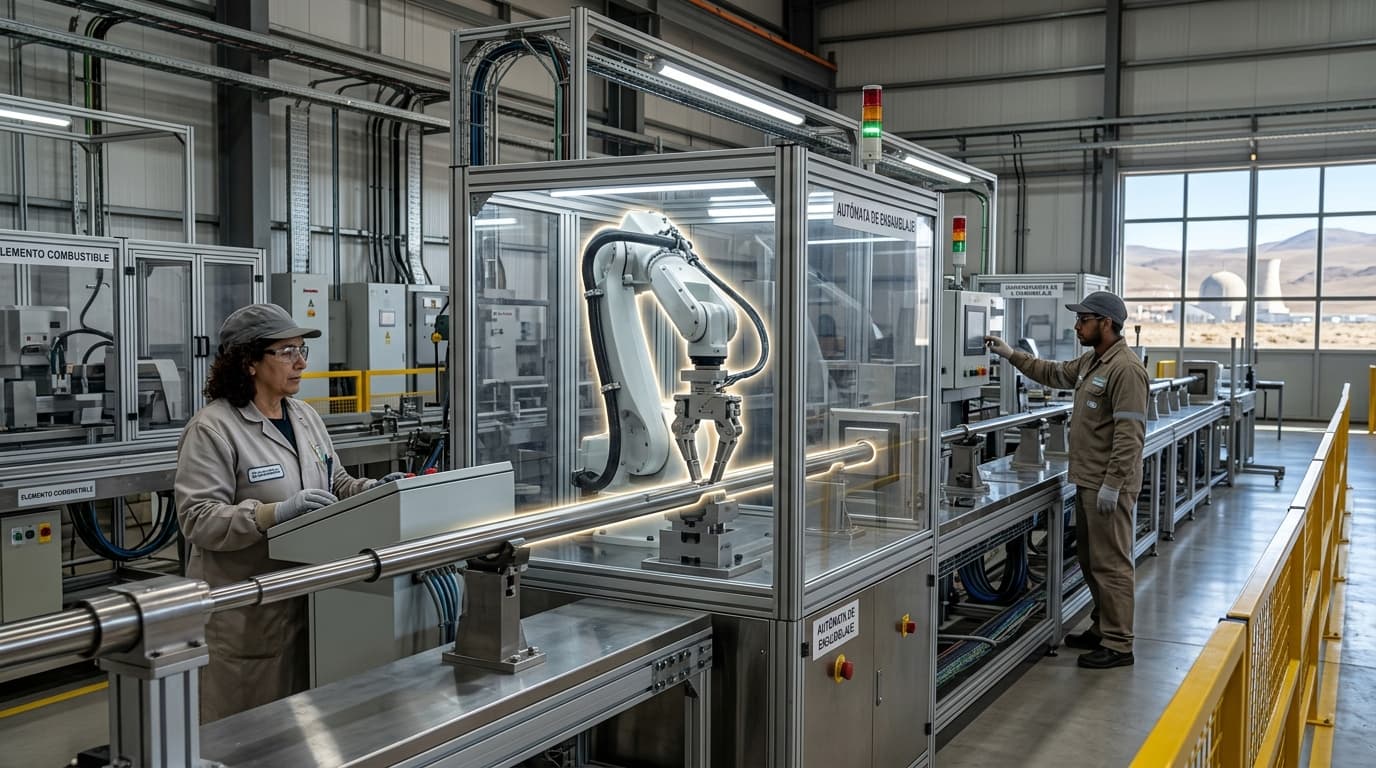
Argentina possesses one of the most complete indigenous nuclear fuel cycles outside the major nuclear powers. CNEA and its subsidiary CONUAR fabricate nuclear fuel assemblies for Argentina's three operating power reactors (Atucha I, Atucha II, Embalse) using domestically-mined uranium. The country operates a gaseous diffusion uranium enrichment plant at Pilcaniyeu, a uranium conversion facility, and the heavy water production plant at Arroyito — essential for the CANDU-type and PHWR reactors in Argentina's fleet.
The technology encompasses the full chain: uranium exploration and mining in Mendoza and other provinces, yellowcake processing, UF6 conversion, low-enrichment uranium (up to 20% for research reactors), fuel pellet sintering, cladding fabrication, and final fuel assembly integration. Argentina also operates research reactors built by INVAP, which has exported research reactor technology to Australia, Egypt, Algeria, and other countries.
This nuclear fuel cycle sovereignty is strategically significant in an era of renewed global interest in nuclear energy. Very few countries — the US, Russia, China, France, UK, Japan, India, and Argentina — possess the full spectrum of nuclear fuel cycle capabilities. Argentina's ability to fuel its own reactors independent of foreign suppliers provides energy security and positions CNEA/INVAP as technology partners for developing nations seeking nuclear power. The AUKUS submarine deal, which denied Argentina its planned nuclear submarine partnership with Australia, highlighted both the capability and the geopolitical sensitivity of Argentine nuclear technology.
Research this in Signals
Signals turns a topic into a sourced research record you can inspect and rerun. Your first scan is free, and this one starts with Indigenous Nuclear Fuel Fabrication already loaded, so edit it or scan as is.