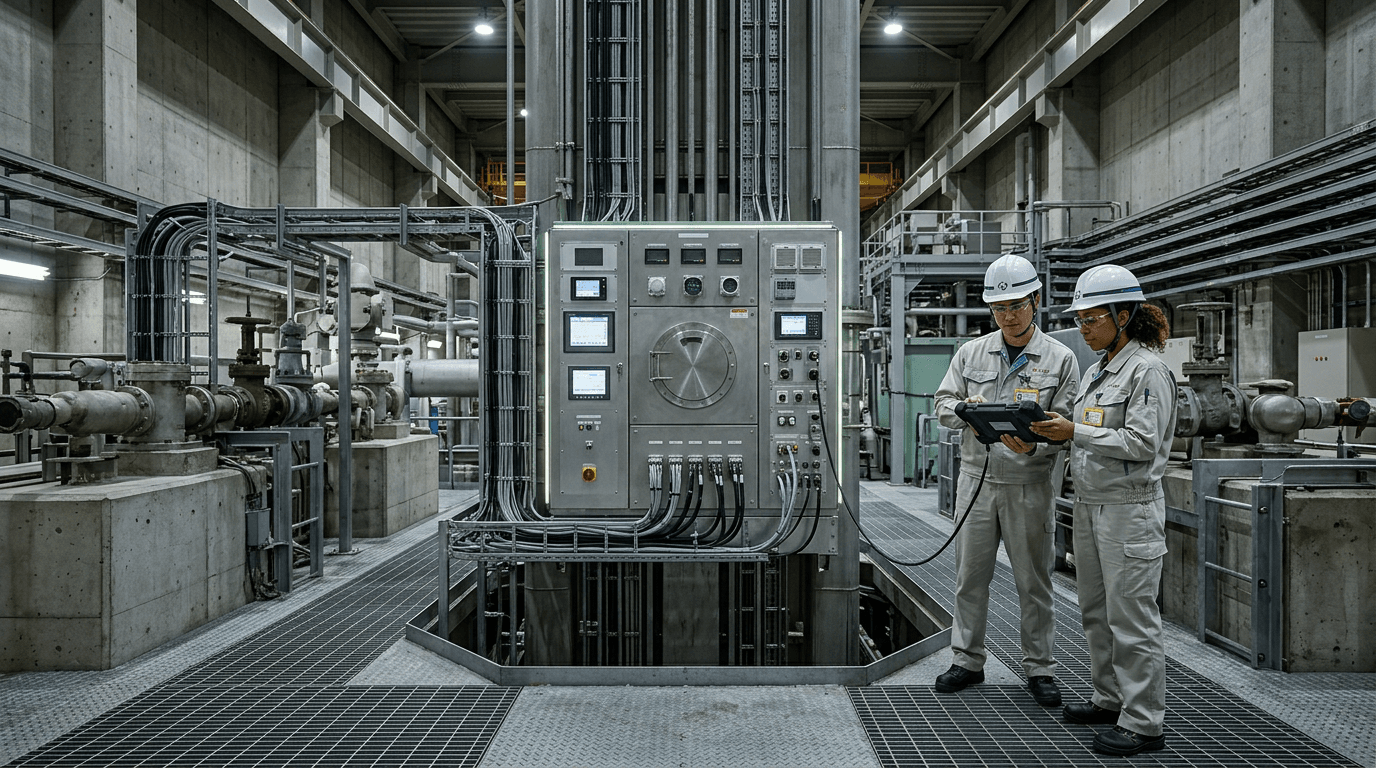
Nuclear Power Restart Program
Geography: Asia Pacific · East Asia · Japan
In January 2026, TEPCO restarted Unit 6 of the Kashiwazaki-Kariwa Nuclear Power Station, the world's largest nuclear plant by capacity (8.2 GW across seven reactors), after 14 years offline following the 2011 Fukushima disaster. This followed approval by Niigata Governor Hanazumi Hideyo in November 2025 and represents Japan's most significant nuclear policy milestone since Fukushima. Japan's new energy plan shifts the official stance from nuclear reduction to maximization.
As of early 2026, 14 reactors have been restarted across Japan under enhanced post-Fukushima safety standards. The government targets nuclear providing 20-22% of electricity by 2030 (up from ~7% in 2023) and is exploring lifetime extensions beyond 60 years and next-generation reactor designs. The policy reversal is driven by energy security concerns (Ukraine-related gas price spikes), decarbonization targets, and the massive electricity demand from data centers and AI computing.
The nuclear restart is transformative for Japan's energy economics: each restarted reactor displaces approximately $1 billion/year in LNG imports. Kashiwazaki-Kariwa alone, if all seven units restart, could power the equivalent of Tokyo's electricity demand. However, public acceptance remains fragile — the January 2026 restart was briefly paused for technical checks, drawing intense media scrutiny. Japan's ability to sustain nuclear expansion will be a defining factor in its energy transition.
Research this in Signals
Signals turns a topic into a sourced research record you can inspect and rerun. Your first scan is free, and this one starts with Nuclear Power Restart Program already loaded, so edit it or scan as is.