Hydrogen Economy Infrastructure
Geography: Asia Pacific · East Asia · Japan
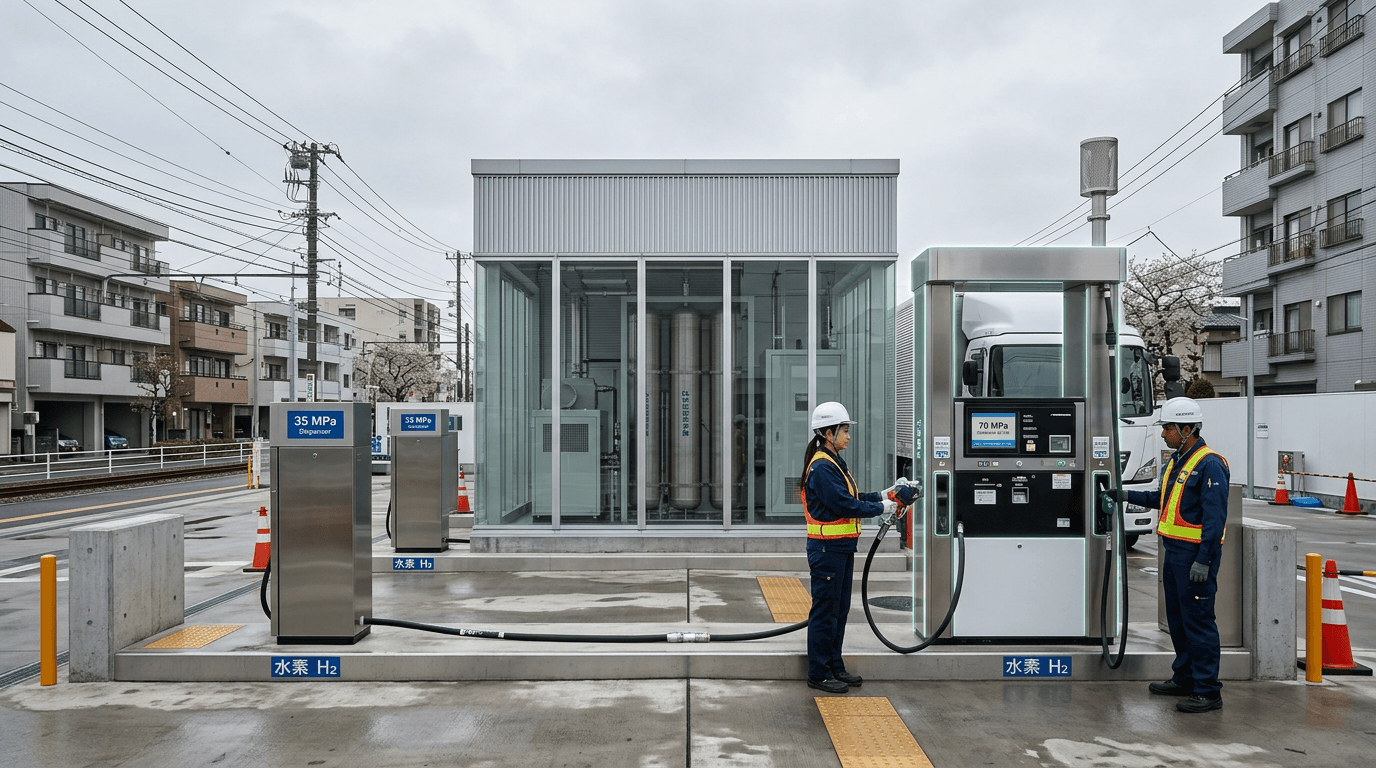
Japan's hydrogen strategy is the world's most comprehensive, encompassing production, storage, transport, and end-use across multiple sectors. The country operates 160+ hydrogen refueling stations (more than any other nation), is piloting green hydrogen production from renewables, and has established the world's first liquid hydrogen supply chain from Australia. JERA and IHI are leading ammonia co-firing demonstrations at coal power plants — mixing 20% ammonia with coal to reduce CO2 emissions while maintaining baseload reliability.
The ammonia co-firing approach is uniquely Japanese — a pragmatic response to the country's limited renewable energy potential (mountainous terrain, limited land) and need for energy security. Japan imports 90%+ of its primary energy, making hydrogen and ammonia imports a pathway to carbon-neutral energy independence. Kawasaki Heavy Industries developed the world's first liquid hydrogen carrier ship for this purpose.
Japan's hydrogen bet carries significant risk: green hydrogen remains 3-5x more expensive than natural gas, and battery electrification may address more end uses than hydrogen advocates project. However, if hydrogen costs decline as expected and hard-to-abate sectors (steel, shipping, aviation) require non-electric decarbonization, Japan's decade-long head start in infrastructure and industrial supply chains could prove visionary.
Research this in Signals
Signals turns a topic into a sourced research record you can inspect and rerun. Your first scan is free, and this one starts with Hydrogen Economy Infrastructure already loaded, so edit it or scan as is.