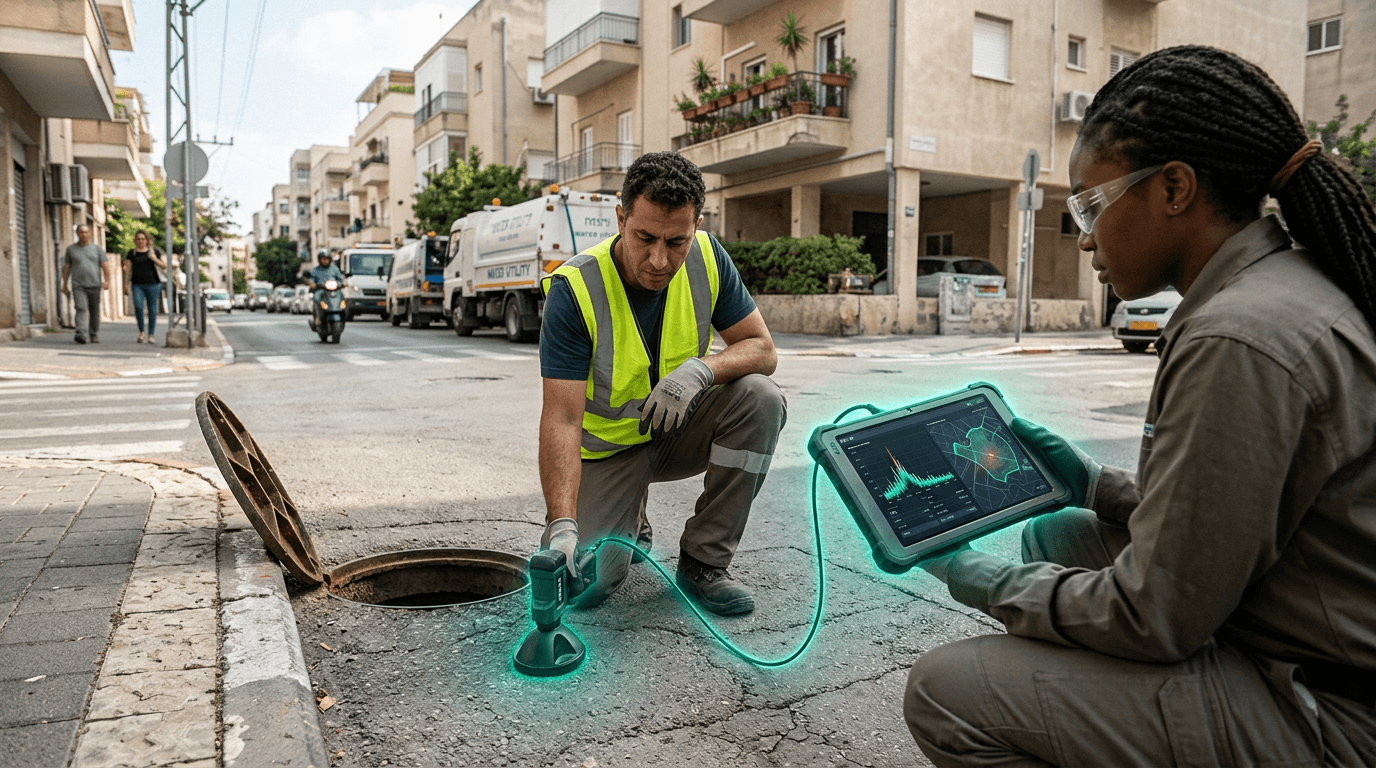
AI-Based Water Infrastructure Leak Detection
Geography: Emea · Middle East · Israel
Israeli companies have developed advanced systems for detecting leaks in municipal water distribution networks, combining acoustic sensors, pressure monitoring, satellite-based ground deformation analysis, and AI algorithms. Companies like TaKaDu (acquired by French utility Suez) and Utilis use machine learning to identify anomalies in water network behavior that indicate leaks, pipe bursts, or unauthorized connections. Utilis notably uses satellite SAR imagery to detect moisture patterns indicating underground leaks.
Globally, 30-40% of treated water is lost to leaks before reaching consumers — representing both a massive waste of resources and a significant revenue loss for utilities. In water-scarce regions, every lost liter has compounded impact. Israel's own water network achieves some of the world's lowest loss rates, partly due to deployment of these detection technologies domestically before exporting them.
Strategically, water leak detection technology addresses a $14 billion global market opportunity and aligns with Israel's broader water technology export strategy. As climate change intensifies water scarcity and utilities face pressure to reduce waste, Israeli detection technology provides proven solutions that can be deployed on existing infrastructure without costly pipe replacement.
Research this in Signals
Signals turns a topic into a sourced research record you can inspect and rerun. Your first scan is free, and this one starts with AI-Based Water Infrastructure Leak Detection already loaded, so edit it or scan as is.