Advanced Wastewater Recycling for Agricultural Reuse
Geography: Emea · Middle East · Israel
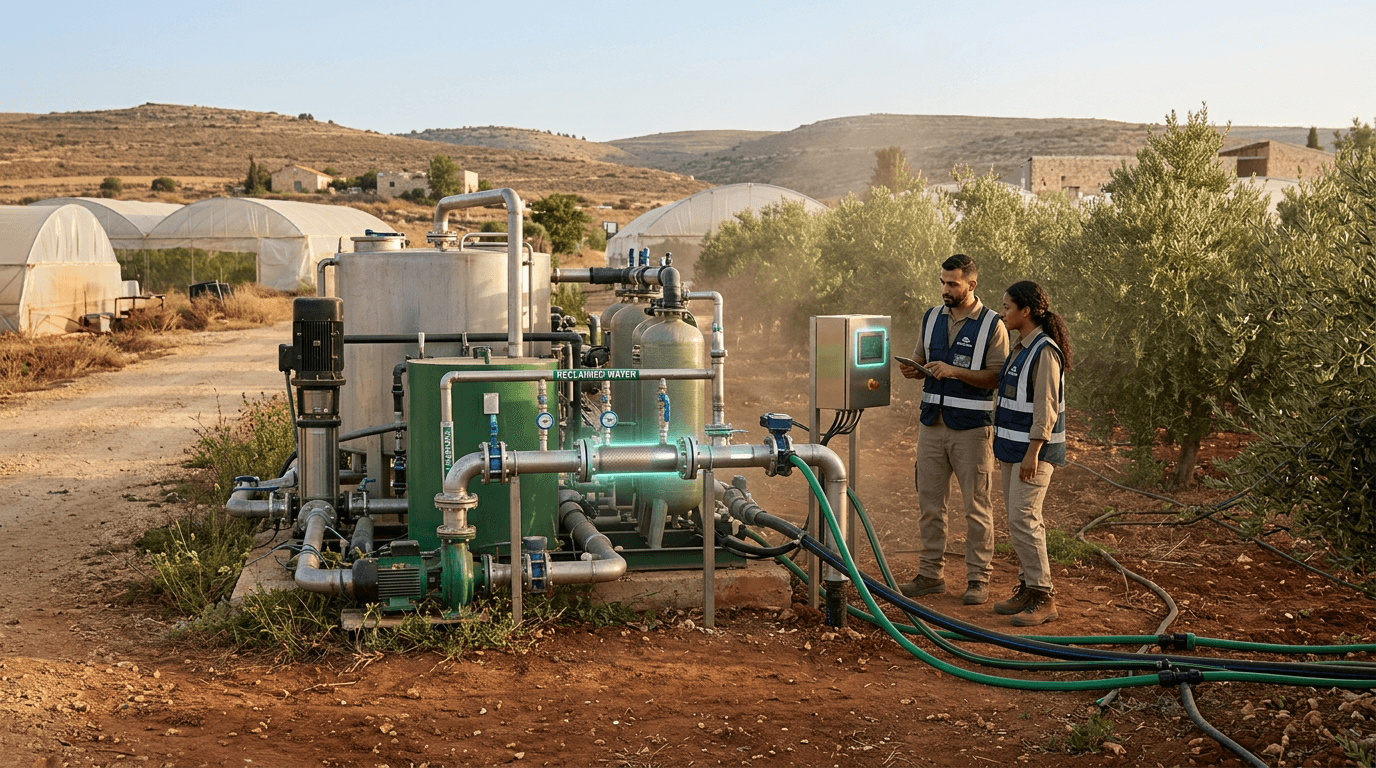
Israel has developed the world's most comprehensive wastewater recycling system, treating and reusing nearly 90% of its domestic sewage for agricultural irrigation — compared to Spain at 20% and the U.S. at less than 1%. The system uses advanced tertiary treatment including sand filtration, UV disinfection, and soil aquifer treatment (SAT) to produce water quality suitable for unrestricted irrigation. The Shafdan facility near Tel Aviv treats 140 million m³/year.
This technology emerged from the same scarcity-driven innovation that produced Israeli desalination leadership. By closing the water cycle — drinking water from desalination, wastewater recycled for farming — Israel effectively uses every drop of water twice. The system requires sophisticated monitoring of pathogen levels, heavy metals, and emerging contaminants to ensure agricultural safety.
Israel's wastewater recycling model is being studied and replicated worldwide as water stress increases. The technology package includes treatment systems, real-time quality monitoring, regulatory frameworks, and agricultural application expertise. For developing nations facing simultaneous water scarcity and food security challenges, Israeli water recycling provides a proven, scalable template.
Research this in Signals
Signals turns a topic into a sourced research record you can inspect and rerun. Your first scan is free, and this one starts with Advanced Wastewater Recycling for Agricultural Reuse already loaded, so edit it or scan as is.