Three-Stage Nuclear Power Program (Thorium Cycle)
Geography: Asia Pacific · South Asia · India
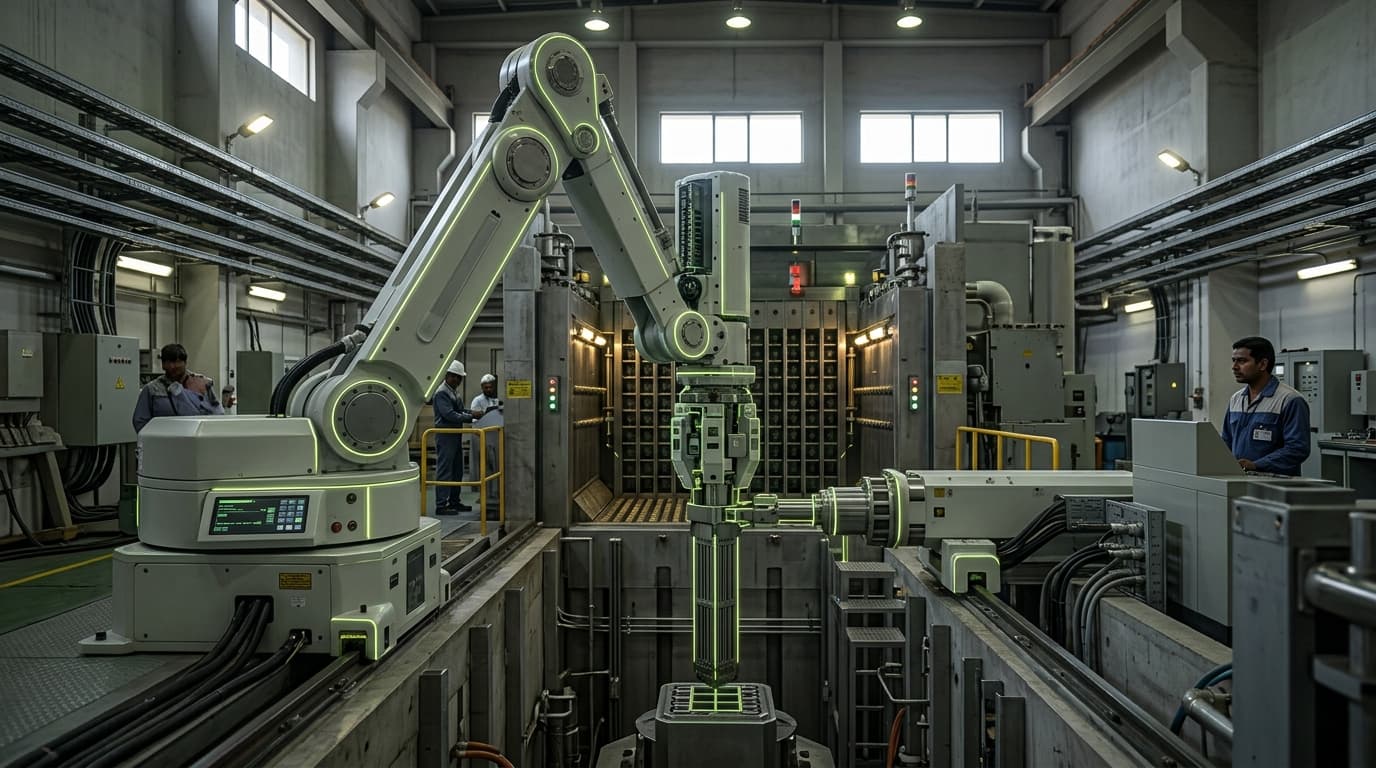
India's three-stage nuclear power program is a uniquely ambitious, multi-decade strategy to exploit the country's vast thorium reserves — approximately 25% of the world's supply. The program progresses through three stages: pressurized heavy water reactors (Stage 1, operational), fast breeder reactors using plutonium (Stage 2, with the 500 MWe Prototype Fast Breeder Reactor at Kalpakkam nearing criticality), and thorium-based advanced heavy water reactors (Stage 3, in development).
The Prototype Fast Breeder Reactor (PFBR) at Kalpakkam, Tamil Nadu, has been under construction and testing, with the government announcing plans for four additional 600 MWe fast breeder reactors. The 2024 Union Budget opened the door for private sector participation in nuclear power for the first time, potentially accelerating investment and deployment.
India's thorium nuclear program is strategically significant because thorium is far more abundant than uranium, and thorium reactors produce less long-lived radioactive waste. If India successfully commercializes thorium-based nuclear energy, it would gain energy independence from uranium-importing constraints and possess a technology that could be exported to thorium-rich nations worldwide. No other country has invested as systematically in closing the thorium fuel cycle.
Research this in Signals
Signals turns a topic into a sourced research record you can inspect and rerun. Your first scan is free, and this one starts with Three-Stage Nuclear Power Program (Thorium Cycle) already loaded, so edit it or scan as is.