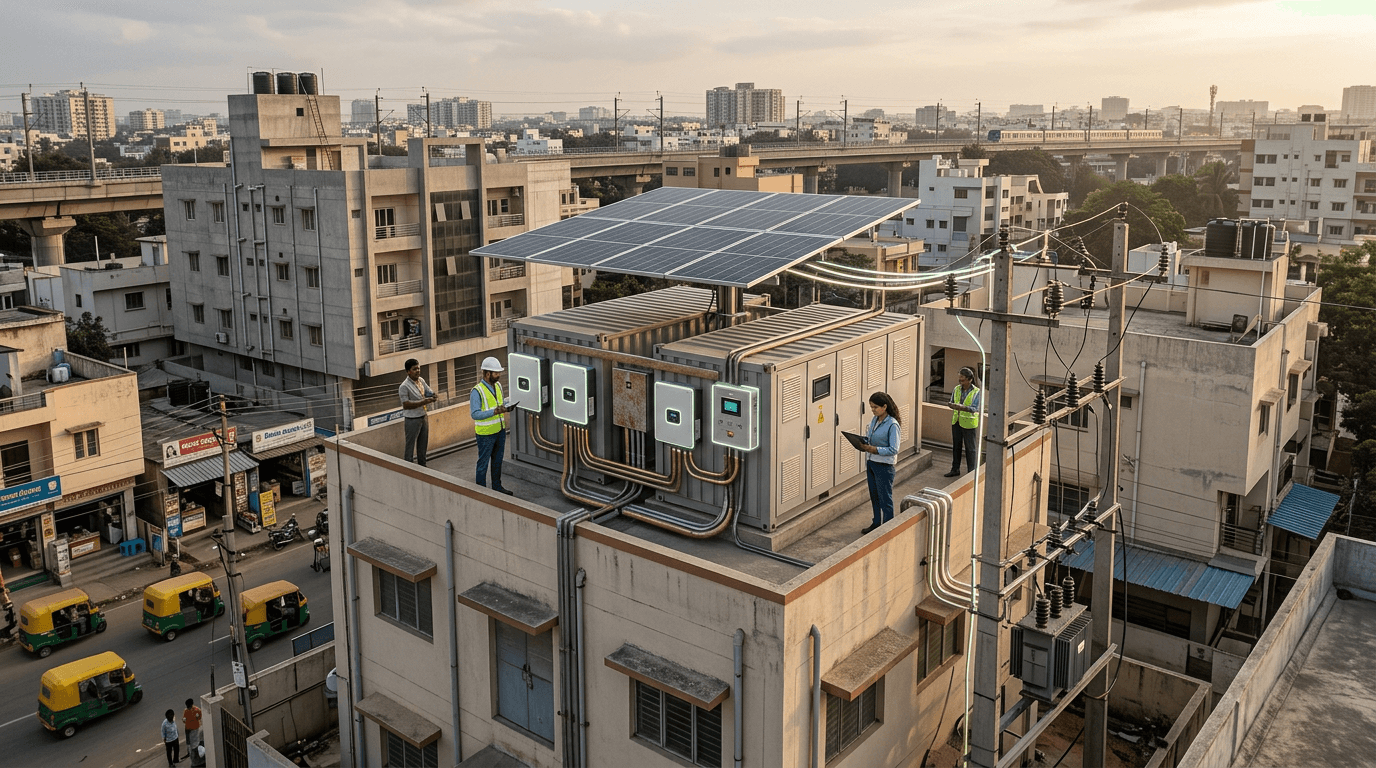
National Renewable Energy Deployment
Geography: Asia Pacific · South Asia · India
India is the world's fourth-largest market for renewable energy, behind China, the US, and the EU. The year 2025 marked the highest-ever annual expansion of renewable energy in India's energy transition journey, with record solar and wind capacity additions. India's installed renewable energy capacity (including large hydro) exceeded 200 GW, on a path toward the ambitious target of 500 GW of non-fossil fuel electricity capacity by 2030.
The growth is driven by a combination of declining technology costs, supportive policies (renewable purchase obligations, competitive auctions, tax incentives), and massive private sector investment from companies like Adani Green, Tata Power, ReNew Energy, and JSW Energy. India's solar tariffs have fallen to among the lowest in the world — below Rs 2.5 per kWh ($0.03/kWh) — making solar cheaper than coal in most of the country.
India's renewable energy deployment is remarkable given the country's starting point. Just a decade ago, India was overwhelmingly dependent on coal, which still generates over 70% of its electricity. The transition is being managed carefully — India won't abandon coal overnight given energy security concerns — but the direction is clear. India's renewable deployment scale positions it as a potential manufacturing and deployment partner for developing nations across Africa and South Asia seeking their own energy transitions.
Research this in Signals
Signals turns a topic into a sourced research record you can inspect and rerun. Your first scan is free, and this one starts with National Renewable Energy Deployment already loaded, so edit it or scan as is.