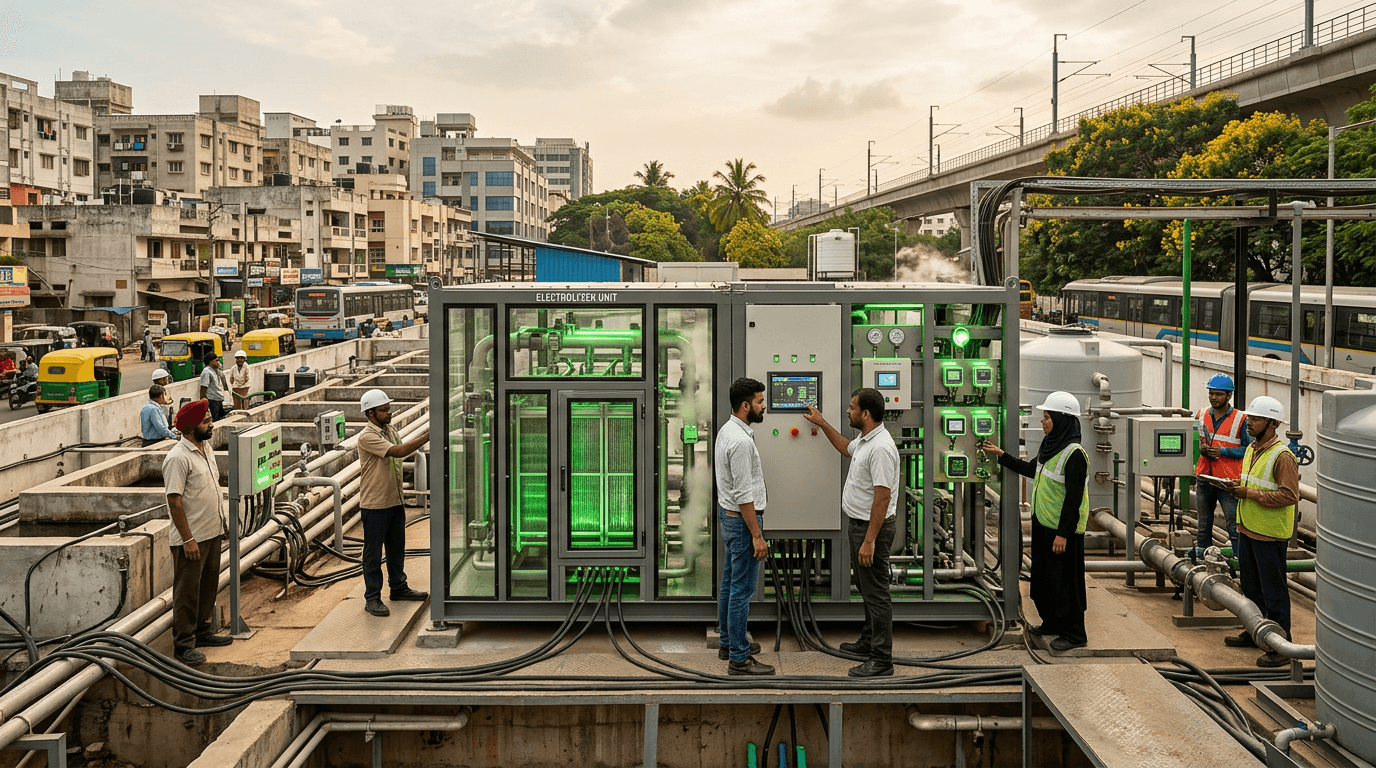
National Green Hydrogen Mission
Geography: Asia Pacific · South Asia · India
India's National Green Hydrogen Mission, launched in January 2023 with an initial outlay of Rs 19,744 crore ($2.4 billion), aims to make India a global hub for green hydrogen production. The target is 5 million tonnes of annual green hydrogen production by 2030, which would make India one of the world's largest producers. By May 2025, 19 companies had been allocated a cumulative annual production capacity of 862,000 tonnes, and 15 firms were awarded 3,000 MW of electrolyzer manufacturing capacity.
Green hydrogen — produced by splitting water using renewable electricity — is critical for decarbonizing industries that can't easily electrify: steel, cement, chemicals, heavy transport, and shipping. India's abundant solar and wind resources give it a potential cost advantage in green hydrogen production. The government is providing incentives for both hydrogen production and electrolyzer manufacturing to build an end-to-end domestic value chain.
India's green hydrogen ambitions complement its solar manufacturing push — cheap renewable electricity is the key input for cost-competitive green hydrogen. If India can achieve its targets, it could become a major hydrogen exporter, particularly to energy-importing countries in East Asia and Europe. Indian companies including Reliance, Adani, Indian Oil, and NTPC are investing heavily in hydrogen projects, with several pilot plants already operational.
Research this in Signals
Signals turns a topic into a sourced research record you can inspect and rerun. Your first scan is free, and this one starts with National Green Hydrogen Mission already loaded, so edit it or scan as is.