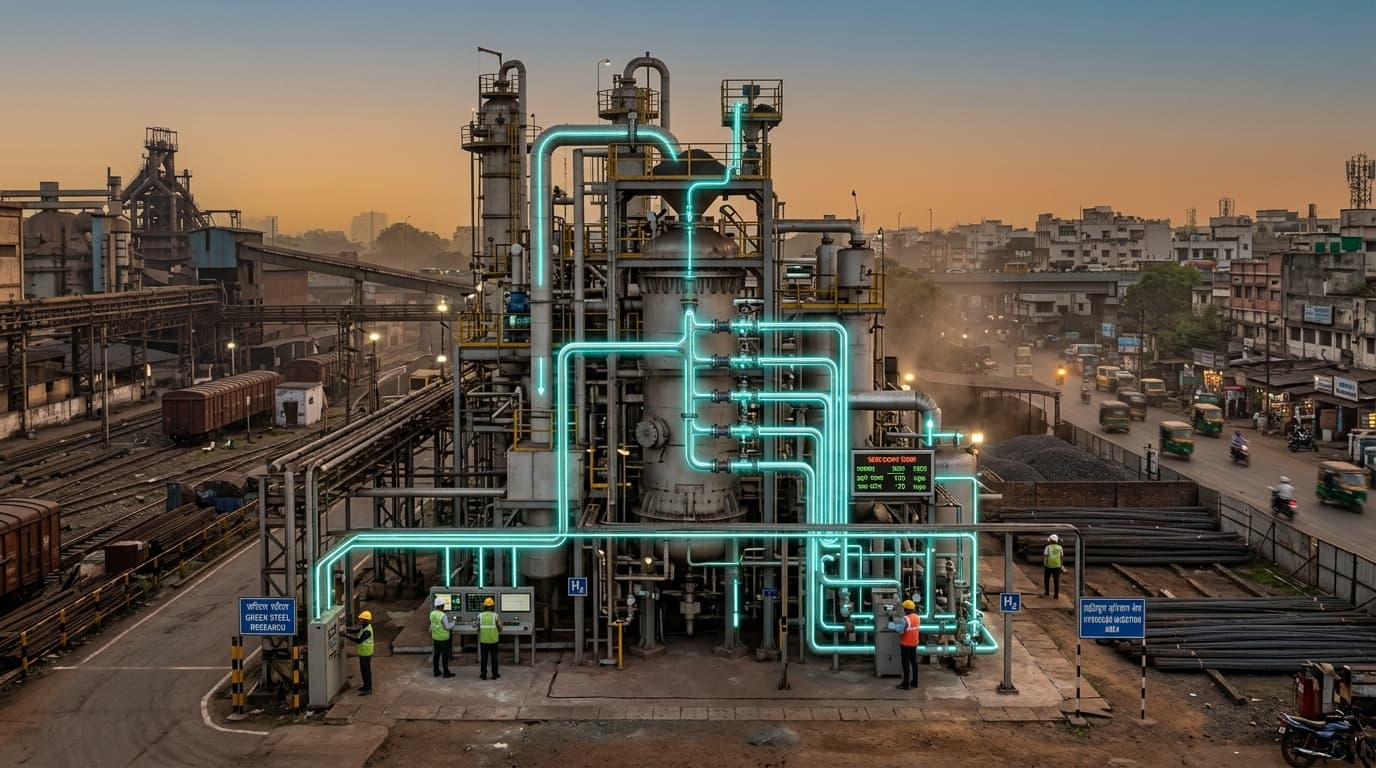
Green Steel and HIsarna Technology
Geography: Asia Pacific · South Asia · India
India is the world's second-largest steel producer after China, producing over 140 million tonnes annually — and steel production accounts for approximately 12% of India's total CO2 emissions. Tata Steel has developed HIsarna, a radical alternative to the traditional blast furnace process that skips the coking and sintering steps entirely, reducing CO2 emissions by at least 20% and up to 80% when combined with carbon capture. The technology, developed at Tata Steel's IJmuiden plant in the Netherlands, represents a potential breakthrough for the global steel industry's decarbonization challenge.
Beyond HIsarna, Indian steelmakers are pursuing hydrogen-based steelmaking. Tata Steel became India's first steel company to demonstrate end-to-end capabilities for developing steel pipes for hydrogen transportation — solving a critical infrastructure challenge for the hydrogen economy. JSW Steel and SAIL are also piloting hydrogen injection into blast furnaces to replace coal. India's National Green Hydrogen Mission (targeting 5 million tonnes of green hydrogen by 2030) creates a potential domestic supply of clean hydrogen for steelmaking.
The stakes are enormous. Global steel production generates 7-9% of all CO2 emissions. As the EU implements its Carbon Border Adjustment Mechanism (CBAM), Indian steel exporters face potential tariffs if they can't decarbonize. India's green steel efforts are therefore both an environmental imperative and an export competitiveness necessity. If Indian companies can crack affordable green steel at scale — applying the same cost-engineering discipline that makes Indian manufacturing competitive in other sectors — they could set the standard for decarbonized steel production in the developing world.
Research this in Signals
Signals turns a topic into a sourced research record you can inspect and rerun. Your first scan is free, and this one starts with Green Steel and HIsarna Technology already loaded, so edit it or scan as is.