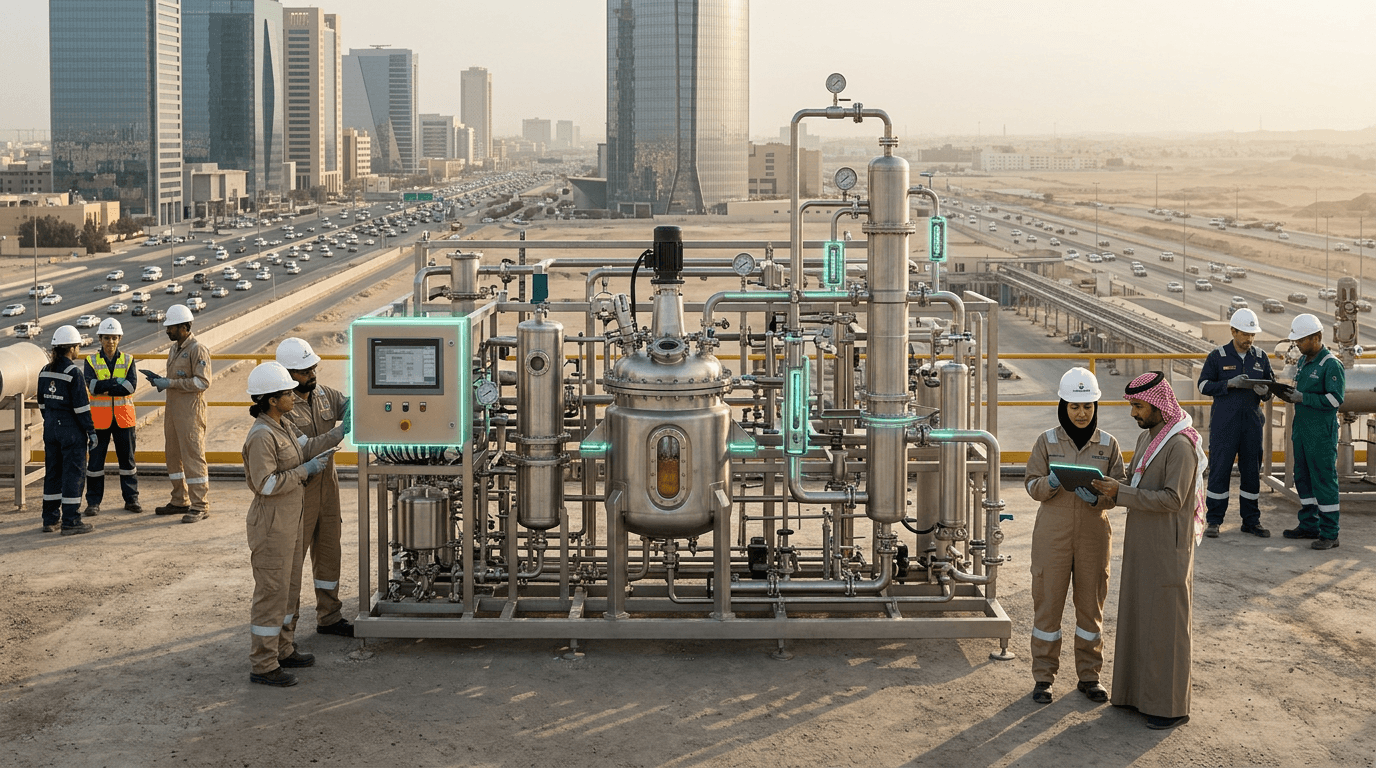
Saudi Critical Minerals & Rare Earth Program
Geography: Emea · Middle East · Gulf States
In January 2025, Saudi Vice Minister of Mining Khalid al-Mudaifer announced a SR375 billion (~$100 billion) mineral investment program targeting rare earths, lithium, copper, gold, zinc, phosphate, and nickel — with $20 billion already in final engineering or under construction. Saudi Arabia's mineral reserves have been revised upward to $2.5 trillion. Ma'aden, the national mining company, has signed partnerships with international rare earth specialists to conduct feasibility studies on Saudi deposits, with technical assessments expected to conclude by late 2025.
The geopolitical calculus is explicit: China currently refines approximately 90% of global rare earths, produces 75% of graphite anode materials, and manufactures 80% of lithium-ion battery cells. Saudi Arabia's critical minerals push is a direct play to break this concentration. The Kingdom's existing industrial infrastructure (ports, energy, logistics), sovereign capital (PIF), and reformed mining regulations create conditions for rapid scaling that few other resource-rich nations can match. Saudi Arabia's exploratory mining budget increased 595% between 2021 and 2025.
This represents Saudi Arabia's most strategically important diversification bet after AI. If the Kingdom successfully develops rare earth extraction and processing capabilities, it positions itself in the supply chains of every major technology trend — electric vehicles, wind turbines, smartphones, defense systems, and data centers. The US-Saudi minerals partnership, discussed during 2025 trade negotiations, suggests Washington sees Saudi rare earths as a viable path to reducing Western dependence on Chinese processing — adding a diplomatic dimension to what is already a massive industrial undertaking.
Research this in Signals
Signals turns a topic into a sourced research record you can inspect and rerun. Your first scan is free, and this one starts with Saudi Critical Minerals & Rare Earth Program already loaded, so edit it or scan as is.