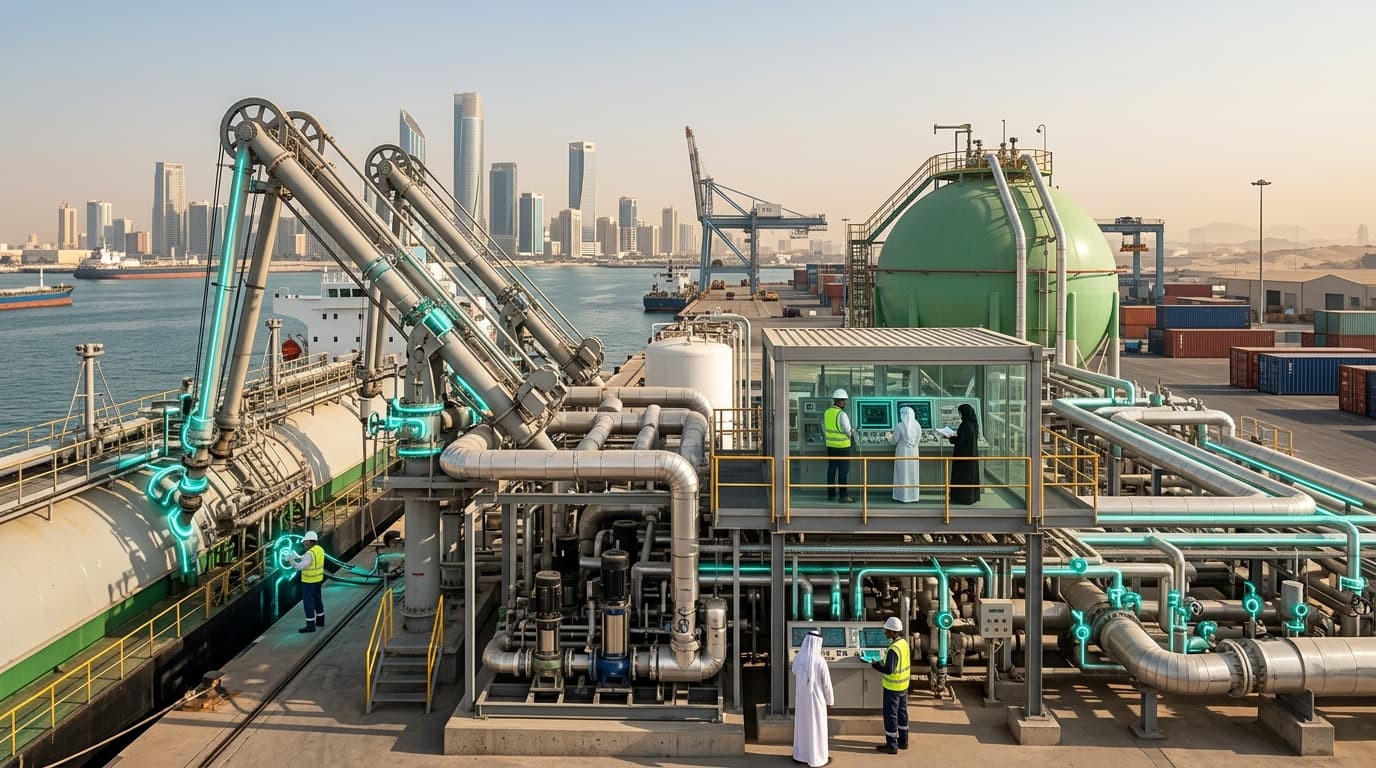
Green Ammonia Export Infrastructure
Geography: Emea · Middle East · Gulf States
Green ammonia — produced from green hydrogen and atmospheric nitrogen — is emerging as the Gulf's preferred vector for exporting clean energy. Unlike pure hydrogen, ammonia can be transported using existing shipping infrastructure and stored at moderate pressures. The NEOM green hydrogen project will produce green ammonia for Air Products to distribute globally, while ACWA Power and other developers are building additional ammonia production capacity.
The Saudi-German Hydrogen Bridge agreement (February 2025) establishes a corridor for 200,000 tonnes of green hydrogen annually to European markets by 2030, primarily transported as ammonia. The UAE's Masdar and ADNOC are developing parallel ammonia export routes, while Oman's Hydrom projects include dedicated ammonia production facilities.
Green ammonia represents the Gulf's strategy to maintain its role as a global energy exporter in a decarbonizing world. By leveraging existing petrochemical expertise, port infrastructure, and energy trade relationships, Gulf states can transition from crude oil exports to clean fuel exports without building entirely new commercial ecosystems.
Research this in Signals
Signals turns a topic into a sourced research record you can inspect and rerun. Your first scan is free, and this one starts with Green Ammonia Export Infrastructure already loaded, so edit it or scan as is.