Qatar Solar-Powered Open-Air Cooling
Geography: Emea · Middle East · Gulf States
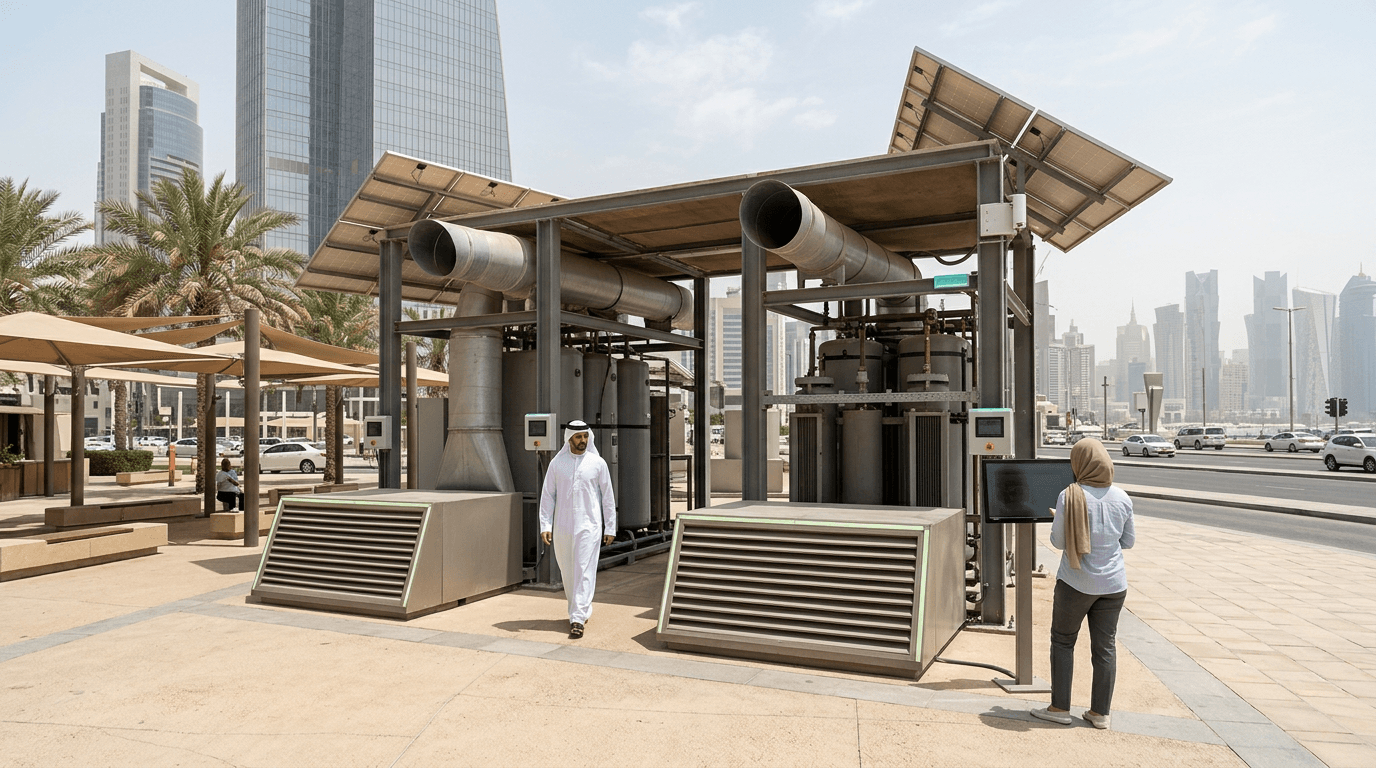
Developed through Qatar Foundation's National Research Fund and Qatar University, this cooling technology creates controlled-temperature 'air bubbles' in open-air environments by pulling ambient air through solar-powered cooling units and distributing it via thousands of grills under stadium seats and pitch-side nozzles. Deployed in seven of eight World Cup 2022 stadiums, the system maintained temperatures at 21°C during matches in conditions exceeding 40°C. The technology was led by Dr. Saud Abdulaziz Abdul Ghani, known as 'Dr. Cool.'
Post-World Cup, the technology has been deployed beyond stadiums into commercial settings: Katara Cultural Village plaza, agricultural greenhouses, and outdoor worker accommodation. This transition from prestigious showcase to practical infrastructure demonstrates the technology's commercial viability. The system's use of solar energy for cooling — using the very resource that creates the heat problem — is an elegant engineering solution with broad applications.
As global temperatures rise, the ability to make outdoor spaces habitable in extreme heat becomes a critical adaptation technology. Cities across South Asia, the Middle East, and increasingly Southern Europe face periods where outdoor activity becomes dangerous. Qatar's proven, solar-powered open-air cooling technology offers a model for maintaining livability in public spaces, transit hubs, and agricultural facilities in a warming world — a genuine climate adaptation export.
Research this in Signals
Signals turns a topic into a sourced research record you can inspect and rerun. Your first scan is free, and this one starts with Qatar Solar-Powered Open-Air Cooling already loaded, so edit it or scan as is.