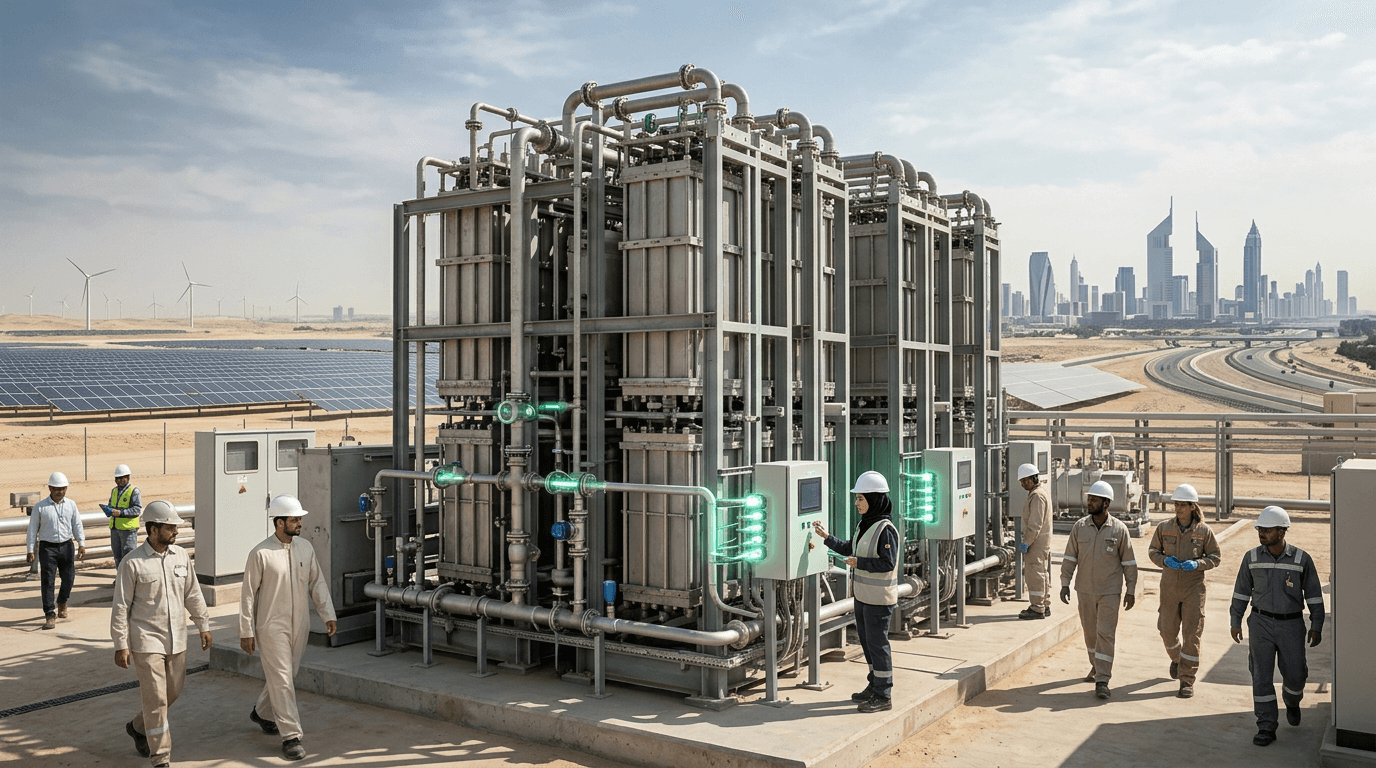
Gigawatt-Scale Green Hydrogen Electrolysis
Geography: Emea · Middle East · Gulf States
The NEOM Green Hydrogen Company (NGHC), a joint venture between ACWA Power, Air Products, and NEOM, is building the world's largest green hydrogen production facility in northwest Saudi Arabia. The project integrates 4 GW of dedicated solar and wind generation with a massive electrolyzer array that splits water into hydrogen and oxygen using only renewable electricity. The hydrogen is then converted to green ammonia for export — a form that is easier to transport and store than gaseous hydrogen. The facility reached 80% completion across all sites by Q1 2025, with electrolyzer commissioning scheduled for 2026 and first product availability in 2027.
The scale of this project is genuinely unprecedented. At 600 tonnes of hydrogen per day, NGHC will produce more green hydrogen than the entire current global output from electrolysis. The electrolyzer array — using proton exchange membrane (PEM) and alkaline technologies — represents the largest single deployment of electrolysis technology ever attempted. This scale is critical because electrolyzer costs follow steep learning curves: every doubling of deployed capacity reduces costs by approximately 20%. NGHC's sheer volume will drive down green hydrogen costs globally.
Strategically, this positions Saudi Arabia to transition from fossil fuel exporter to clean fuel exporter using the same comparative advantages — abundant land, extreme solar irradiance, existing port infrastructure, and sovereign capital. Green ammonia produced at NGHC is already contracted for delivery to Asian and European markets where it will be used as shipping fuel, power plant feedstock, and fertilizer input. If the project delivers on schedule and at projected costs, it proves that green hydrogen can be produced at scale competitive with grey hydrogen from natural gas — a tipping point that would accelerate decarbonization of heavy industry worldwide.
Research this in Signals
Signals turns a topic into a sourced research record you can inspect and rerun. Your first scan is free, and this one starts with Gigawatt-Scale Green Hydrogen Electrolysis already loaded, so edit it or scan as is.