District Cooling Systems
Geography: Emea · Middle East · Gulf States
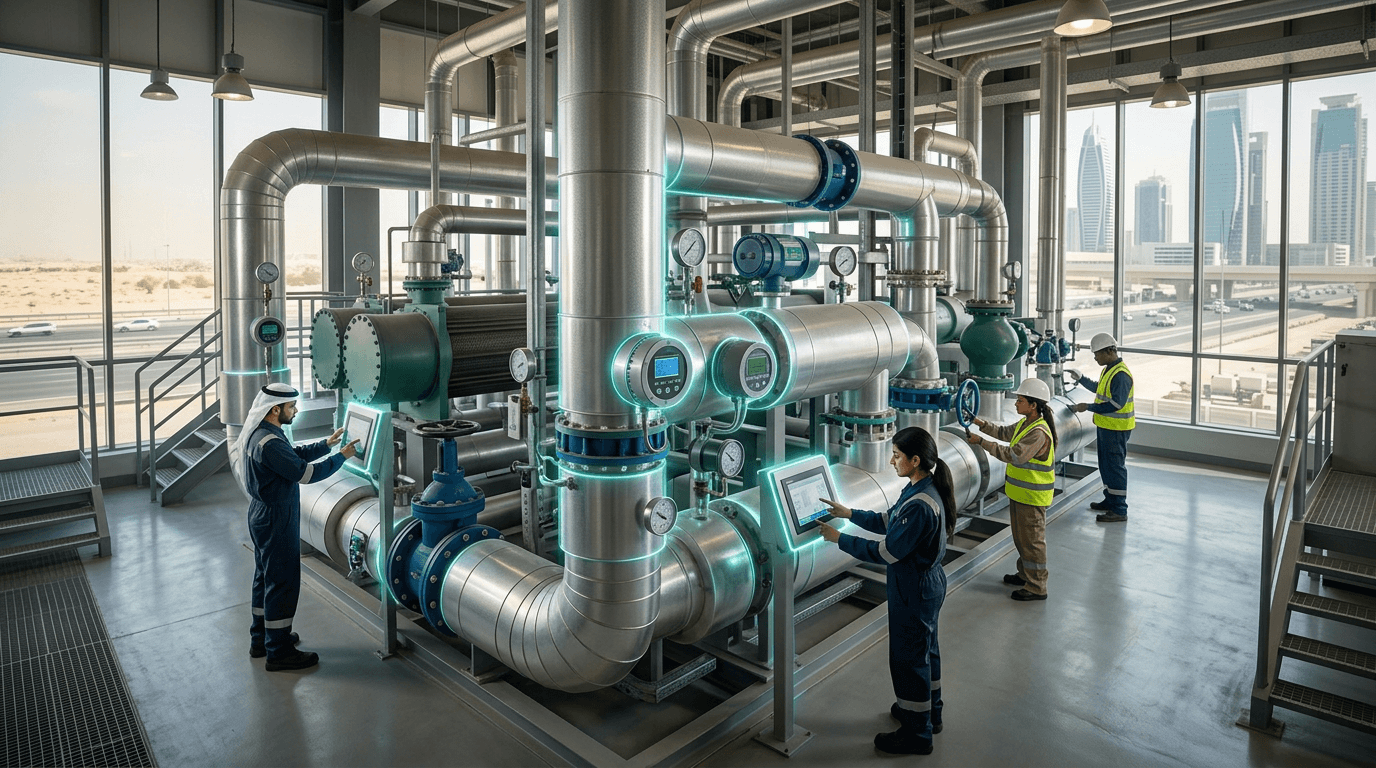
District cooling systems centralize chilled water production and distribute it to buildings through insulated underground pipes, replacing individual AC units. The UAE is the global leader in district cooling, with Dubai alone hosting some of the world's largest systems. These centralized plants achieve approximately 50% greater energy efficiency than distributed building-level cooling.
In a region where air conditioning can account for 60-70% of a building's energy consumption, district cooling represents critical climate adaptation infrastructure. The technology reduces peak electrical demand, lowers carbon emissions, and enables more efficient urban planning by removing large AC equipment from individual buildings.
District cooling technology developed for Gulf conditions is increasingly relevant as global temperatures rise. Cities in South Asia, Southeast Asia, and Africa facing growing cooling demands can benefit from Gulf operational expertise. The GCC's investment in thermal energy storage integrated with district cooling systems — using ice or chilled water banks to shift cooling load to off-peak hours — represents leading-edge practice in demand-side energy management.
Research this in Signals
Signals turns a topic into a sourced research record you can inspect and rerun. Your first scan is free, and this one starts with District Cooling Systems already loaded, so edit it or scan as is.