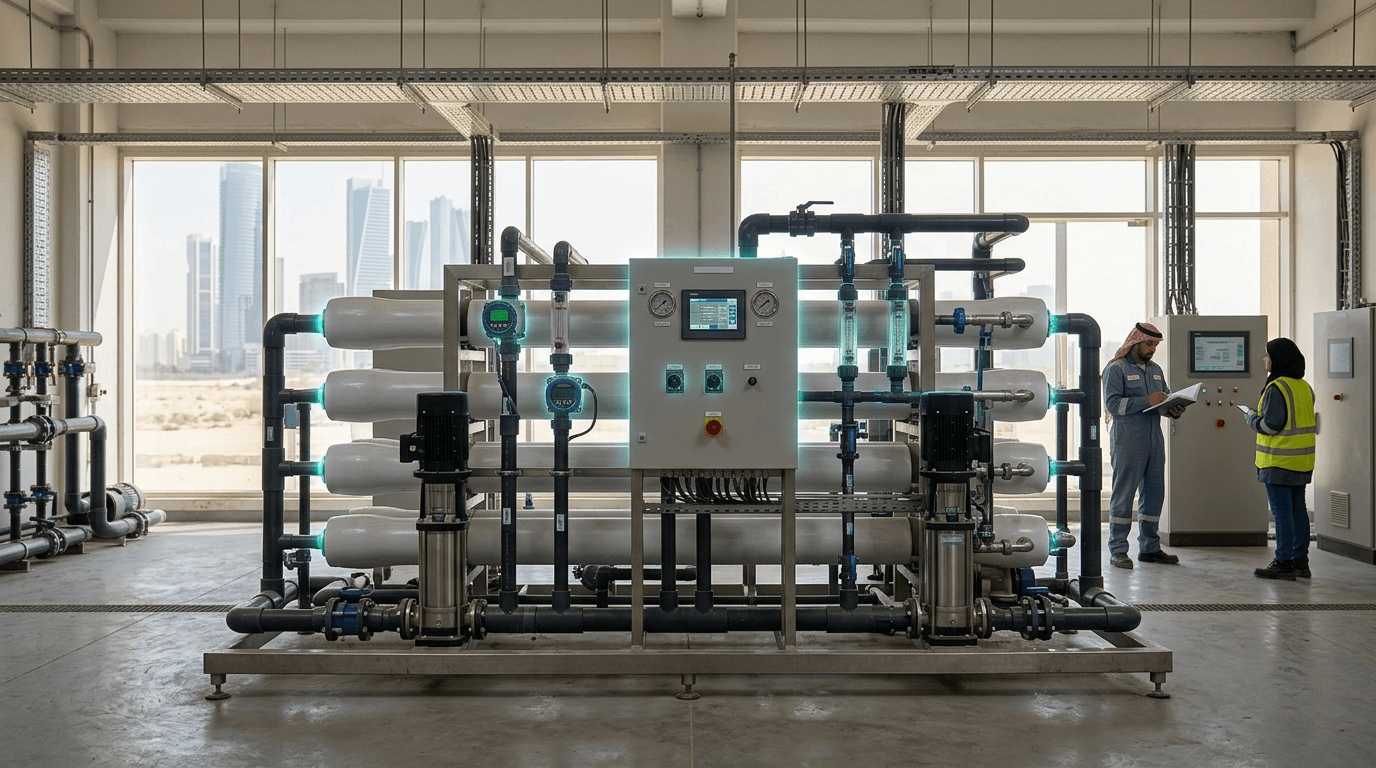
Advanced Desalination Technologies
Geography: Emea · Middle East · Gulf States
The Gulf states collectively operate more than half of the world's desalination capacity, with Saudi Arabia alone producing over 7.5 million cubic meters of desalinated water daily. The region is transitioning from energy-intensive thermal desalination (MSF and MED) to more efficient reverse osmosis (RO) systems, while investing in next-generation technologies including solar-powered desalination, graphene-based membranes, and forward osmosis.
Water scarcity is existential for the Gulf: with virtually no freshwater resources, desalination is not optional but essential infrastructure. This necessity has driven genuine innovation — Gulf-funded research has contributed significantly to reducing the energy cost of desalination from over 10 kWh/m³ for thermal processes to under 3 kWh/m³ for modern RO systems.
As climate change intensifies water scarcity globally — affecting regions from California to India to sub-Saharan Africa — Gulf desalination expertise becomes increasingly valuable. The region's desalination companies, including ACWA Power and Metito, are already exporting technology and operating concessions across Africa and Asia, extending Gulf influence through water infrastructure.
Research this in Signals
Signals turns a topic into a sourced research record you can inspect and rerun. Your first scan is free, and this one starts with Advanced Desalination Technologies already loaded, so edit it or scan as is.